Understanding the cost of a commercial HVAC system isn’t as simple as quoting a flat number per square foot. Facility managers, developers, and property owners often look for quick estimates when planning a retrofit, upgrade, or new build. But in commercial environments, HVAC pricing depends on a wide set of variables—each of which can shift total cost significantly.
The square footage of a space does play a role in estimating HVAC costs, but it’s just one part of a more complex formula. System type, building use, ceiling height, local climate, ductwork layout, energy goals, and occupancy patterns all affect pricing. Without evaluating these details, even a rough cost per square foot can lead to unrealistic expectations or budget misalignment.
National Facility Contractors works with clients to scope and install HVAC systems that reflect building needs, regulatory compliance, and operational budgets—not just raw floor area. Below, we’ll walk through the key drivers behind commercial HVAC pricing, along with general cost ranges that can help you begin framing your planning.
Why Square Footage Alone Doesn’t Determine HVAC Cost
In residential construction, HVAC cost per square foot may be a useful shorthand because system types and usage patterns are relatively consistent. But commercial properties vary too widely to allow for uniform pricing. A 10,000-square-foot warehouse has vastly different HVAC requirements than a 10,000-square-foot medical clinic. The number of zones, equipment needs, and energy efficiency standards all shift the cost curve.
A large open-plan office might require fewer zones and less ductwork than a multi-use building with private suites, kitchens, and server rooms. Retail environments need systems that respond quickly to door traffic and lighting loads. Gyms, restaurants, labs, and schools each bring their own airflow, filtration, and temperature-control challenges.
That’s why square footage is just a starting point—not a complete answer.
Typical Cost Ranges: A Broad View
Even with these caveats, it’s helpful to understand general pricing brackets for commercial HVAC work. These are not quotes, but broad market observations that provide context for budgeting:
- Basic commercial HVAC installations in standard office or retail environments may fall within $15 to $30 per square foot. This range assumes relatively simple layouts and standard equipment.
- Mid-range projects with zoned systems, upgraded efficiency targets, or minor duct reconfigurations can fall into the $30 to $50 per square foot range.
- Complex HVAC installations—such as those in hospitals, laboratories, or high-tech facilities—can exceed $50 per square foot, particularly when clean-room filtration, building automation systems, or customized climate controls are involved.
These ranges vary by region, project scale, access constraints, and local building codes. Labor costs, permit requirements, and lead times on equipment can also widen or compress these figures.
System Type Drives Cost Significantly
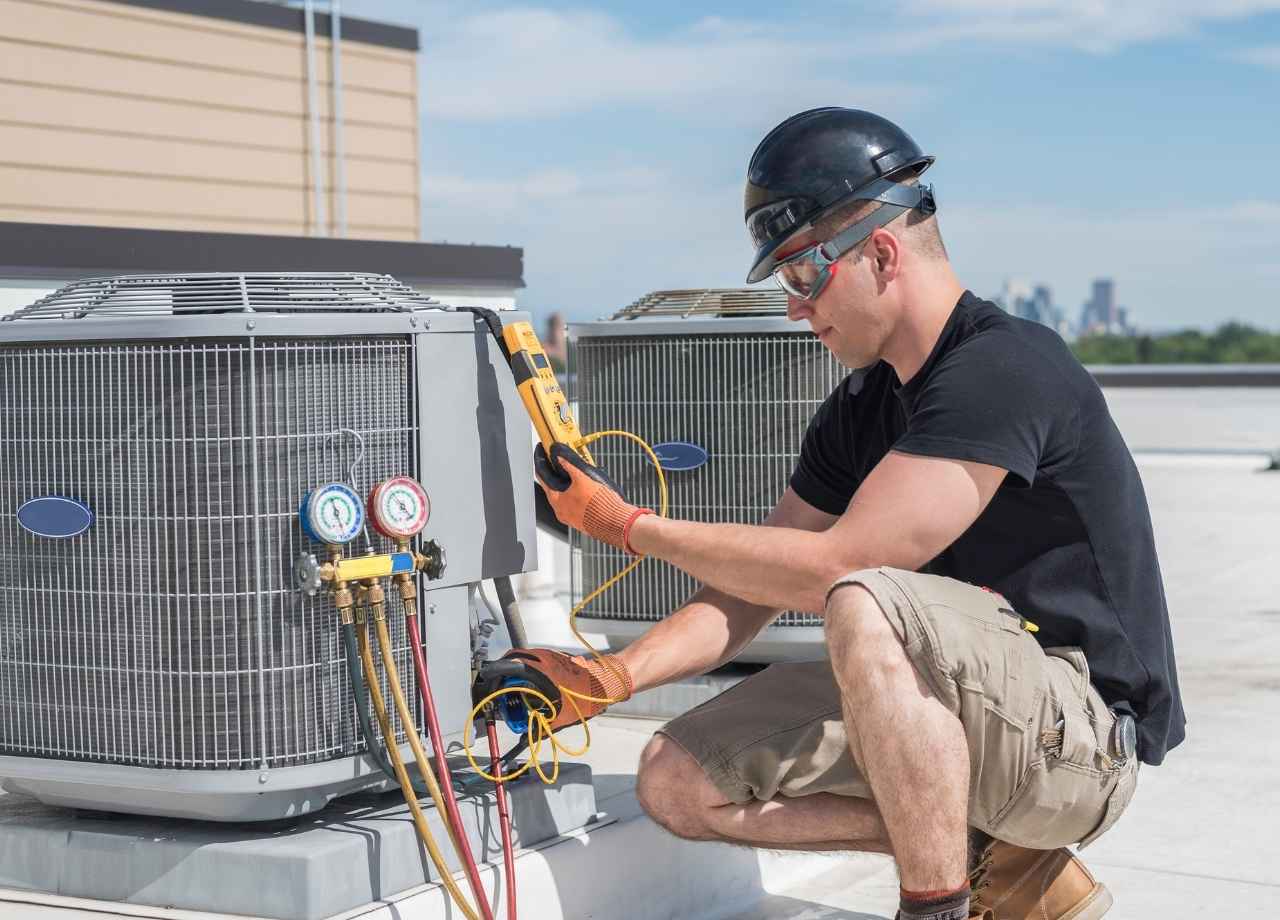
The choice of HVAC system is one of the biggest cost influencers. A packaged rooftop unit serving a single-story open-plan space might cost far less per square foot than a VRF (Variable Refrigerant Flow) system managing multiple zones across several floors.
Split systems, heat pumps, water-source units, and geothermal installations all bring different price points and installation complexities. Buildings aiming for LEED certification or energy-efficiency incentives may need higher-efficiency systems that cost more upfront but reduce long-term operational expenses.
Each system also comes with a different set of maintenance needs, which can influence total ownership cost even if initial installation appears competitive.
Ductwork, Insulation, and Infrastructure Add to Total Cost
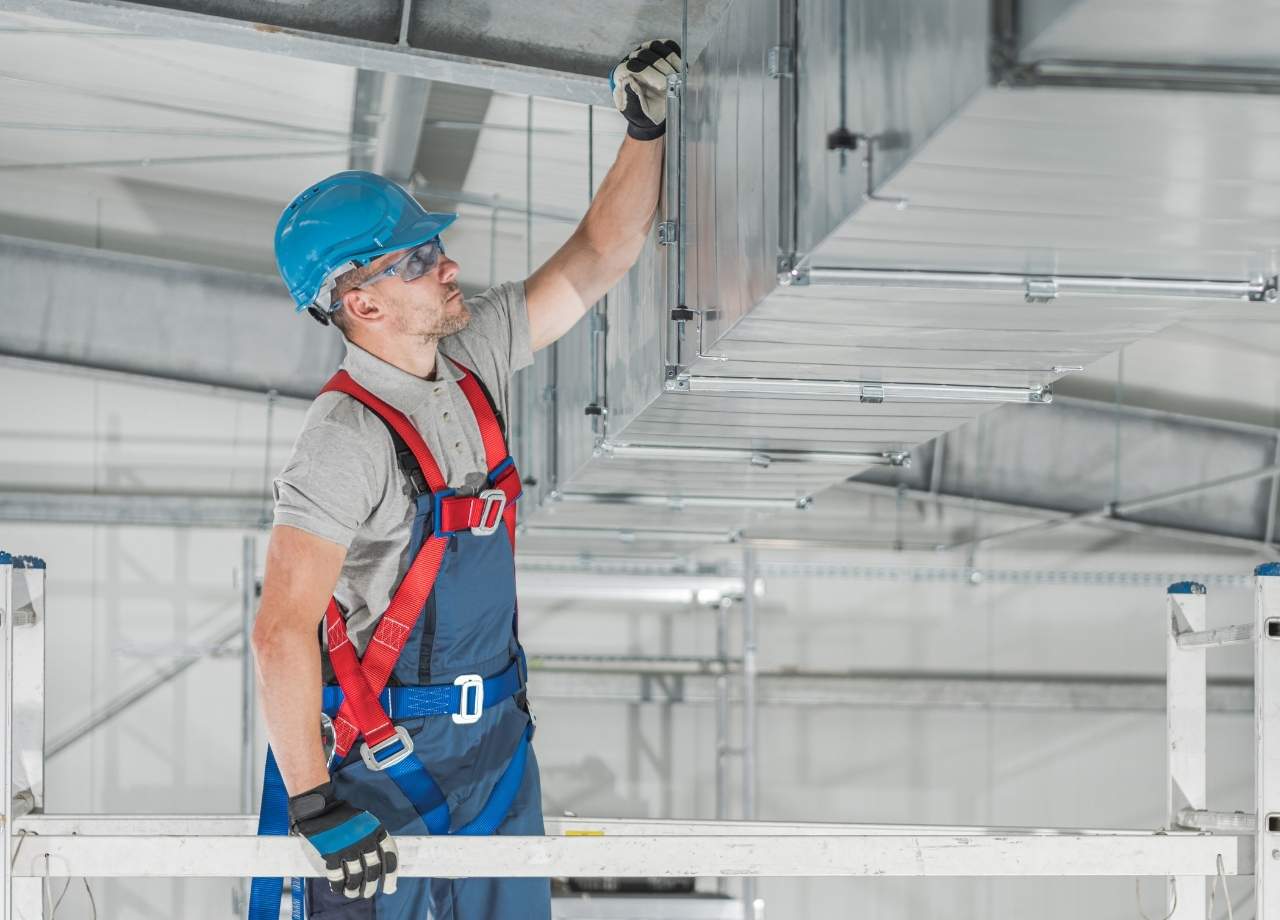
Beyond the equipment itself, ductwork layout, ceiling height, wall structure, and mechanical access play a major role in overall cost. Replacing or rerouting ductwork—especially in retrofit projects—adds material and labor. If the building requires new ceiling access panels, fire dampers, or noise control treatments, the price per square foot goes up.
Facilities with minimal insulation or air sealing need more robust HVAC capacity to deliver consistent temperatures. If insulation upgrades are needed to bring the building envelope up to performance standards, those costs may be bundled into HVAC planning, but they represent an additional layer of investment.
It’s also important to consider where the equipment is being installed. Rooftop units require crane access and safety staging. Basement systems need load considerations and drainage planning. These logistical challenges increase cost even if the square footage stays the same.
Zoning and Controls Influence Both Comfort and Price
Commercial buildings often require multiple zones to manage temperature for different users or times of day. Conference rooms, server areas, restrooms, and break rooms all behave differently in terms of heat gain and ventilation.
Each additional zone adds cost, not only in equipment but also in controls and wiring. However, skipping zoning to save money can result in tenant discomfort, inconsistent temperatures, and higher energy bills. Sophisticated building management systems (BMS) can help monitor and optimize energy use, but they increase installation complexity.
Energy management systems, smart thermostats, and programmable controls all contribute to final HVAC costs—and they’re often worth it for the operational efficiency they deliver over time.
Permits, Compliance, and Inspection Costs
Every commercial HVAC project must meet local codes, which can include everything from minimum SEER (Seasonal Energy Efficiency Ratio) ratings to fresh air intake requirements. Cities with strict environmental regulations may require additional equipment or documentation, increasing both soft and hard costs.
Permit fees, engineering reviews, air balancing reports, and final inspections all take time and budget. Working with experienced professionals ensures compliance, but it also means accounting for those services in cost planning.
Delays in permitting or inspection can impact installation timelines and increase carrying costs if the building can’t be occupied or conditioned on schedule.
Maintenance and Lifecycle Costs Matter
Initial installation is only part of the HVAC investment. Maintenance costs, filter replacements, refrigerant management, and equipment calibration all contribute to long-term value. In some cases, a lower upfront cost system may carry higher maintenance burdens, while a slightly more expensive system could pay off in reduced service calls and energy savings.
It’s not just the equipment lifespan that matters—it’s the cost of maintaining performance over that lifespan. Commercial properties should factor in access to parts, local technician availability, and manufacturer support when evaluating system options.
Why Accurate Estimates Require Site Evaluation
For property managers and business owners budgeting for HVAC, it’s natural to look for simple benchmarks. But HVAC isn’t a commodity product—it’s an engineered solution built around how your building operates. Without a site visit, load calculation, and infrastructure assessment, any quote based solely on square footage is unlikely to reflect the true cost.
That’s why a walkthrough and mechanical evaluation are essential before finalizing scope or budget. This process doesn’t just identify equipment needs—it also ensures the design supports comfort, energy efficiency, and regulatory compliance.
At National Facility Contractors, we guide clients through these evaluations to develop HVAC plans tailored to the specific building and use case, rather than guesswork.