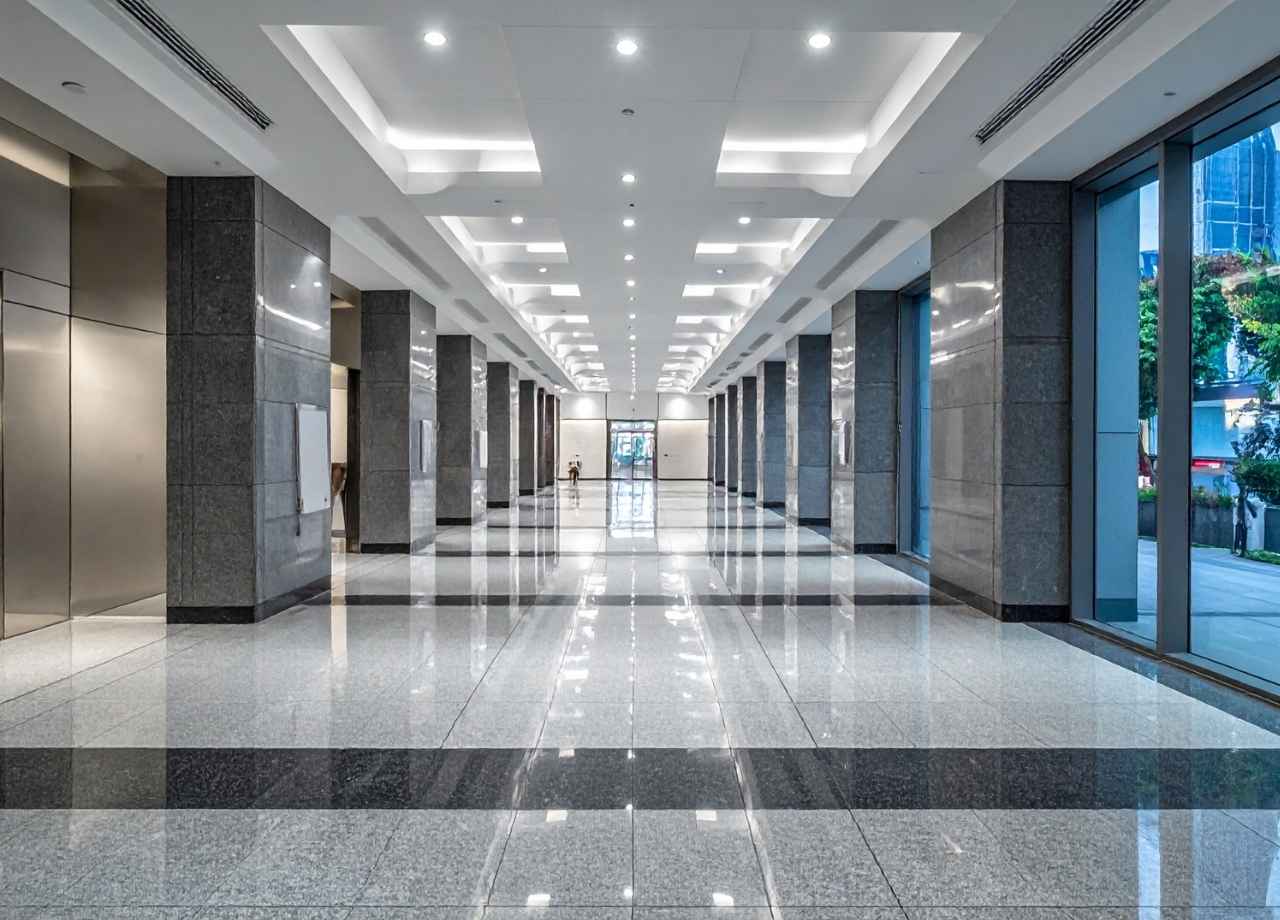
Commercial flooring isn’t just a background feature—it takes daily abuse and carries a heavy share of operational responsibility. From lobby tile to office carpet to industrial-grade vinyl in back-of-house corridors, each floor type must withstand foot traffic, furniture, rolling equipment, spills, and regular cleaning without losing function or appearance.
If floors fail, it’s not just a cosmetic issue. Damaged or poorly maintained flooring leads to safety risks, lower tenant satisfaction, and early replacement—none of which support a well-run facility.
Caring for commercial flooring isn’t about one-size-fits-all methods or quick fixes. It requires a consistent plan that considers the floor’s material, usage patterns, environmental exposure, and cleaning compatibility. At National Facility Contractors, we’ve seen how small lapses in care can lead to major repair costs. But when maintained properly, flooring can last well beyond its expected service life while still looking presentable.
Know What You’re Working With
Caring for commercial flooring starts with understanding what type of surface is installed. Each material responds differently to foot traffic, moisture, cleaning products, and wear:
- Luxury vinyl tile (LVT) is durable but can lose its finish with the wrong chemical.
- Ceramic and porcelain tile resist scratching but need regular grout maintenance.
- Carpet tiles absorb sound and foot traffic but trap dust and allergens without deep extraction.
- Polished concrete handles weight but can stain easily and lose its sheen.
- Rubber flooring, common in healthcare and gyms, is slip-resistant but sensitive to harsh cleaners.
Mistaking one floor for another, or assuming they can all be cleaned the same way, leads to early deterioration. Always confirm the exact material—preferably from the original specs or installer—before setting a maintenance routine.
Daily Cleaning is a Foundation, Not a Full Plan
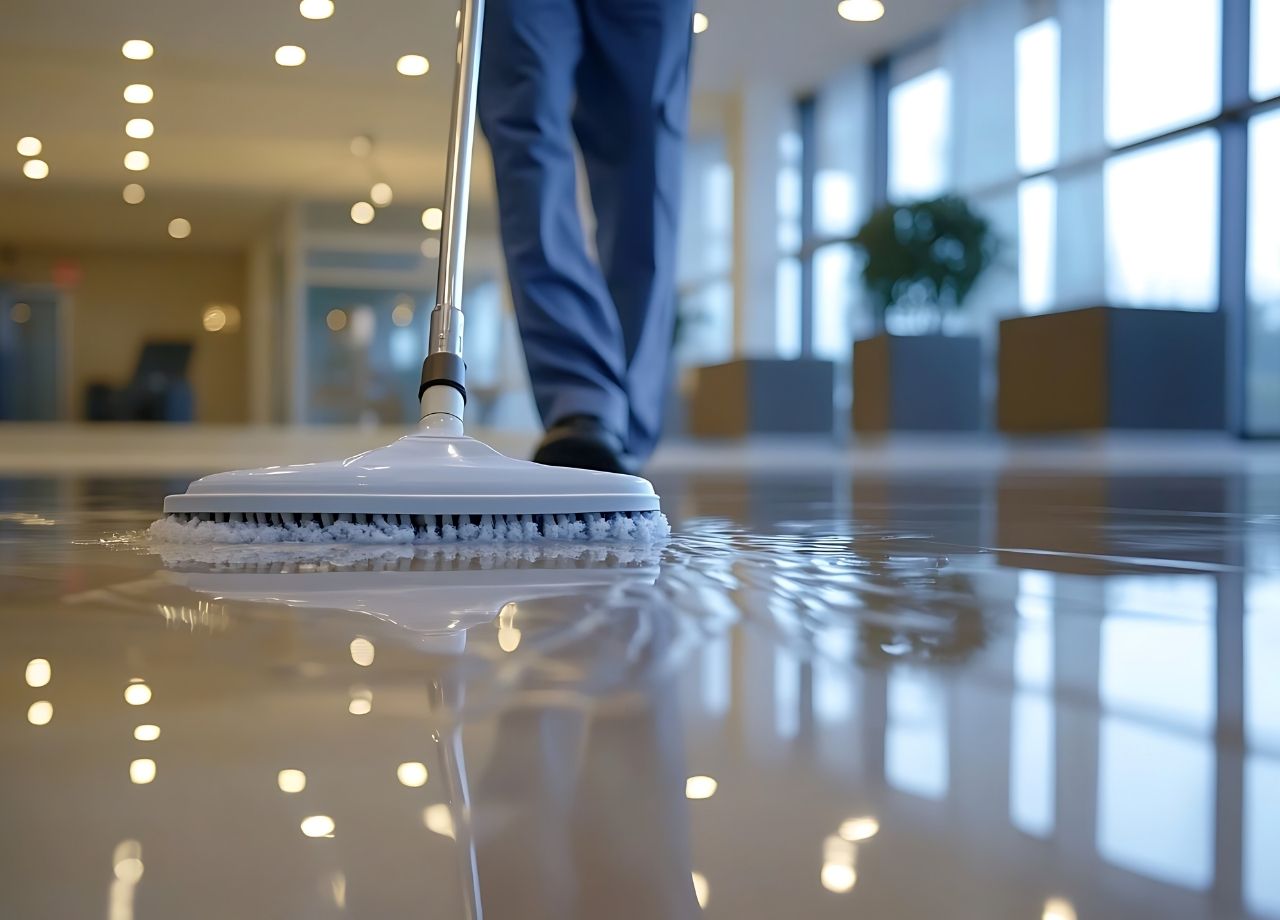
Most commercial properties have janitorial crews perform daily vacuuming or mopping. That’s important, but it’s not enough to preserve flooring quality. Daily cleaning removes surface dirt, but embedded grime, grit, and residue slowly accumulate and wear down the material.
Even the best cleaning crews need support through periodic deep cleaning, targeted spot treatments, and refinishing. For example, vinyl flooring may look clean after mopping, but still harbor layers of chemical residue that dull the finish. Without periodic scrubbing and resealing, that surface loses clarity and starts to degrade.
Establishing a layered care plan—daily, weekly, monthly, and annual—is the best way to avoid major restoration costs.
Match Cleaning Products to Flooring Material
One of the most common causes of commercial flooring damage is the use of improper chemicals. Many cleaners are designed for residential use and contain ingredients that can discolor, etch, or degrade commercial-grade surfaces.
Alkaline cleaners used on polished concrete can damage the surface’s seal. Acidic tile cleaners can eat away grout if used too frequently. Bleach and disinfectants can cause color fading on carpets or rubber tiles. Even general-purpose degreasers, if too concentrated, can strip protective coatings.
Always use manufacturer-recommended or commercial-grade neutral pH cleaners designed for the specific surface. If labels are unclear, test any new product on a small, inconspicuous area before applying to the full floor.
Keep Entryways Clean to Reduce Internal Wear
Up to 80% of the dirt in a building is tracked in from outside. Grit, sand, water, and salts act like sandpaper on every step, grinding down surfaces over time. One of the easiest and most cost-effective ways to extend floor life is by improving the entry mat system.
A proper mat system should include three zones:
- Scraper mats outside the entrance to remove large debris
- Wiper/scraper mats immediately inside the doors to absorb moisture and finer dirt
- Absorptive mats further inside for additional protection
These mats should be cleaned or replaced regularly. A worn mat does little to stop dirt and can even act as a source of grime.
Reducing what enters the building reduces what wears down the flooring inside.
Schedule Regular Inspections for Early Detection
Flooring problems rarely appear overnight. They build gradually—loose tiles, worn transitions, subtle discoloration, buckling edges, and minor tears. These issues are easy to overlook during routine cleaning, but they grow into liabilities if not addressed early.
A quarterly flooring inspection, separate from janitorial duties, can identify these issues in time to intervene with patching, resealing, or spot replacement. Catching minor damage early also helps preserve warranties, as many flooring products require documentation of proper care and maintenance.
Inspections also help catch patterns. If one area near an elevator is constantly showing wear, maybe a furniture leg is rubbing, or a cleaning machine is making repeated contact. Understanding wear patterns helps you target preventive actions before widespread replacement is needed.
Don’t Overlook Humidity and Temperature
Commercial flooring can expand, contract, or warp depending on climate conditions. LVT and rubber flooring are especially prone to movement if HVAC systems aren’t regulated. High humidity can lead to adhesive failure, while extreme dryness may cause gapping.
Building managers should monitor indoor humidity and temperature, especially in facilities with large glass areas or seasonal weather swings. Flooring care should go beyond surface treatment—it needs to include environmental control. Proper HVAC programming, adequate ventilation, and moisture barriers beneath flooring layers all contribute to long-term durability.
Restore, Don’t Just Replace
A well-maintained floor doesn’t need to be replaced just because it looks dull. Many commercial flooring types can be restored with professional-grade cleaning or resurfacing. Stripping and reapplying finish on vinyl, encapsulation or hot water extraction for carpet, grout renewal for tile, or repolishing for concrete can bring surfaces back to near-new condition without full replacement.
This is where a strategic maintenance calendar pays off. Restoration services cost a fraction of new installation and can be timed during low-occupancy periods to minimize disruption. Keeping a record of service intervals, products used, and past repairs helps determine when restoration is a viable option versus when a floor has truly reached the end of its life cycle.
Plan Flooring Maintenance with Occupancy in Mind
High-traffic areas demand more frequent care, but they’re also harder to access during business hours. Floor care needs to be scheduled around building use—not just for convenience but for safety and drying time.
Communicate in advance with tenants or staff when floors need deeper treatment. Use clear signage during wet cleaning, and avoid peak entry/exit times. After-hours services are often worth the cost if they reduce interruption and liability.
Even better, plan floor care for seasonal patterns. Schedule carpet deep cleaning before allergy season, tile resealing before winter salt exposure, or vinyl polishing ahead of holiday foot traffic. Timing matters.
Budgeting for Care, Not Just Repair
Many facility managers account for repair and replacement in their budgets, but not for ongoing care. That imbalance leads to deferred maintenance, which eventually becomes capital expenditure. A small recurring investment in floor care reduces long-term costs by extending the usable life of your floors and avoiding emergency fixes.
Include floor inspections, deep cleanings, finish reapplications, and materials testing in your annual facilities budget. This puts you in control, rather than reacting to failures.
Coordinated Care Extends Value
Flooring, like HVAC or roofing, is a system. It interacts with cleaning equipment, environmental controls, furniture layout, foot traffic, and tenant behavior. Coordinated care involves more than a mop and bucket—it’s a managed routine that keeps your facility safe, attractive, and cost-effective over time.
National Facility Contractors includes commercial flooring maintenance as part of our facility care planning for clients who want long-term performance from their investments. When flooring is treated as a managed asset, not a disposable feature, the returns are visible and lasting.