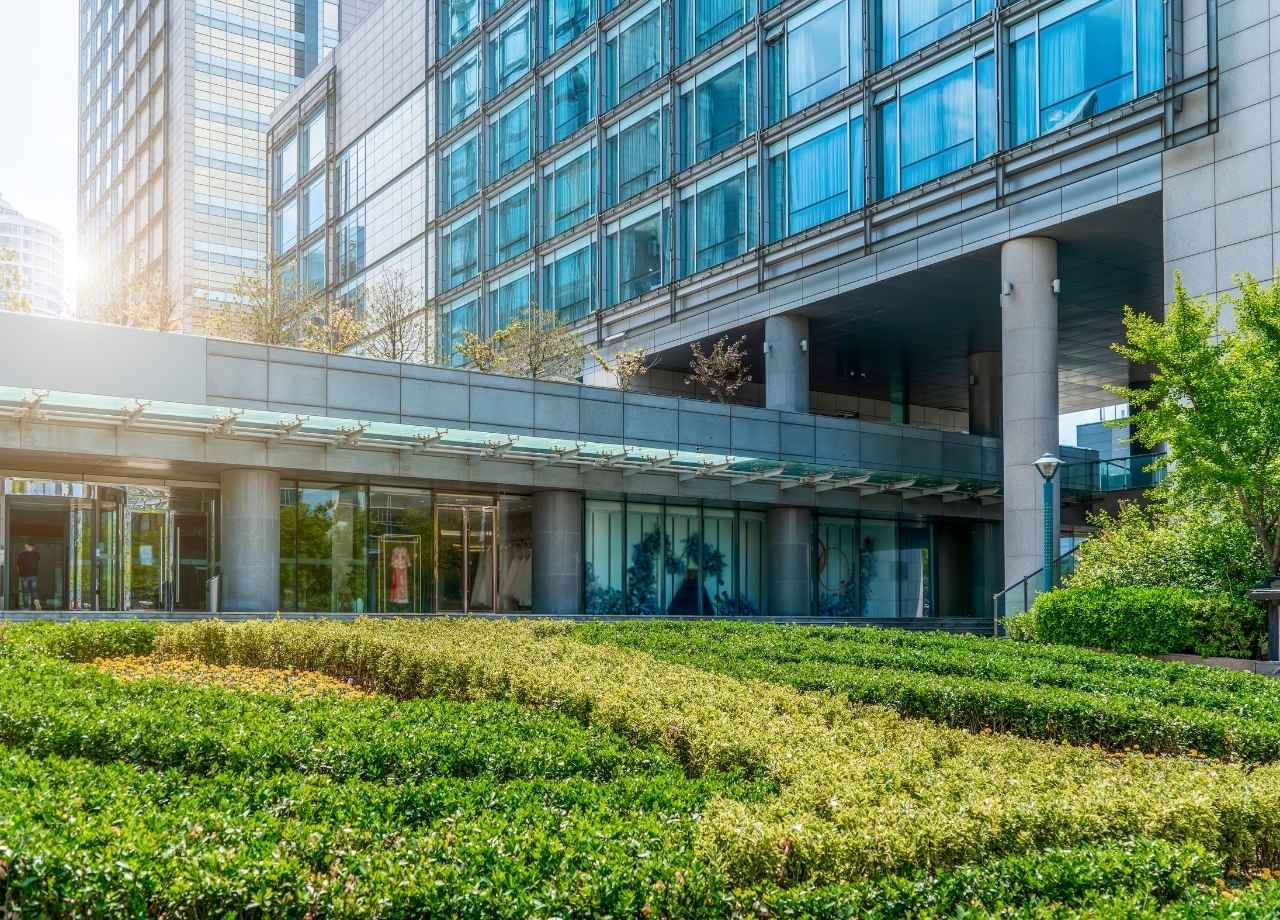
Commercial landscapes are more than aesthetic features. They shape first impressions, support tenant satisfaction, influence pedestrian comfort and safety, and play a measurable role in property valuation. When property managers schedule lawn mowing or seasonal planting, fertilization is often overlooked or treated as a checklist item. That approach undermines the role of targeted nutrition in maintaining plant health, resisting stress, and extending the lifespan of valuable landscape assets.
National Facility Contractors offers commercial landscape fertilization as part of our integrated exterior services, ensuring properties receive scientifically grounded care rather than generic treatment. Fertilization at this scale demands a strategy that responds to soil chemistry, plant species, environmental pressures, and the operational calendar of a commercial property.
Understanding what fertilization actually accomplishes, and how to implement it effectively, is essential for any proactive facility manager.
What Fertilization Does for Commercial Grounds
Plants produce their own energy through photosynthesis, but without access to key nutrients they cannot build strong roots, leaves, or flowers. Fertilization supplements the natural supply of nutrients that the soil cannot provide in sufficient quantities. The major nutrients—nitrogen (N), phosphorus (P) and potassium (K)—serve distinct but interconnected functions. Nitrogen supports green growth and leaf regeneration, phosphorus fuels root development and energy transfer within cells, and potassium strengthens overall plant resilience and water regulation.
Secondary nutrients and trace minerals like calcium, magnesium, sulfur, iron and zinc also matter, particularly when soil tests indicate deficiencies. These elements often go unnoticed until plants show signs of stress, but an effective fertilization program anticipates these needs based on soil science rather than reacting to visual decline.
On commercial properties, turfgrass and ornamental beds react differently to nutrient inputs. Turfgrass may require more frequent, lighter applications to sustain vigorous growth through heat or traffic stress. Trees and shrubs, once established, have slower metabolic rates and absorb nutrients over time through extensive root systems. Each plant group therefore requires attention that respects its unique biology.
Starting with Soil: The Foundation of Nutrient Planning
Successful landscape fertilization begins with soil testing, a step that many property owners underestimate but that dramatically improves outcomes. Soil tests reveal pH levels, nutrient availability, organic matter content and texture. A soil pH outside the optimal range limits the ability of plant roots to absorb nutrients even when they are present in abundance. Clay soils may hold onto nutrients but drain poorly, while sandy soils lose nutrients quickly through leaching.
A soil test informs the type of fertilizer to use, the ratio of nutrients needed and when those nutrients will be most effective. Soil sampling should occur at regular intervals, ideally before each major growing season, so subsequent fertilization plans align with current conditions rather than assumptions based on past results.
Professional analysis replaces guesswork with objective data. For commercial sites that span large areas or include diverse planting zones, soil maps can identify variation within the property so that nutrient applications are tailored, not uniform. This precision prevents waste and reduces the risk of over- or under‑fertilizing.
Selecting the Right Product for the Landscape
Fertilizers come in various formulations and release patterns. Commercial landscape care relies heavily on products that deliver nutrients slowly over time rather than all at once. Slow‑release fertilizers minimize the risk of burning plant tissues and provide a steady nutrient supply that matches how plants absorb elements. This is especially important for turfgrass under frequent use or in shaded areas that grow at inconsistent rates.
Liquid formulations offer rapid nutrient availability but often require more frequent applications. Granular products, particularly those with coated or polymer‑enhanced granules, release nutrients gradually and reduce the need for constant site visits. Combination approaches that mix liquid and slow‑release fertilizers can be useful on sites with mixed plantings or variable microclimates.
Choosing the right fertilizer also depends on environmental factors specific to commercial properties. Urban heat islands, reflected heat from buildings and impervious surfaces, and stormwater runoff patterns influence nutrient uptake and loss. Fertilizer plans should mitigate environmental impacts by avoiding high‑phosphorus products near water features or drainage areas and by stabilizing nutrients in soils prone to leaching.
The selection process benefits from professional expertise, especially when balancing cost, nutrient concentration and application frequency. National Facility Contractors customizes product selection based on soil test results and seasonal performance goals, ensuring that each application advances plant health rather than simply ticking a maintenance box.
Timing and Frequency: Aligning Fertilization with Growth Cycles
Fertilization timing is a science and an art. Plants follow natural growth cycles, and fertilizers applied at the wrong time can be ineffective or even harmful. Turfgrass, for example, typically responds best when fertilized during active growth phases—not when dormant or stressed by drought. Warm‑season grasses have a different schedule from cool‑season grasses, and ornamental trees and shrubs require nutrient boosts at stages aligned with leafing and flowering.
Frequency depends on fertilizer type. Slow‑release products may sustain growth for 8 to 12 weeks, while quick‑release liquids might only last 2 to 4 weeks. A commercial fertilization calendar accounts for these windows, scheduling applications when plants are most receptive and avoiding peak stress periods such as extreme heat or prolonged drought.

Commercial managers also must synchronize fertilization with irrigation patterns. Fertilizer must move into the root zone without washing away. Irrigation schedules should precede or follow fertilization in ways that encourage absorption without creating runoff. This coordination is especially relevant for properties with automated irrigation systems that require periodic adjustment throughout the year.
Monitoring Impact Through Turf and Plant Health Observations
Once a fertilization plan is underway, its effectiveness should be evaluated not just by visual greenness but by plant behavior and soil chemistry over time. A healthy lawn shows consistent blade density, minimal patchiness and strong recovery after traffic. Trees and shrubs demonstrate steady leaf expansion, rich color and resilience to pests.
Visual monitoring works alongside periodic soil retesting. Over time, fertilization plans must be refined, adjusting nutrient ratios or application timing based on observed results and updated soil data. This iterative approach avoids stagnation and ensures long‑term landscape vitality. Commercial property managers who adopt rigid fertilization schedules without review risk wasting resources and encountering preventable plant stress.
Professional service providers offer scheduled inspections alongside applications to document progress, identify emerging deficiencies early and adjust plans before plants show severe decline.
Landscape Fertilization and Environmental Responsibility
Fertilization carries environmental responsibility. Misapplied nutrients contribute to runoff that affects nearby water bodies, harming aquatic life and triggering regulatory concerns for commercial properties. Using regionally appropriate fertilizer formulations, applying nutrients in measured doses and timing applications to reduce stormwater transport all contribute to environmental stewardship.
Commercial properties often intersect with public spaces, storm drains and community infrastructure. Strategic fertilization reduces the ecological footprint of landscape care and protects reputational value. Environmentally responsible plans prioritize soil health, minimize chemical contribution, and align with best practices recognized by landscape science.
Integrating Fertilization with Holistic Grounds Management
Fertilization works best when integrated with other landscape services such as irrigation management, pest and weed control, aeration, mulching and seasonal plant refreshment. Turf aeration, for example, loosens compacted soil so nutrients reach deeper into root zones. Weed‑free beds allow ornamentals to absorb nutrients without competition.
Coordinated site care treats fertilization not as an isolated task but as part of a broader maintenance routine that sustains year‑long landscape performance. National Facility Contractors delivers integrated programming that aligns nutrient inputs with irrigation calibration, soil health monitoring, and ongoing maintenance schedules. This unified approach reduces unnecessary callbacks, stabilizes costs, and improves landscape performance.
Educating Stakeholders and Decision‑Makers
Facility managers are frequently called on to justify landscape service investments to owners, tenants, board members or operators. Fertilization presents an opportunity to communicate measurable outcomes—healthier turf, fewer bare patches, more robust trees and shrubs—and tie them to tenant satisfaction and property valuation. Providing clear documentation of soil tests, application schedules and visual progress builds confidence and supports informed budgeting.
Documentation also protects properties from liability claims related to harmful runoff or improper application timing. Transparency and recordkeeping demonstrate professional diligence and position the property as well cared for rather than merely maintained.
Long‑Term Value of Strategic Commercial Fertilization
Commercial landscape fertilization contributes to stronger turf health, deeper root systems, more resilient plantings and reduced need for emergency interventions. Rather than expend funds on reactive treatments, fertilization reinforces the landscape’s inherent capacity to thrive. It enhances aesthetic appeal but also protects hardscapes, supports stormwater management and extends the life of plant investments.
Property owners who adopt a strategic, science‑based fertilization plan realize consistent returns through reduced maintenance disruptions, lower long‑term replacement costs and improved outdoor environments for tenants and visitors.
National Facility Contractors stands ready to build and manage fertilization programs that align with your operational goals, soil conditions, plant types and budget.