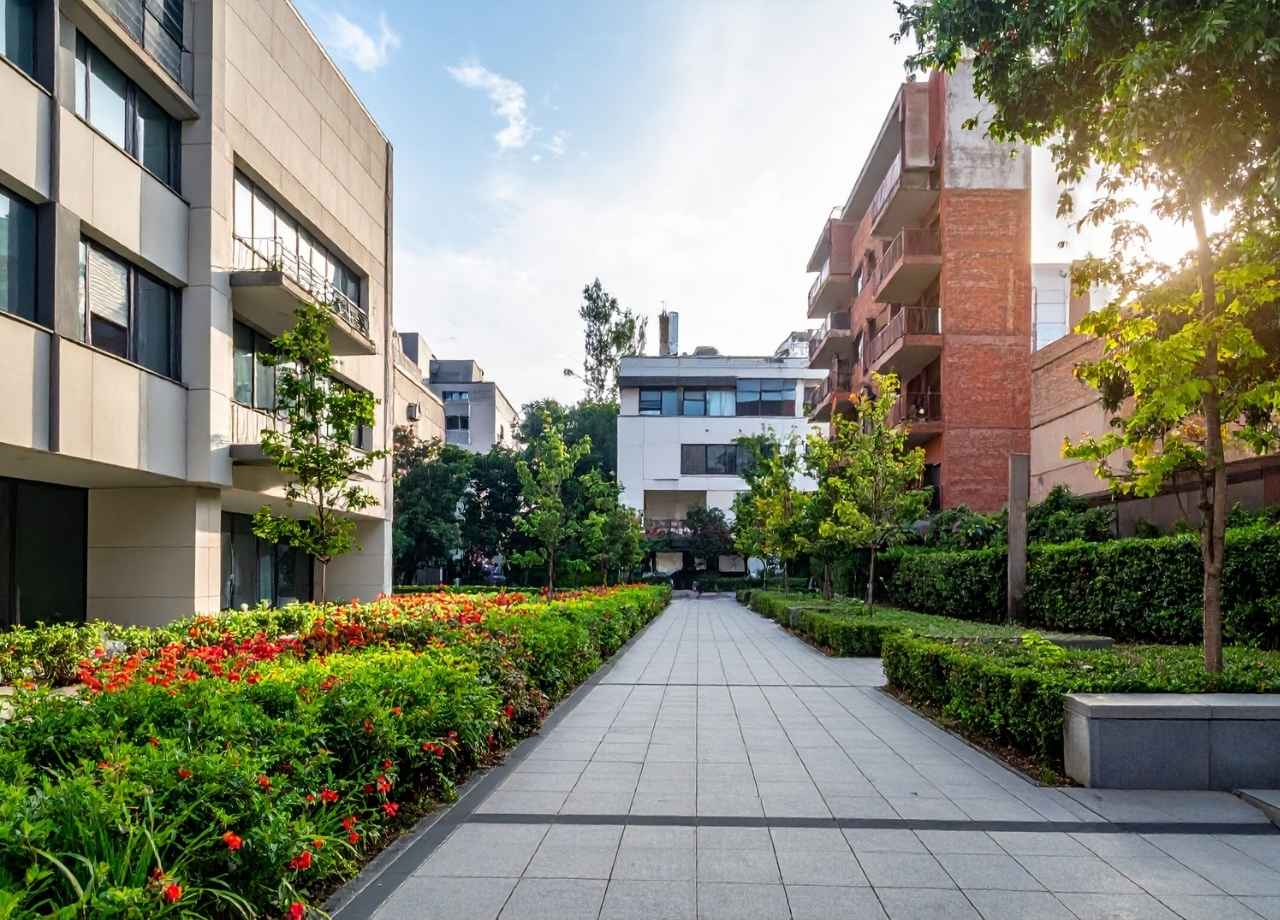
Government buildings present a distinct set of requirements when it comes to landscaping. These are not corporate campuses or private developments. They are civic spaces, governed by strict budgets, federal or municipal regulations, and heightened security protocols. Landscaping here is both aesthetic and functional — it must reinforce the dignity of public institutions, support daily operations, and reduce maintenance burdens without compromising environmental goals or public safety.
Whether it’s a courthouse, city hall, state office complex, or federal facility, every square foot of outdoor space should be planned with purpose. This guide offers a professional approach to commercial landscaping for government buildings, covering everything from design principles and plant selection to safety, accessibility, and long-term cost management.
The Role of Landscaping in Public Facilities
Landscaping for government buildings is often the first physical interaction the public has with the agency inside. Clean lines, healthy plantings, and a well-maintained entryway suggest professionalism and trust. At the same time, these spaces must serve practical needs — guiding pedestrian flow, protecting building infrastructure, managing stormwater, and ensuring ADA compliance.
Because government campuses must often balance security and openness, landscaping becomes a tool for visual control and subtle barrier creation. It separates pedestrian zones from restricted areas without the need for fencing. It softens architectural edges while controlling access. It can also serve as a communication channel, reinforcing environmental values through native plantings or green infrastructure.
Planning Around Regulations, Access, and Function
Unlike private-sector projects, government landscapes are shaped by procurement rules, public oversight, and interagency cooperation. This means landscaping must comply not only with local building codes, but also with federal mandates around accessibility, safety, and environmental impact.
Landscape architects and contractors must work within detailed specifications for:
- ADA and ABA (Architectural Barriers Act) standards
- Anti-ram and perimeter security guidelines
- Fire access lanes and emergency ingress/egress
- Sustainable landscaping goals under LEED, SITES, or local equivalents
- Procurement protocols for materials and labor
- Water use restrictions tied to regional conservation mandates
All of these factors must be considered during the planning phase — not added after design. Clear communication with public works, security teams, and building engineers early in the process can avoid costly redesigns or compliance failures later.
Key Design Principles for Government Landscaping
Simplicity and Formality
Public sector landscapes typically favor clean, formal layouts over ornamental or experimental design. Symmetry, clear sightlines, and low-profile plantings help convey order and approachability while minimizing maintenance issues.
Durability Over Decoration
Materials and plant choices must withstand constant public use, seasonal weather, and limited access to ongoing upkeep. Walkways, benches, planters, and retaining walls should be selected based on proven performance in public spaces, not just visual appeal. Plants must thrive without intensive pruning or chemical treatments.
Controlled Access with Passive Design
Bollards, retaining walls, berms, and dense shrub masses can serve dual roles — guiding foot traffic and forming physical barriers. These can reduce vehicle access to sensitive areas while still maintaining an open, civic character. Thoughtfully placed landscaping can support security without resorting to fencing or excessive signage.

Maintenance Zoning
Designs should group plantings and surfaces based on the level of upkeep required. High-profile areas near main entrances or public gathering spaces may warrant seasonal color and detailed grooming. Peripheral areas can be designed with native species or low-irrigation ground covers to reduce labor hours and cost.
Stormwater Management
Public buildings must comply with stormwater runoff regulations, and landscaping plays a major role in compliance. Bioswales, permeable pavements, and retention basins can be integrated into the site plan to meet code requirements while also enhancing the landscape’s visual and ecological value.
Plant Selection and Sustainability
Government contracts increasingly call for sustainable landscaping — not as a trend, but as policy. Native and drought-tolerant plants reduce water use, avoid the need for pesticides, and lower maintenance costs over the lifecycle of the installation. Trees are chosen for canopy structure, root stability, and resistance to storm damage. Ground covers are used to eliminate large turf areas where mowing and irrigation would be inefficient.
Where pollinator-friendly or habitat-focused landscapes are specified, the plant list must still meet the requirements for visibility, safety, and control. Avoiding invasive species, managing sight lines, and maintaining separation from utilities remain top priorities.
Irrigation systems must be efficient, zoned, and equipped with smart controllers where budget allows. Rain sensors and leak detection features should be standard on large government sites, especially where public scrutiny over water use is high.
Long-Term Maintenance Planning
Government properties require a predictable maintenance model. Landscapes must be designed with life cycle costs in mind — not just installation expenses. That means selecting plants that don’t outgrow their spaces, materials that don’t need regular sealing or repairs, and layouts that allow ground crews to maintain large areas with minimal disruption.
Mulching, pruning, irrigation checks, and pest management must all be manageable with limited staff or third-party contracts. Avoiding complex bed designs, high-maintenance turf zones, or water-heavy ornamental features helps stretch maintenance budgets while keeping the site presentable.
Facilities directors often favor durable, structured landscapes over those that rely on seasonal color or high variability. Designing with that reality in mind results in higher long-term satisfaction.
Security Integration
For buildings with elevated security needs — such as courthouses, federal offices, or military sites — landscaping must be planned in tandem with threat assessments. The Department of Homeland Security and GSA provide guidelines for standoff distances, anti-ram barriers, and blast-resistant layouts. These requirements often influence how close plantings can be to building walls, where trees can be placed, and how hardscape is structured.

In lower-risk environments, security can still be reinforced through plant selection (thorny shrubs, dense hedging), lighting layout, and elimination of hiding places near windows or entrances. Surveillance sightlines must always remain clear.
Common Challenges and Solutions
Budget Constraints
Public sector projects often involve tight budgets and fixed bid processes. Cost-effective landscaping doesn’t mean cutting corners — it means using proven plant lists, durable surfaces, and smart design to minimize waste and reduce upkeep.
Limited Water Supply
Especially in arid or drought-prone regions, water use must be carefully managed. Xeriscaping principles, irrigation zoning, and soil amendments can significantly reduce demand without sacrificing appearance.
Public Use and Vandalism
High-traffic areas require tamper-resistant fixtures, graffiti-resistant surfaces, and plantings that won’t be easily damaged. Using layered planting beds and defined walkways helps control movement and reduce off-path trampling.
Compliance with Changing Standards
As regulations shift — especially around environmental impact — landscaping must remain adaptable. Designing with flexibility allows agencies to make changes later without replacing entire sections of the installation.
Commercial landscaping for government buildings isn’t just about making public property look good. It’s about reinforcing function, accessibility, security, and stewardship. Every element — from tree placement to paving material — must work together to serve the public and support the agencies operating on site.
The most successful landscapes are those that look timeless, perform consistently, and support the mission of the building they surround. For facility directors, planners, and contractors alike, that means focusing on long-term value, not short-term visual trends.