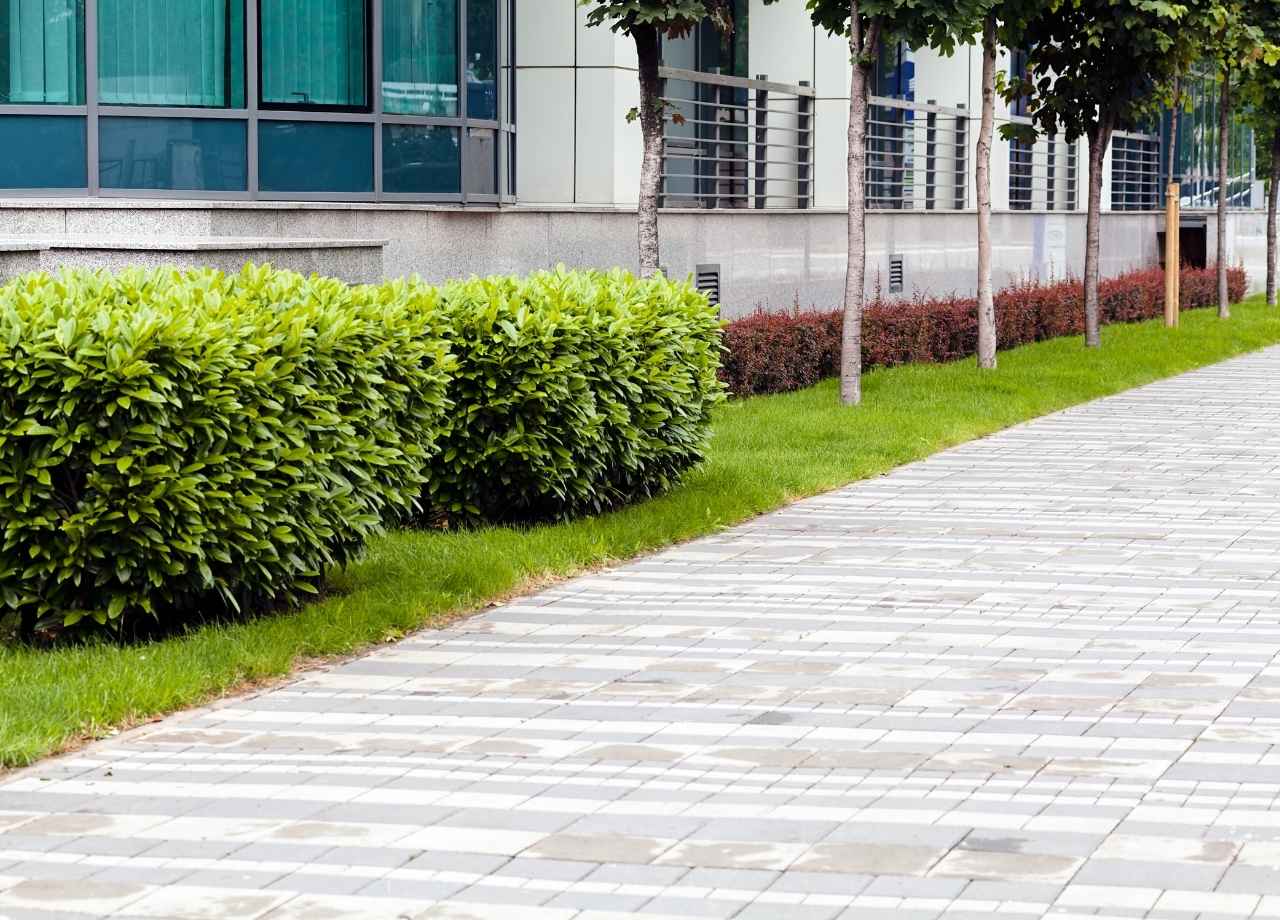
The exterior of a commercial property sets expectations before a visitor even walks through the door. Plants are often the first detail noticed—whether it’s a vibrant, low-maintenance bed outside a retail plaza or structured greenery framing a corporate campus. When selected and maintained well, commercial landscaping plants improve curb appeal, guide foot traffic, contribute to brand image, and reduce operational costs through shade, wind protection, and erosion control.
Yet not all plants are suitable for commercial settings. Facility managers must weigh aesthetics against durability, maintenance requirements, and local growing conditions. A plant that thrives in one climate zone may fail in another. Some varieties bring hidden costs through constant pruning, pest problems, or root intrusion. Others deliver consistent performance year-round with minimal intervention.
At National Facility Contractors, we work with property owners to create exterior environments that support functionality and longevity. Choosing the right plant material—and caring for it appropriately—makes a measurable difference in how commercial properties perform over time.
Understand the Role of Plants in a Commercial Setting
Plants serve a variety of functions in commercial environments. Some are visual features, used to soften architecture or highlight entryways. Others offer practical benefits such as noise buffering, privacy screening, or anchoring slopes to prevent runoff. In urban areas, trees help moderate heat around pavement-heavy zones, reducing cooling loads and improving pedestrian comfort.
Knowing the intended role of a planting zone is step one. Groundcover on a parking lot median will require different qualities than shrubs at an office entrance. Plants for a medical campus may need to be hypoallergenic and free of sharp thorns, while those near restaurants must discourage pests and allow for easy cleanup.
Plants aren’t just decoration—they interact with tenants, weather, utilities, and maintenance equipment. Treating them as assets rather than filler avoids costly errors down the line.
Choose Plants That Match the Microclimate
Many plant failures in commercial landscapes come from ignoring the microclimate—the specific light, soil, moisture, and wind exposure of a planting site. A full-sun plant will wither in shade. A drought-tolerant species will rot in poorly drained soil. Local hardiness zones provide a general guide, but microclimates are more specific and often more important.
For example, areas near tall buildings may receive less sun than expected. Sidewalks and asphalt reflect heat and increase evaporation, stressing plants not adapted to those conditions. Courtyards can trap cold air or amplify wind. Plants along high-traffic paths must tolerate compacted soil and occasional foot traffic.
Site evaluation should come before any plant selection. Test the soil. Observe sun patterns. Consider irrigation availability. Matching plant traits to site conditions is the most reliable way to build a resilient landscape.
Prioritize Low-Maintenance, Non-Invasive Species
In commercial settings, simplicity and predictability are assets. That’s why many facilities rely on low-maintenance plant selections that perform well with minimal attention. These plants don’t require weekly trimming, constant fertilization, or specialized care. They grow in controlled patterns, maintain their shape, and resist disease and pests naturally.
Avoid aggressive spreaders and invasive species. These may seem attractive at first—fast-growing, dense, inexpensive—but they often overrun other plantings, damage infrastructure, or require costly removal. Some jurisdictions even regulate or prohibit their use.
Native plants are often a smart choice because they are already adapted to local soil, rainfall, and temperature patterns. While not always the flashiest option, native or regionally adapted plants offer long-term reliability and lower water demands.
Consider Seasonal Interest and Color Rotation
A common mistake in commercial landscapes is planting for one season and leaving the rest of the year bare. A more effective approach considers year-round appeal. Evergreen shrubs provide winter structure. Spring bulbs add early interest. Summer blooms carry visual weight during peak tenant use. Fall foliage can offer vibrant transitions even after flowers fade.
Color rotation beds—typically used near entryways, signage, or public seating areas—should be planned for quick turnover. Choose plants with fast establishment, predictable bloom periods, and uniform growth. Avoid varieties that bolt quickly or have uneven size at maturity.
Where possible, mix textures and foliage colors so that plantings remain attractive even when not in bloom. This layered approach reduces the visual flatness that often plagues commercial beds during off-peak months.
Account for Visibility, Growth Habits, and Safety
In a commercial environment, plant placement must consider visibility and access. Overgrown hedges that block signage or window views reduce usability and safety. Trees with low-hanging branches can interfere with delivery trucks or parking lot lights. Spiky or toxic plants placed near walkways or play areas create liability risk.
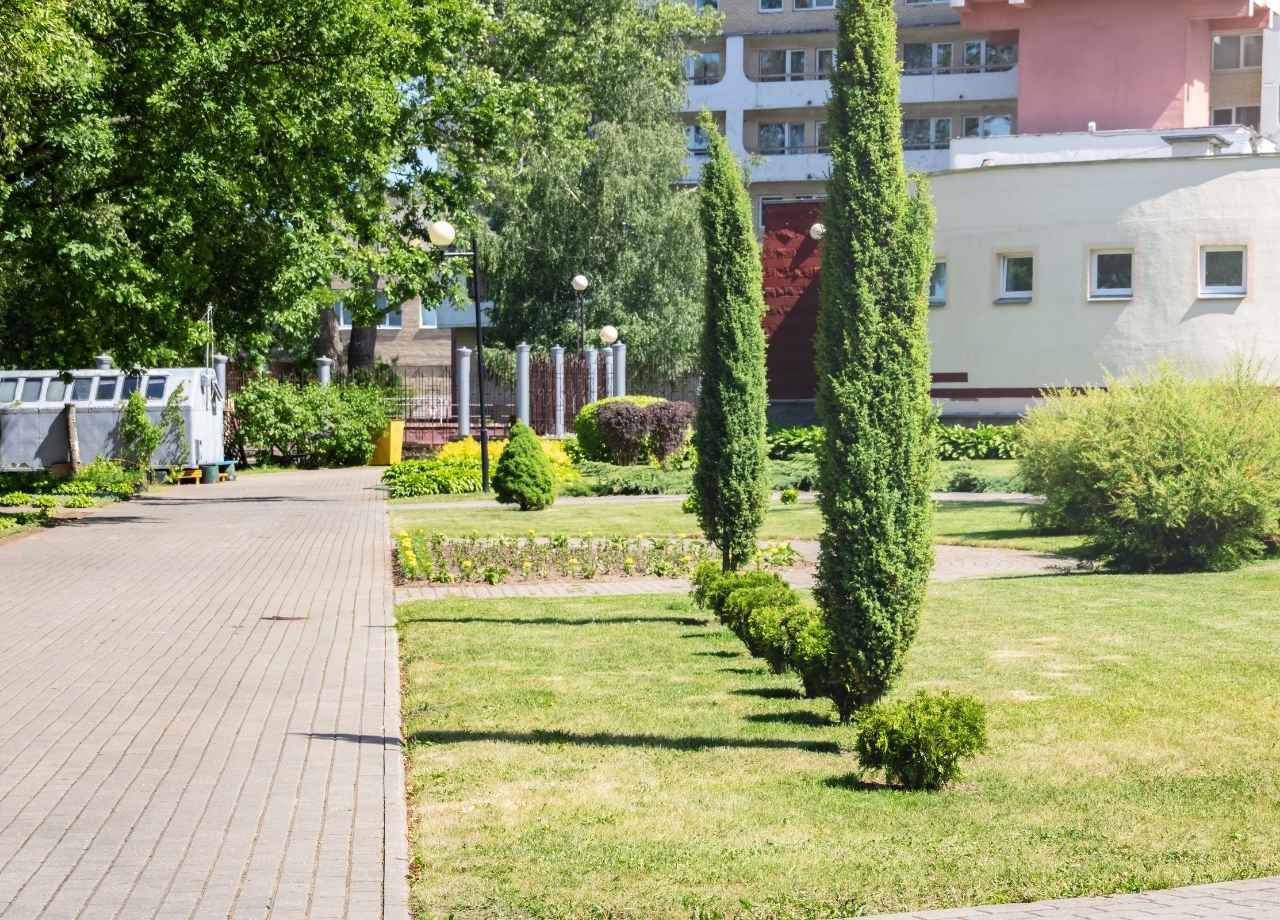
Plants should be scaled to their final size—not just their nursery pot dimensions. What looks modest at planting may soon overtake walkways, encroach on buildings, or obscure security cameras. Always account for mature height and width, root spread, and natural growth habit.
Layered plantings—tall in back, medium in the middle, low in front—help maintain clear sightlines and encourage natural containment. Grouping plants with similar maintenance needs also makes care more efficient, especially when automated irrigation or contract crews are involved.
Plan for Irrigation and Water Efficiency
No matter how tough a plant is, it still needs water to establish roots and survive stress periods. Commercial landscapes should include irrigation plans that match plant needs and water availability. Overwatering is as common as under-watering, especially when all plants are treated equally by zone timers.
Drip irrigation works well for shrubs and trees, minimizing water waste and delivering moisture directly to the root zone. Spray systems can be effective for turf but must be calibrated carefully to avoid runoff or misting hardscapes. Smart irrigation controllers that respond to weather conditions can significantly improve efficiency and lower utility costs.
Plants selected for drought tolerance should still receive regular water until fully established—often a full season or more. Once mature, these plants need less frequent watering but still benefit from monitoring during dry or hot spells.
Monitor and Maintain for Health and Appearance
Even low-maintenance plants need attention. Regular inspections help identify pest issues, nutrient deficiencies, or structural pruning needs before they escalate. Weed control is essential in keeping plant beds clean and reducing competition for nutrients and water. Mulching helps conserve soil moisture, suppress weeds, and insulate root systems, but it must be kept away from plant crowns to prevent rot.
Fertilization, if required, should follow soil test results. Blanket applications often do more harm than good, particularly in native or low-fertility soil environments where many commercial plants thrive naturally.
Trimming and deadheading should follow each species’ growth cycle—not just a monthly calendar. Over-pruning reduces flowering and weakens the plant. Under-pruning results in an unkempt, overgrown appearance.
When managed well, plantings don’t just survive—they mature into structured, healthy elements that anchor the entire site design.
Avoid Short-Term Trends
Flashy plants that show up in glossy catalogs or trendy commercial landscapes may not perform well in your region or setting. Avoid chasing trends that don’t align with your site conditions, budget, or long-term management capacity. Stick with proven performers tested in your area and backed by reliable nursery sources.
If you’re experimenting with new varieties or sustainable alternatives, do so on a limited basis and evaluate before scaling. A poorly suited plant installed across multiple sites can create widespread problems that outstrip any initial visual benefit.
Protect Your Investment with a Long-Term Plan
Plants take time to establish, and their value increases as they mature. A thoughtful maintenance plan protects that investment and avoids waste. Work schedules should be tied to plant biology, not just budget cycles. Documentation of all plant species, installation dates, irrigation details, and care routines helps maintain consistency across staff changes or service providers.
National Facility Contractors provides plant care services that align with long-term performance goals for commercial properties, ensuring the health of plant material and the integrity of surrounding infrastructure.