Manufacturing environments don’t tolerate inefficiency for long. A slight delay in compressed air supply, a temperature fluctuation on the production floor, or an unplanned equipment shutdown can ripple through an entire operation. Output drops. Schedules shift. Costs climb quickly.
That’s the difference between managing a standard commercial building and managing a manufacturing facility. In production environments, facilities are not just support functions. They are directly tied to output, quality, and uptime.
Integrated facilities management fits into this environment differently. It’s not about convenience or vendor consolidation. It’s about aligning infrastructure, maintenance, and support services with the pace and precision of production.
Facilities Are Part of the Production Chain
In manufacturing, the line between facilities and operations is thin.
Utilities like compressed air, chilled water, steam, and power are not background systems. They are production inputs. If any of them drift outside required parameters, the impact shows up immediately on the line.
Even environmental conditions matter. Temperature and humidity can affect material behavior, product quality, and equipment performance. In certain industries, slight variations can lead to rejects or rework.
This means facilities management cannot operate independently. It has to be synchronized with production requirements.
An integrated model allows that alignment to happen in a structured way.
Where Fragmented Models Start to Break Down
Many manufacturing sites still operate with separate vendors handling maintenance, utilities, cleaning, and support services. On paper, each function is covered.
In practice, gaps appear at the points where these functions intersect.
A maintenance team may focus on equipment uptime without visibility into energy performance. A cleaning contractor may not understand the sensitivity of certain production areas. Utility systems may be monitored separately from the assets they support.
When something goes wrong, it rarely stays within one category. A utility issue affects equipment. An equipment issue affects production. Production delays affect scheduling and delivery.
Fragmentation slows down response because coordination becomes the bottleneck.
Integrated facilities management removes that delay by connecting these functions into one operational layer.
Maintenance That Matches Production Cycles
In manufacturing, timing is everything.
Maintenance cannot simply follow a fixed schedule. It has to align with production cycles, planned shutdowns, and operational priorities.
An integrated model allows maintenance planning to be tied directly to production data. Equipment servicing can be scheduled during planned downtime instead of interrupting active operations.
Predictive maintenance becomes more effective when it includes data from both facility systems and production equipment. A motor drawing more power than usual, combined with changes in output performance, provides a clearer signal than either data point alone.
This reduces unplanned downtime, which is one of the most expensive problems in any manufacturing environment.
Utilities Management as a Core Function
Utilities are often treated as background infrastructure until something fails.
In reality, they require the same level of attention as production equipment.
Compressed air systems, for example, are frequently underestimated. Leaks, pressure drops, and inefficient operation can increase energy costs significantly while also affecting equipment performance.
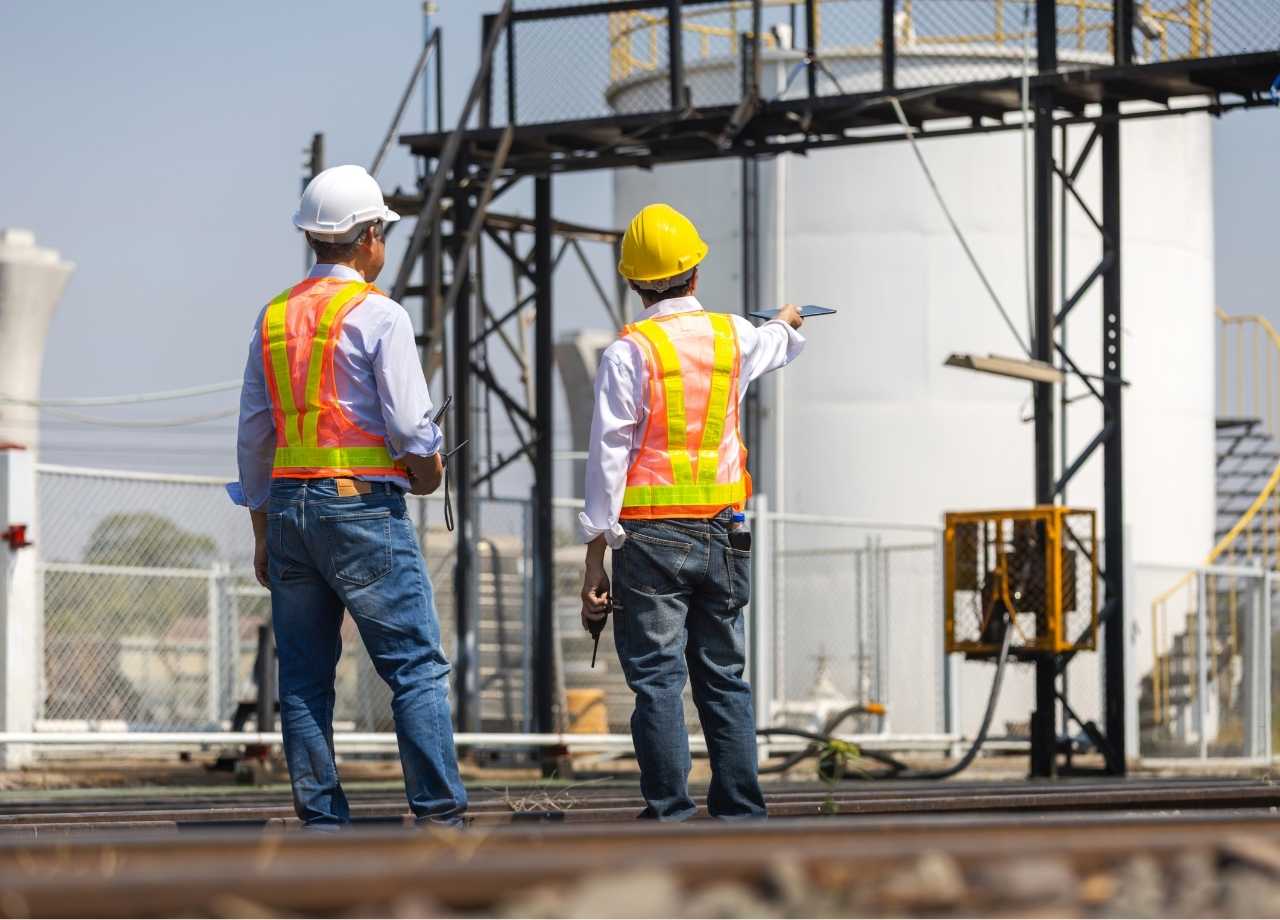
Chilled water systems, steam generation, and electrical distribution all need continuous monitoring. Variations in these systems can lead to inconsistent production conditions.
Integrated facilities management brings utilities into the same system as maintenance and operations. This allows for real-time monitoring, faster response, and better optimization.
Energy consumption can also be tied directly to production output, which helps identify inefficiencies that would otherwise go unnoticed.
Cleaning in Controlled Environments
Cleaning in manufacturing facilities is not just about appearance. In many cases, it directly affects product quality.
Dust, debris, and contamination can interfere with production processes, especially in industries like food processing, pharmaceuticals, and electronics.
Cleaning teams need to understand the operational environment. Certain areas require strict protocols. Others may need to remain undisturbed during production.
An integrated approach ensures that cleaning schedules, methods, and materials are aligned with production requirements. This reduces the risk of contamination while maintaining operational flow.
It also improves coordination between cleaning and maintenance teams, particularly in sensitive areas.
Data Becomes Operational, Not Just Informational
Manufacturing facilities generate a large amount of data, but it is often split between production systems and facility systems.
Integration changes how that data is used.
Maintenance records, utility performance, and production output can be analyzed together. Patterns start to emerge.
An increase in energy consumption may correlate with reduced equipment efficiency. Frequent minor maintenance issues may indicate a larger system problem developing.
When data is connected, decisions become more precise. Instead of reacting to isolated issues, teams can address underlying causes.
This improves both reliability and cost control.
Workforce Coordination on the Floor
Manufacturing sites involve multiple teams working in parallel—production staff, maintenance technicians, contractors, and support services.
Coordination becomes critical, especially in high-pressure environments.
An integrated facilities management structure creates a single workflow system. Work orders, updates, and priorities are shared across teams. This reduces confusion and ensures that everyone is working with the same information.
Response times improve because there is no need to route requests through multiple layers. Issues are addressed faster, which keeps production moving.
Safety and Compliance in High-Risk Environments
Manufacturing environments carry higher safety risks than most commercial facilities.
Equipment, chemicals, and high-energy systems require strict adherence to safety standards. Inspections, certifications, and maintenance records must be maintained accurately.

An integrated system centralizes compliance tracking. Safety checks, equipment inspections, and regulatory requirements are managed within the same platform used for daily operations.
This reduces the risk of missed requirements and ensures that documentation is always accessible.
It also supports a safer working environment by making potential issues visible earlier.
Scaling Across Multiple Plants
For manufacturers operating across multiple sites, consistency becomes a challenge.
Each plant may develop its own processes, vendors, and systems. Over time, this leads to variation in performance and cost.
Integrated facilities management provides a standardized framework that can be applied across locations. Processes remain consistent while still allowing for site-specific adjustments.
Performance can be compared across plants. Best practices can be identified and implemented more easily.
This level of visibility supports better decision-making at the organizational level.
It Comes Down to Uptime
Everything in a manufacturing facility leads back to one metric: uptime.
Facilities management plays a direct role in maintaining it. When infrastructure is stable, utilities are reliable, and maintenance is aligned with production, operations run smoothly.
Integrated facilities management brings these elements together in a way that reduces friction.
It removes the delays caused by disconnected systems. It aligns support functions with production needs. It provides visibility into how the entire operation is performing.
And in an environment where even small disruptions carry significant cost, that level of control makes a measurable difference.