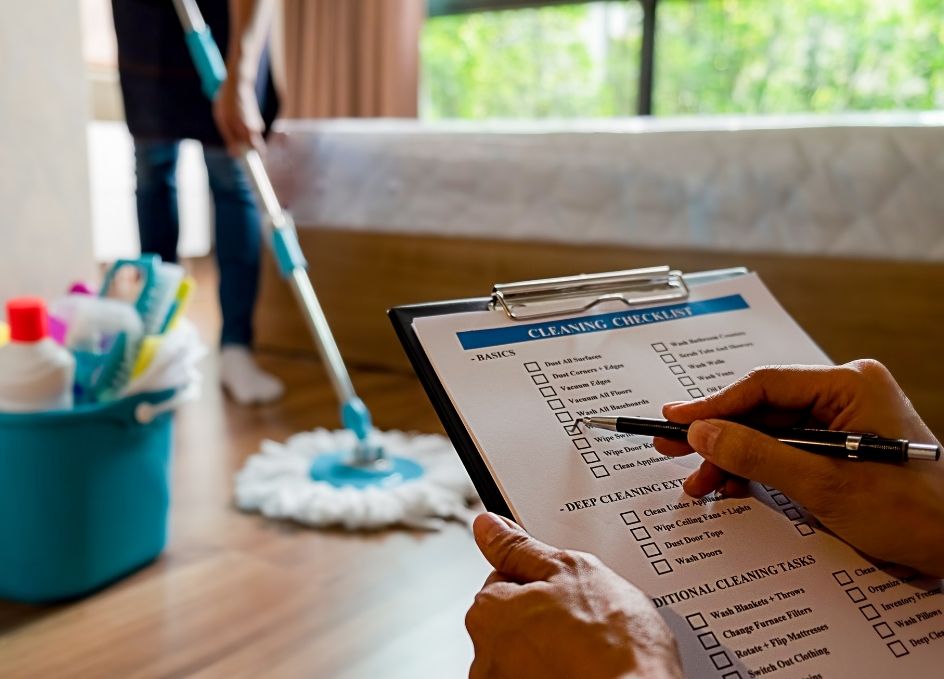
Cleaning a commercial building isn’t about going through the motions. It’s about creating a reliable system that keeps spaces safe, functional, and presentable, day after day. That kind of consistency starts with a strong janitorial checklist. Without it, cleaning turns into guesswork, and guesswork doesn’t cut it in environments where health, safety, and appearance matter.
Facilities vary, but the core responsibilities of a janitorial team follow a predictable structure. That structure ensures no task gets overlooked, whether it’s a high-traffic lobby or a back hallway nobody sees. A good checklist brings order to the work and makes it easy to maintain accountability—whether services are handled in-house or through a contractor.
Why a Janitorial Checklist Matters?
Every commercial space has different cleaning needs, but what makes a janitorial program effective is repeatability. A checklist eliminates ambiguity. It creates a roadmap for each shift, ensures alignment with service expectations, and helps management track performance without micromanaging.
More importantly, it helps identify gaps. If something’s not getting done—or not getting done well—it shows up in the checklist. That makes it easier to isolate problems early, retrain where necessary, or adjust schedules before small issues become bigger ones.
Daily Tasks That Keep the Facility Moving
The day-to-day items form the foundation of any janitorial plan. These are the tasks that protect health, uphold appearances, and reduce wear on building finishes. High-traffic areas, shared workspaces, and restrooms demand attention every shift. That includes emptying trash, wiping down touchpoints, vacuuming, sweeping, and mopping. Restrooms need to be restocked and sanitized. Entry points get cleaned and glass doors wiped to remove fingerprints and grime.
A good daily checklist also catches the easy-to-miss areas: behind doors, under desks, stair railings, elevator buttons, and shared appliances. These aren’t high-visibility until they become noticeably dirty. That’s why they need to be baked into the daily flow.
Weekly Items That Add Depth
Some jobs don’t need to be done every day, but leaving them off the radar leads to build-up and eventually damage. Weekly tasks fill the gaps between deep cleans and daily upkeep. That might include dusting vents and baseboards, polishing floors, cleaning inside microwaves and refrigerators, or disinfecting office chairs and fabric surfaces.
These are the details that make a facility feel maintained—not just cleaned. Staff and tenants may not see when a vent is dusted or when a conference table is disinfected, but they notice when those things aren’t being done regularly.
Monthly and Periodic Items That Preserve the Building
Long-term care belongs on the checklist too. These items may not happen every shift or even every week, but they’re essential to keeping the facility in good condition. Window washing, carpet extraction, machine scrubbing of hard floors, and high dusting all fall into this category.
They take more time, often require specialized equipment, and need to be scheduled to avoid disrupting operations. But without them, building materials wear out faster, and basic cleaning becomes harder. Including these on a rotating monthly or quarterly list keeps the workload balanced and the building in top shape.
Area-Specific Customization Keeps the Checklist Relevant
No two buildings are exactly alike. A law office doesn’t need the same cleaning schedule as a fitness center. A clinic has entirely different hygiene standards than a distribution center. That’s why every janitorial checklist should include area-specific tasks.
Break rooms need attention to appliances, countertops, sink drains, and trash bins that attract pests. Restrooms demand precise product use and touchpoint sanitation. Waiting areas need furniture vacuuming and attention to first impressions. Storage areas, IT closets, and stairwells still count—they just fall off the radar when the checklist isn’t customized.
The best checklists reflect how the building is used, not just how it’s laid out.
Accountability Lives in the Details
An effective janitorial checklist doesn’t just list what needs to be cleaned—it defines what “done” looks like. General statements like “clean bathroom” or “wipe desks” aren’t enough. Clarity prevents miscommunication. “Sanitize all restroom fixtures, refill dispensers, remove trash, and mop floors with disinfectant” leaves no room for interpretation.

Clear instructions also protect teams from cutting corners, especially when they’re working on tight schedules. And when tasks are tracked—whether through software or simple sign-offs—there’s a record that shows whether the work is being done consistently.
Day Porter vs Night Crew: Different Roles, Same Standards
A daytime porter might follow a different routine than a nighttime cleaning team, but both should be working from versions of the same master checklist. Day porters focus on restocking, quick cleanups, and maintaining appearances while the building is in use. The evening team handles the full clean once the facility clears out. Checklists ensure those roles support each other without duplicating or skipping work.
Without a shared reference, you get overlaps in some areas and blind spots in others. A good checklist bridges that gap.
How Janitorial Checklists Improve Facility Management
A detailed checklist gives property managers a direct line to service quality without hovering over the team. It turns subjective feedback—like “the office didn’t feel clean”—into specific, actionable items. It also helps with staffing decisions. If the checklist grows but the team doesn’t, it’s easy to show when more labor hours are needed. If complaints increase, it becomes easier to trace what’s being missed.
Checklists can also support compliance. Certain industries have standards for cleanliness, safety, and disinfection. Being able to show that every requirement is on the list—and tracked—helps protect both the facility and the contractor.
Good Checklists Don’t Stay Static
What works when a building opens may not work a year later. Occupancy shifts. Layouts change. High-traffic zones evolve. The janitorial checklist needs to evolve with them. That means revisiting it quarterly or during major changes to make sure it still supports the real conditions on site.
A facility that ignores the checklist until complaints come in is already behind. But one that updates and adapts the list as the building changes will stay ahead of problems and reduce long-term maintenance needs.
What Belongs on Every Checklist
The exact items vary, but a strong checklist typically covers these zones:
- Entryways and lobbies
- Restrooms
- Offices and workstations
- Conference rooms
- Hallways and stairwells
- Elevators
- Break rooms or kitchens
- Trash disposal areas
- Specialty zones like gyms, labs, or exam rooms
Within those, each task should be specific, repeatable, and measurable. That’s what turns routine work into professional service.
Checklist-Driven Cleaning Delivers Better Outcomes
A well-executed janitorial checklist doesn’t just help the cleaning team—it improves the entire facility. Cleanliness isn’t left to interpretation. Safety and health risks are minimized. Repairs get delayed less often because grime isn’t allowed to build up on surfaces or flooring. And most importantly, everyone in the building notices the difference, even if they can’t pinpoint exactly why the space feels cleaner and more comfortable.
Clean buildings don’t stay that way by accident. They’re maintained with consistency, clarity, and systems that work—and a detailed janitorial checklist is at the center of that system.