Facility managers and business owners often use the terms janitorial services and commercial cleaning interchangeably. That’s understandable. Both involve cleaning, both support the upkeep of your building, and many service providers offer both. But the truth is, they’re not the same thing, and knowing the difference can save you money, improve results, and reduce operational headaches.
If you’ve ever hired a cleaning crew expecting a deep carpet extraction and ended up with a light vacuum and trash pickup, you’ve likely run into this confusion firsthand.
So, what exactly separates janitorial services from commercial cleaning? Let’s break it down in practical terms.
What Janitorial Services Really Mean
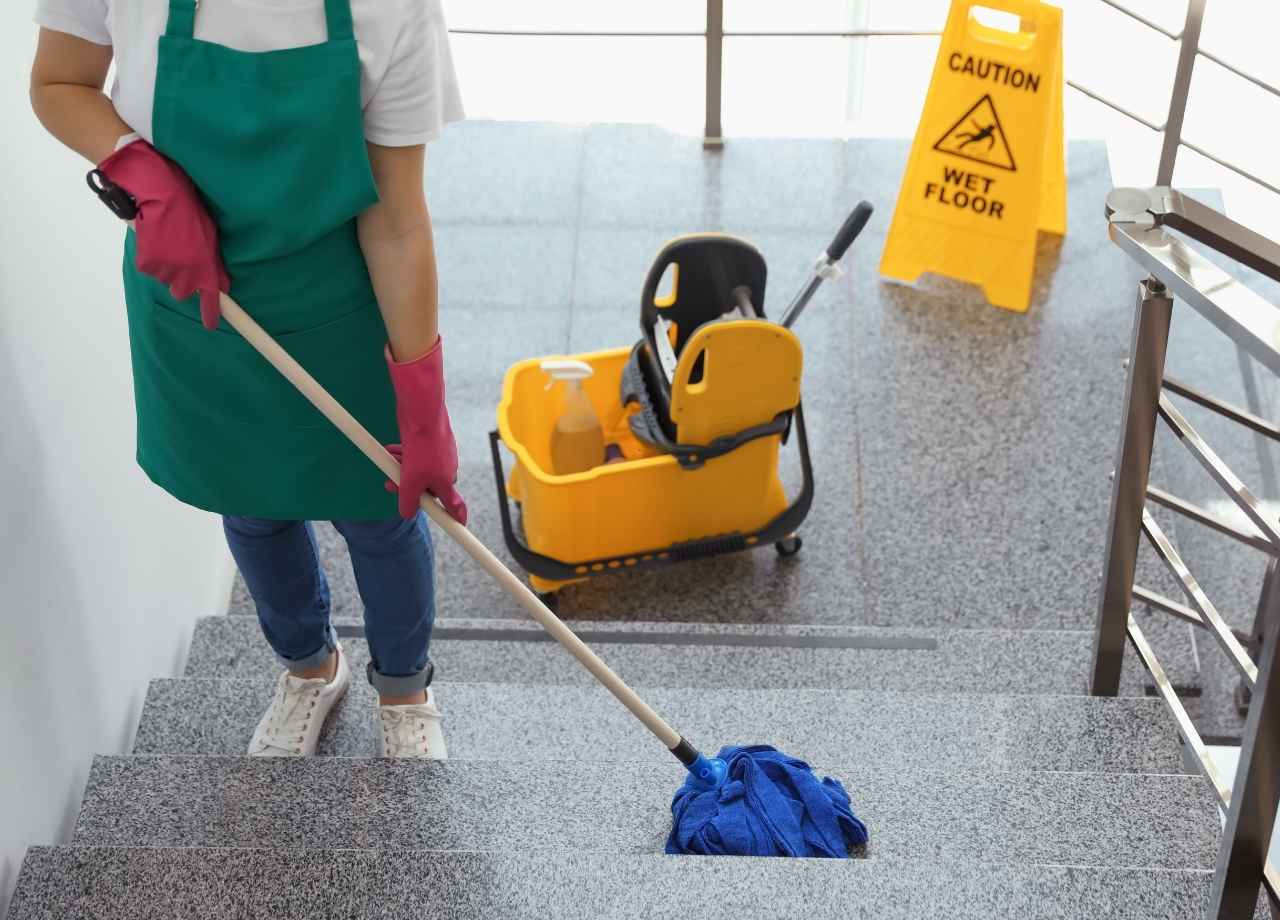
Janitorial services focus on the day-to-day upkeep of a facility. Think of this as the consistent, routine cleaning that keeps your space presentable, functional, and safe for daily use. This isn’t heavy-duty cleaning, it’s maintenance-level work done on a recurring schedule, often daily or several times a week depending on how your facility operates.
If your building sees regular foot traffic, restrooms that need to be restocked, and floors that pick up visible debris by the end of each day, that’s where janitorial services come in. These teams handle the basics, emptying trash, wiping down surfaces, mopping floors, vacuuming common areas, and keeping restrooms clean enough that no one second-guesses using them. They’re also responsible for restocking supplies like toilet paper, soap, and paper towels.
In many facilities, janitorial staff work after hours. Their job is to quietly reset the space so it’s ready to go for the next day.
It’s not glamorous work, but it’s foundational. Without this layer of consistent upkeep, even the most expensive commercial cleanings won’t make a lasting difference.
What Commercial Cleaning Actually Covers
Commercial cleaning picks up where janitorial services leave off. It’s not routine. It’s planned. It’s the kind of work that addresses long-term cleanliness, deep sanitation, and the restoration of surfaces that have started to show wear.
Commercial cleaning includes services like carpet shampooing, floor stripping and waxing, pressure washing, post-construction cleanup, and full-surface disinfection. These tasks often require specialty equipment, trained technicians, and scheduling that works around your operating hours.
You don’t need this level of cleaning every day. But when you do need it, there’s no substitute. Commercial cleaning gets into the places janitorial work doesn’t touch. It’s how you reset a facility, prepare it for inspections, or restore it after months of high-volume use.

The key distinction here is depth. Janitorial services keep things clean. Commercial cleaning makes them feel clean again, like new, or close to it.
Where People Get It Wrong
One of the most common issues we see is misalignment between expectations and services. A client assumes that regular janitorial service includes carpet deep cleaning or floor refinishing. But when those things aren’t addressed, frustration builds.
It works the other way, too. Sometimes a business schedules a full commercial cleaning when all they really needed was someone to stay on top of the daily upkeep. It’s an expensive way to chase results that routine service would’ve handled more efficiently.
This is why it’s important to clearly define the scope of work when setting up your service contract. Janitorial and commercial cleaning serve different purposes. One doesn’t replace the other, they complement each other.
The Overlap and the Need for Both
The best-run facilities have both types of service built into their operations. Janitorial teams handle the rhythm of daily cleanliness. Commercial crews come in on a scheduled basis to handle the heavier jobs that janitorial teams aren’t equipped for.
Let’s say you manage a mid-size office building. Your janitorial crew vacuums, dusts, and wipes surfaces five nights a week. That keeps things orderly. But once a quarter, your carpet shows signs of wear, or your restroom tile starts to look dingy no matter how often it’s mopped. That’s your cue for commercial cleaning.
Without that combination, you’ll either overpay for deep cleans you don’t need every week, or underclean the space and let grime build up slowly until it becomes a problem.
It’s not just about appearance, either. Deep cleaning impacts air quality, health standards, and the lifespan of your flooring and furniture. When done right, commercial cleaning supports your investment in the building.
How to Choose the Right Mix
Every facility is different. A medical office with patient turnover every 15 minutes needs a different approach than a distribution center or a school. What matters is that the cleaning plan is tailored to your space, your usage patterns, and your risk profile.
Some clients want daily janitorial service and twice-a-year deep cleaning. Others might need monthly commercial disinfection services layered into a lighter janitorial routine. There’s no one-size-fits-all plan, but there is a right balance, and it usually starts with a walkthrough of your facility and a conversation about priorities.
Vendors who provide both janitorial and commercial services are usually in the best position to guide this process. They can identify what needs to happen daily versus what needs to be scheduled, and they’ll have the resources to handle both without bringing in outside crews.
The result? Cleaner spaces, fewer service gaps, and one point of accountability for everything.
Understanding the difference between janitorial services and commercial cleaning isn’t just a matter of terminology. It’s the foundation for building a cleaning program that works.
Janitorial services handle your everyday needs, trash removal, restrooms, surface cleaning, and keeping things functional and orderly. Commercial cleaning steps in when the job requires more effort, more equipment, and deeper expertise.
If you’re getting poor results from your current cleaning setup, there’s a good chance the problem isn’t the people, it’s the scope. Aligning your expectations with the right kind of service can solve issues before they show up on a work order or a tenant complaint.
The best service providers understand this difference and will help you build a plan that brings both into focus. Clean buildings don’t just happen, they’re the result of planning, coordination, and knowing which tools to use when.