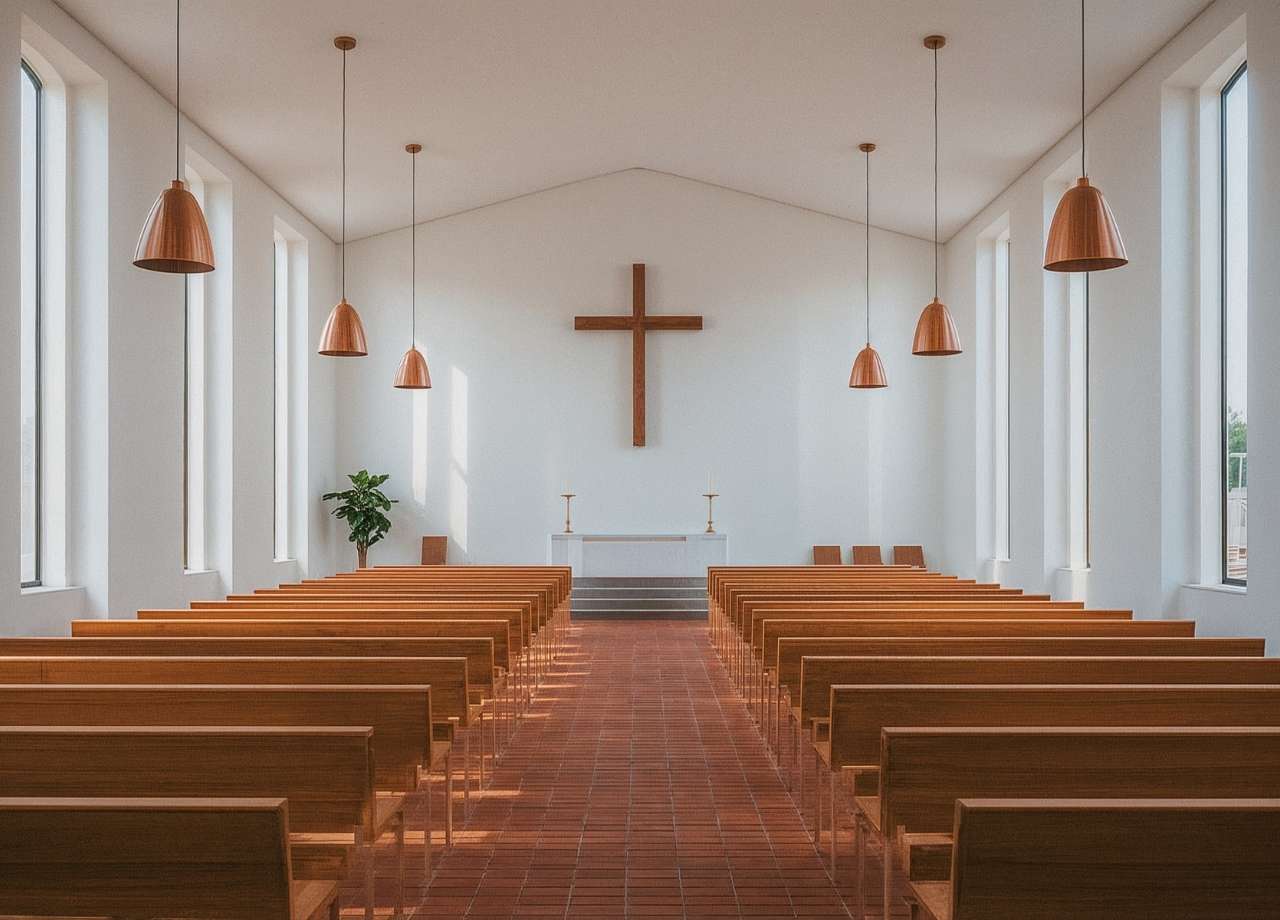
A church is more than a building. It is a place of refuge, community, reflection, and connection. The physical condition of a church matters. When parishioners and visitors walk through the doors, they should experience an environment that reflects care and respect. Cleanliness contributes to that experience. It also supports health, safety, and the longevity of the facility itself. Church janitorial services are not an afterthought. They are essential to maintaining a sacred space.
Cleaning a church presents distinct demands compared with commercial office spaces or typical retail environments. Worship areas have high ceilings and delicate finishes. Some spaces used only once a week are filled with heavy foot traffic on Sundays. Classrooms, fellowship halls, and restrooms require regular attention. Seasonal events and special services create spikes in usage. An effective church cleaning program anticipates these needs.
This article explores what church janitorial services entail, why specialized cleaning matters, key elements to consider when establishing a cleaning plan, and how professional services can support your church’s mission.
The Unique Cleaning Needs of Churches
Church buildings combine multiple types of spaces under one roof. That variety creates cleaning challenges that differ from a standard office space.
Sanctuary areas often feature hardwood floors, carpeted aisles, upholstered pews or chairs, vaulted ceilings, stained glass, and delicate liturgical furnishings. These surfaces require gentle but thorough cleaning techniques. Dust and pollen accumulate where windows are high, and air movement is limited. Carpeted areas must be groomed regularly to maintain appearance without damaging fibers.
Restrooms in churches must accommodate varying usage patterns. On Sunday mornings, these spaces may experience heavy use within a short period of time. In between services, restrooms need rapid turnaround cleaning to ensure they remain stocked, sanitary, and free of odors.
Fellowship halls and kitchens are another set of high-demand areas. Food service and social gatherings expose countertops, floors, and fixtures to spills and debris that require specific cleaning standards to maintain health guidelines.
Classrooms or meeting rooms used for educational programs, youth groups, and community events demand flexible cleaning schedules that align with programming and ensure surfaces are disinfected between groups.
Outdoor spaces such as entryways, walkways, and parking lots are also part of the overall janitorial scope. Leaves, dirt, and trash accumulate rapidly, especially in busy seasons.
Understanding these unique needs helps church leaders make informed decisions about the type and frequency of cleaning required.
Why Professional Janitorial Services Matter for Churches
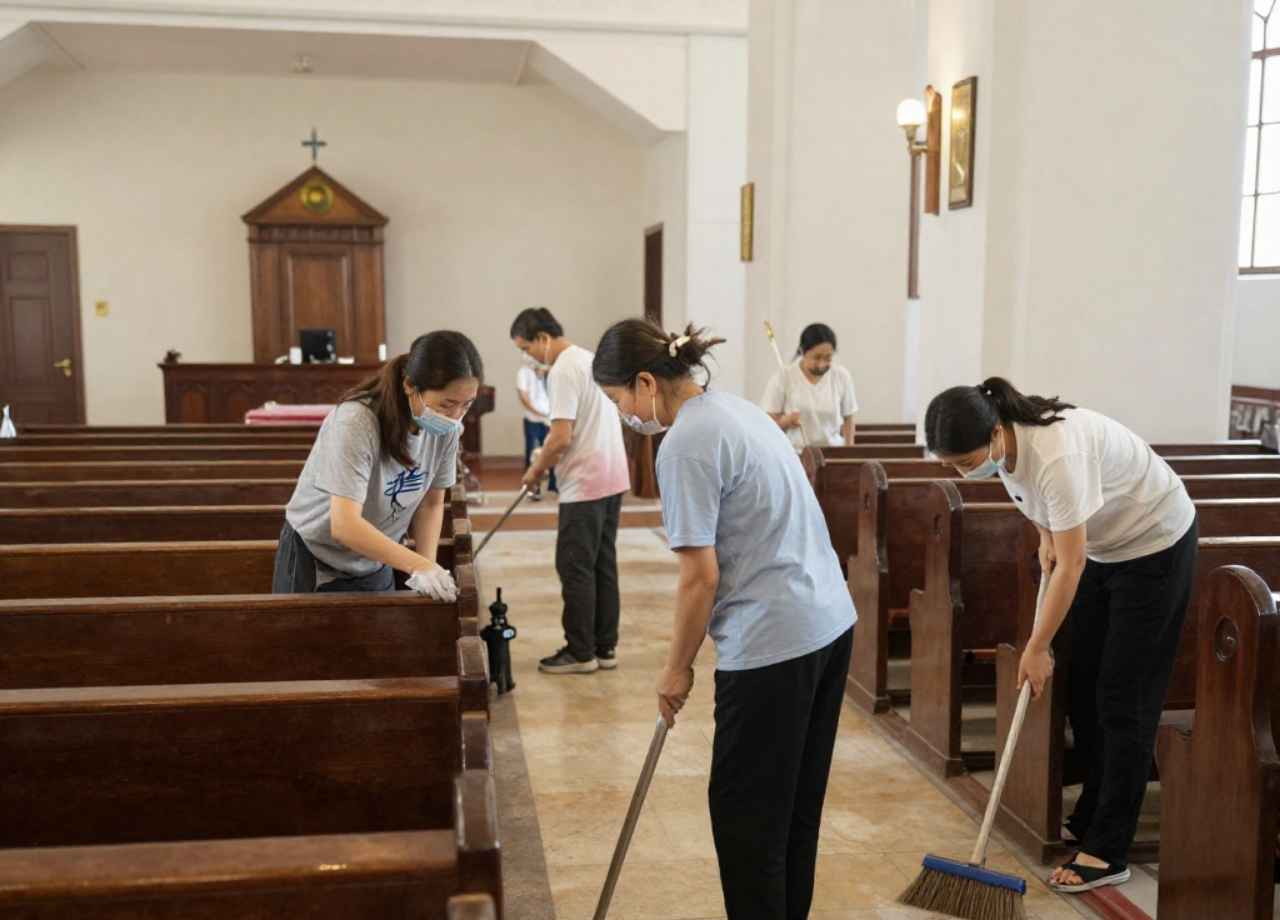
Many churches start with volunteer cleaning teams. There is value in community members giving time and effort. However, volunteer cleaning alone has limitations. Volunteers may not have access to commercial-grade equipment, effective cleaning products, or training on safe handling and proper techniques. Incomplete cleaning can lead to long-term damage to surfaces, missed areas that harbor bacteria, or inconsistent standards across spaces.
Professional janitorial services bring experience and systems designed for thorough, repeatable results. Trained staff understand how to care for a variety of surfaces without causing damage. They follow proven processes to ensure restrooms, floors, and high-touch areas are cleaned and sanitized consistently. A professional service can tailor its approach to the specific needs of the church facility rather than applying a generic checklist.
Health and hygiene concerns are especially important in environments where people gather closely. Professional janitorial services do more than sweep and mop. They disinfect high-touch points such as door handles, light switches, handrails, and shared furniture. Disinfection protocols are especially critical during flu seasons or viral outbreaks.
Outsourcing cleaning also allows church leadership and volunteer teams to focus on ministry and programs rather than the logistics of daily maintenance.
What Church Janitorial Services Typically Include
A comprehensive church janitorial service should cover the full spectrum of cleaning needs. While specific services vary by contract, most include the following components.
Sanctuary Cleaning: Dusting and wiping down pews or seating, vacuuming carpet aisles, sweeping and mopping hard surface floors, removing debris, and cleaning entrance areas. Careful attention to delicate finishes and sacred spaces is essential.
Restroom Maintenance: Regular cleaning and sanitizing of toilets, sinks, mirrors, and floors. Restocking consumables such as soap, paper towels, and toilet tissue. Addressing odor control and ensuring fixtures are functioning properly.
Classrooms and Meeting Spaces: Sweeping, vacuuming, wiping down tables and chairs, cleaning whiteboards or presentation surfaces as needed, and sanitizing high-touch items.
Fellowship Halls and Kitchens: Cleaning countertops, wiping down appliances where permitted, mopping floors, and attending to spills. Sanitizing tables and chairs after events.
High-Touch Surface Disinfection: Focused cleaning of frequently touched surfaces to reduce the spread of germs. This includes light switches, door handles, railings, and shared equipment.
Floor Care: Depending on floor type, this may include vacuuming, sweeping, mopping, buffing, or periodic deep cleaning. Hardwood floors, tile, and carpet require different approaches.
Trash Removal and Recycling: Emptying trash receptacles from all areas, replacing liners, and managing recycling per church guidelines.
Seasonal or Event Cleaning: Pre- and post-event cleaning for weddings, funerals, holiday services, and special events. This service ensures that the building is prepared ahead of time and restored afterward.
Establishing an Effective Cleaning Schedule
The frequency and timing of cleaning should reflect how your church is used. A facility that supports multiple ministries throughout the week has different needs than one used only on weekends. Establishing the right cleaning cadence begins with an assessment of usage patterns.
Daily cleaning addresses areas that see frequent foot traffic, such as restrooms, entryways, and fellowship spaces. High-touch surface disinfection may be part of daily routines. Weekly deep cleaning is often scheduled for sanctuary areas once services are complete. Monthly or quarterly tasks include deep carpet cleaning, window washing, and floor maintenance.
Collaboration between church leadership and the janitorial provider ensures the cleaning schedule aligns with service times and activities. For churches with evening gatherings or weekday programs, janitorial services must operate in a way that does not interfere with church operations.
Safety and Compliance in Church Janitorial Services
Safety is fundamental. Cleaning professionals should be trained in the safe use of chemicals, proper lifting techniques, and the handling of equipment. SDS (Safety Data Sheets) for cleaning products should be readily available. A church should receive clear communication about what products are used, especially if there are concerns about allergies or sensitivities within the congregation.
Compliance with local health and environmental regulations matters, especially for waste disposal and chemical use. A reputable janitorial service maintains appropriate insurance coverage, including liability and worker’s compensation. This protects the church in the event of accidents or damage.
Security procedures are also important. Janitorial staff often work when the facility is unoccupied. Clear protocols for access, key handling, alarm systems, and privacy ensure the safety of both property and information.
Clear Communication and Accountability
A successful janitorial partnership depends on communication. Establishing expectations up front prevents misunderstandings. Written contracts that specify tasks, frequency, performance standards, and pricing provide clarity. Regular check-ins and walkthroughs with the cleaning provider help address issues promptly.
Feedback mechanisms allow staff and church members to report concerns. Timely response to cleaning issues demonstrates reliability and reinforces trust.
The Cost of Church Janitorial Services
Churches often operate under tight budgets. Cost is always a factor in decisions about facility maintenance. It is important to consider cost in relation to value. A lower price that sacrifices quality can lead to poor outcomes, increased wear on surfaces, and more frequent repairs or replacements. A higher-quality service with trained staff, reliable scheduling, and proper equipment delivers consistent results that protect the facility.
When evaluating pricing, consider what is included in the service. Some providers include supplies and equipment in the price, while others charge these separately. Transparent pricing allows church leaders to budget effectively and avoid unexpected expenses.
Church janitorial services play a crucial role in maintaining a safe, healthy, and welcoming environment. A well-maintained facility supports the mission of the church by enhancing the experience for parishioners and visitors. Clean spaces reflect respect for the people who come through the doors, and they contribute to the overall comfort and dignity of worship.
Choosing the right janitorial partner requires thoughtful evaluation of cleaning needs, clear communication about expectations, and an understanding of how professional services support the life of your church. When executed thoughtfully, janitorial services become a dependable foundation that supports every aspect of church operations.