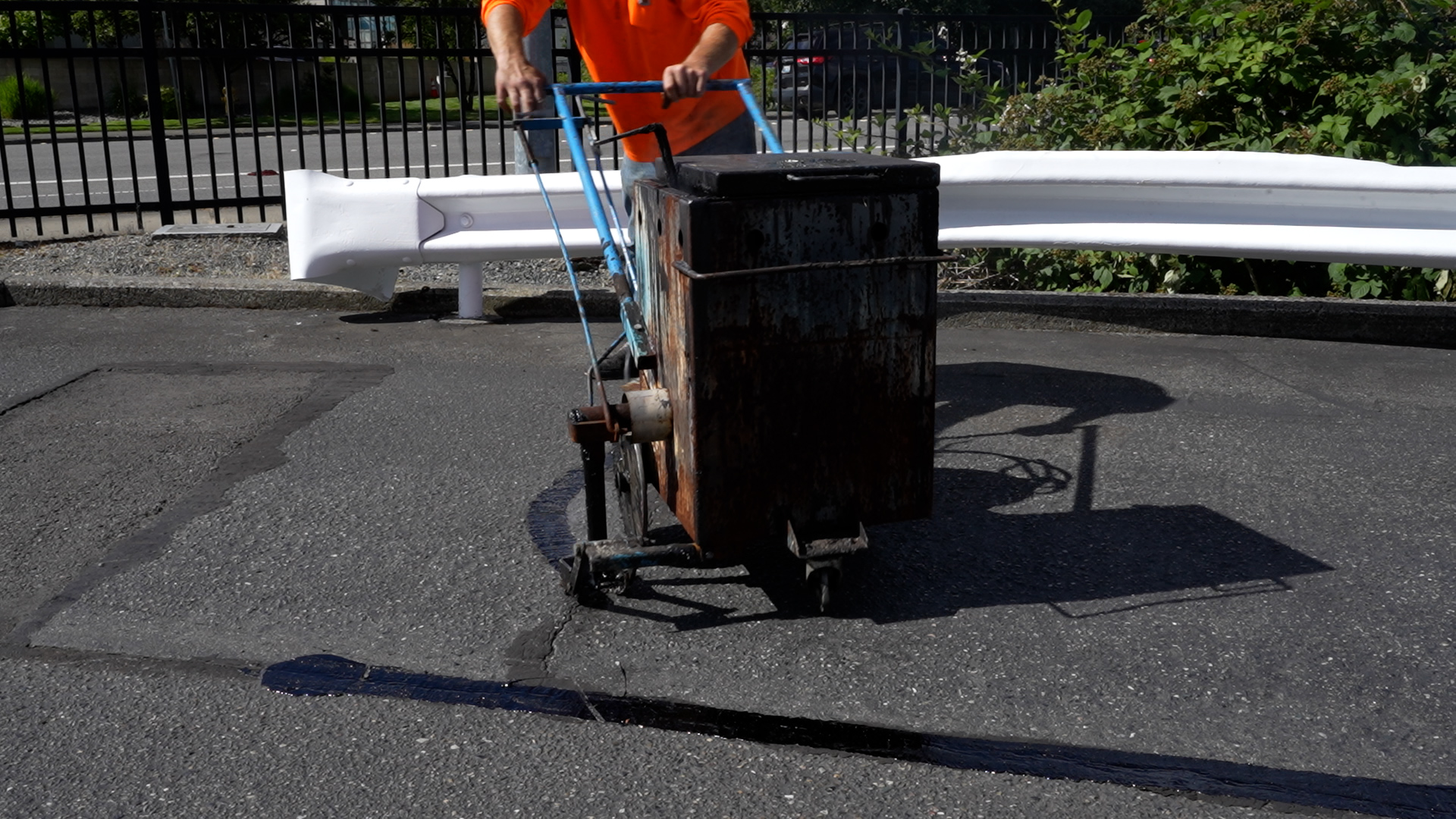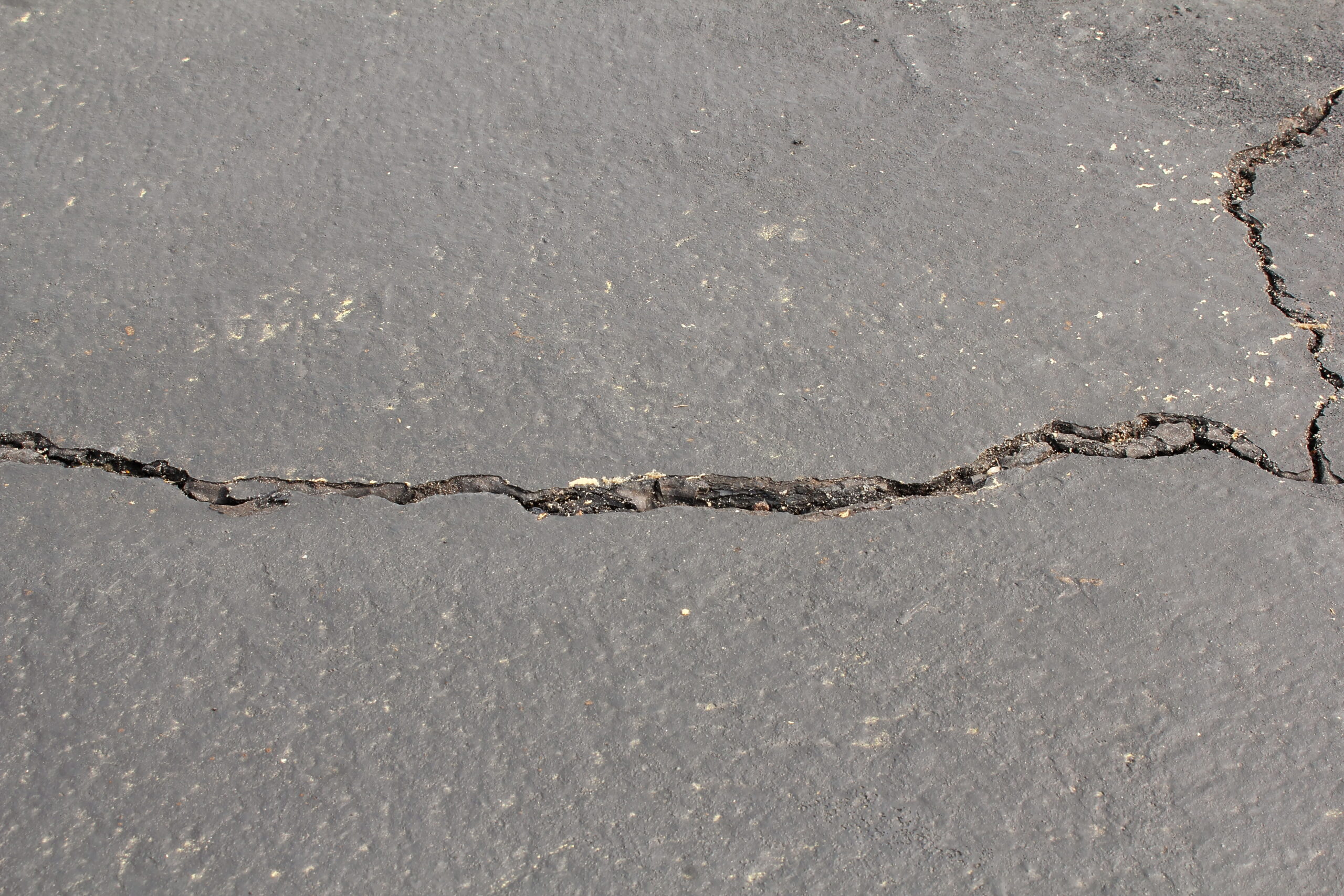
Freeze-thaw pavement damage can become a concern when existing cracks, moisture, and changing temperatures begin working together. As summer gives way to cooler weather, September offers facility managers a useful opportunity to identify those conditions before repeated freezing and thawing become part of the equation.
A crack in asphalt or concrete creates an opening where water may collect or move into the pavement system. When temperatures eventually fall below freezing, that moisture can freeze and expand. When temperatures rise again, it thaws. Repeated cycles can contribute to further deterioration, particularly where pavement already has cracking, drainage problems, weakened supporting materials, or other existing damage.
That does not mean every crack will become a pothole when winter arrives. Pavement performance depends on several factors, including the type and extent of cracking, drainage, traffic loads, pavement structure, previous repairs, and local weather conditions. The important step for facility managers is recognizing where those factors are beginning to overlap.
September gives us a good time to do exactly that. Summer pavement conditions are still easy to see, rainfall can reveal where water collects, and colder weather is approaching in many parts of the country. A crack that appears relatively unchanged during warm, dry weather may tell a different story once moisture and colder temperatures enter the picture.
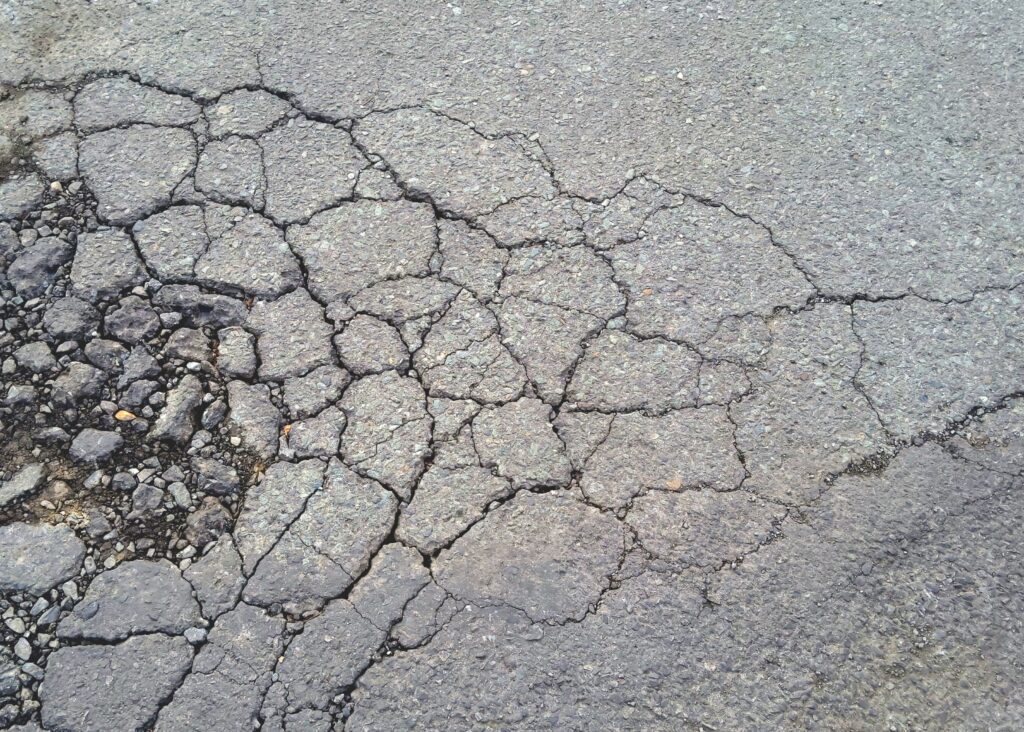
Start With the Crack You Can See
A pavement crack is visible evidence that movement or deterioration has occurred.
In asphalt, cracks may develop from aging, repeated traffic loads, temperature-related movement, pavement structure, drainage conditions, or deterioration beneath the surface. Concrete also develops cracks for several reasons, including shrinkage, loading, settlement, movement, and environmental conditions.
The appearance of the crack matters.
A narrow isolated crack across an otherwise serviceable asphalt surface tells a different story than interconnected alligator cracking across a heavily traveled drive lane. A crack near a settled catch basin deserves different consideration than a similar-looking crack in a stable parking stall.
Instead of recording only that a crack exists, document its location, pattern, surrounding pavement condition, and any nearby drainage concerns.
Context makes the observation more useful.
What Happens When Water Enters a Pavement Crack?
Water follows available paths.
When rain or melting snow reaches an opening in pavement, some moisture may move below the surface. What happens next depends on the pavement structure, drainage, soil conditions, severity of the opening, and other site-specific factors.
Commercial asphalt is a pavement system rather than a single layer of black material. The asphalt surface relies on supporting materials beneath it to carry traffic loads. When those supporting layers are affected by excessive moisture or poor drainage, pavement performance can suffer.
Traffic continues regardless of what is happening underneath.
Cars, delivery vans, refuse trucks, tractor-trailers, and other vehicles continue applying loads to the surface. If pavement support has weakened, repeated loading can contribute to additional cracking, deformation, or material loss.
This is one reason a visible crack should not always be viewed as a purely cosmetic condition.
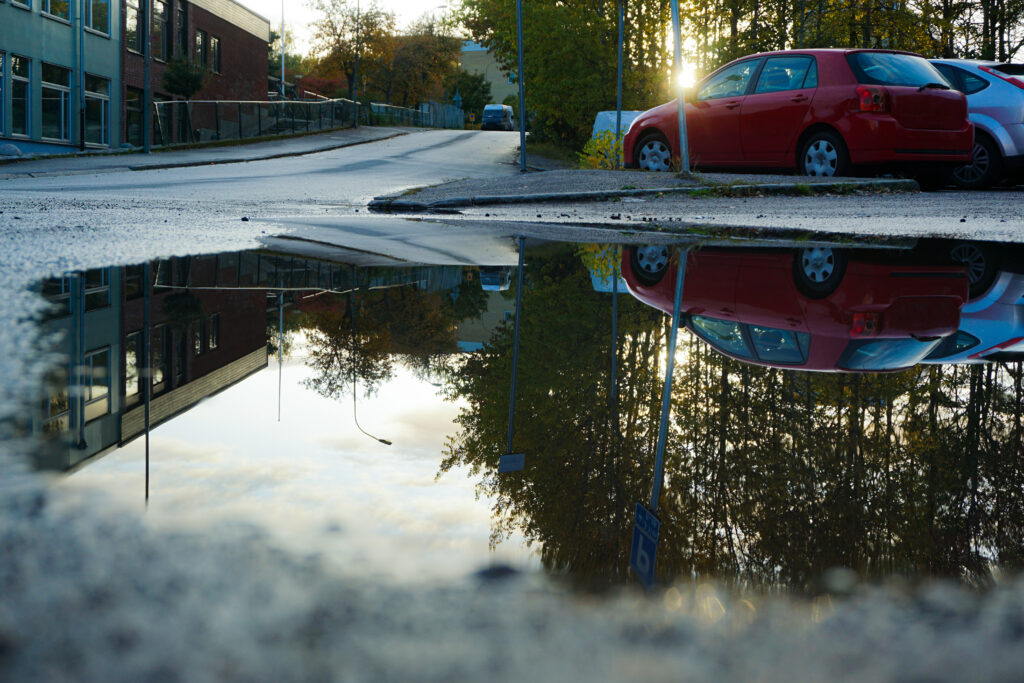
Why September Rain Can Be Useful
Rain can interrupt exterior work, but it can also improve an inspection.
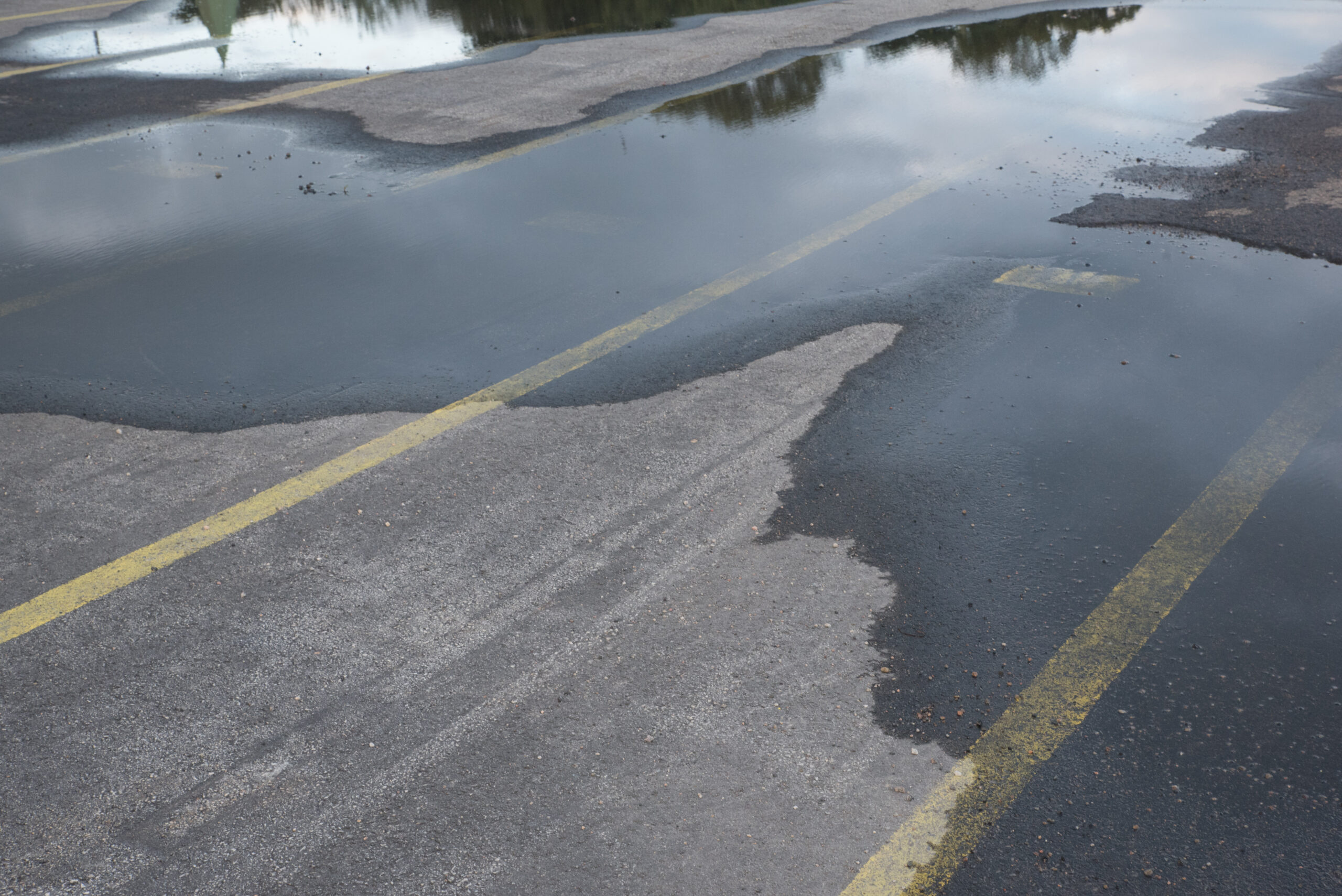
Walk the property after a rainfall and look at the cracks you have already documented. Are they holding water? Is water flowing across them? Are they located near a recurring puddle? Does moisture remain in the area after the surrounding pavement begins drying?
Then look beyond the cracks.
A recurring drainage pattern may explain why one section of pavement deteriorates faster than another. Water may be moving toward a low area, collecting along a curb, remaining around a catch basin, or flowing from landscaping onto pavement.
This kind of observation can help facility managers connect visible pavement deterioration with conditions elsewhere on the property.
A dry-day inspection tells you what the pavement looks like. A wet-day inspection can tell you how the site behaves.
When Colder Temperatures Enter the Equation
Water becomes particularly important when temperatures begin crossing the freezing point.
If moisture is present within pavement cracks, joints, or other openings and temperatures fall below freezing, that water can freeze. Water expands when it freezes, which can place additional pressure within existing openings and surrounding materials.
When temperatures rise, the ice thaws.
Repeated freezing and thawing can contribute to continued deterioration, particularly where pavement already has cracks, moisture infiltration, drainage problems, or weakened supporting materials.
Traffic adds another variable. Commercial properties do not stop operating simply because temperatures fluctuate. Vehicles continue moving over pavement while these environmental changes occur.
The result can be a cycle in which an existing weakness gradually becomes more noticeable.
Facility Management Term: Freeze-Thaw Cycle
A freeze-thaw cycle occurs when temperatures move below and above the freezing point, causing water to freeze and later thaw.
For pavement, the concern is not simply that the air becomes cold. Moisture must also be part of the equation.
That distinction matters. Cold weather by itself does not automatically create pavement failure. Existing openings, available moisture, drainage conditions, pavement structure, and repeated temperature changes all influence how a surface responds.
For facility managers, the practical lesson is straightforward: understand where water is getting into or collecting around pavement before repeated freezing conditions begin.
Not Every Crack Is the Same
One of the easiest mistakes in pavement maintenance is treating all cracks as interchangeable.
They are not.
A transverse crack generally runs across the direction of travel. A longitudinal crack runs in roughly the same direction as traffic or along pavement joints. Edge cracking develops near pavement boundaries. Alligator or fatigue cracking forms interconnected patterns that can indicate more substantial pavement distress.
Concrete introduces another distinction. Some joints are intentionally placed to accommodate or control movement. A properly functioning joint should not automatically be treated as damage simply because it creates a visible line through the concrete.
This is why the repair should match the condition.
Some cracks in otherwise serviceable asphalt may be candidates for crack sealing. Other cracking may indicate deterioration that requires a different repair approach. Widespread fatigue cracking, settlement, recurring failures, or damaged pavement around drainage structures deserves a broader evaluation.
Simply filling every visible opening does not guarantee that the underlying problem has been addressed.
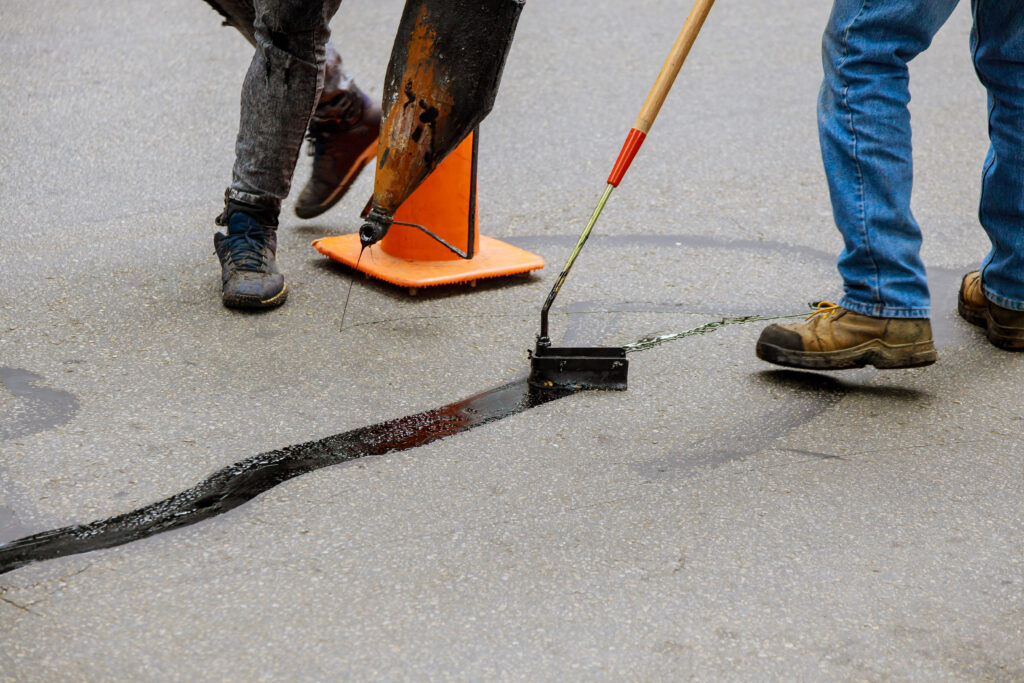
Crack Sealing and Water Infiltration
Crack sealing is a preventive pavement maintenance treatment intended for appropriate cracks in pavement that remains in suitable condition.
One of its purposes is to help limit the amount of water and debris entering through those openings.
Timing matters.
Asphalt that still has useful service life remaining provides more opportunities for preventive maintenance than pavement experiencing widespread structural deterioration. Once a section has extensive fatigue cracking, substantial deformation, or other signs of failure, crack sealing may no longer be the appropriate response.
This is why facility managers benefit from evaluating pavement condition rather than selecting a treatment based only on what is visible from a distance.
The question should not simply be, “Can we seal this crack?”
Ask whether sealing the crack addresses what the pavement actually needs.
Watch Areas Where Water and Cracking Meet
During your September pavement inspection, pay particular attention to locations where cracking and recurring moisture occur together.
Catch basins are one example. Settlement around a drainage structure can create cracking and low areas where water collects. Curbs and pavement edges can develop openings while also carrying water toward drainage structures. Loading areas may combine cracking, heavy vehicle traffic, and depressions that retain water.
Transitions between asphalt and concrete also deserve attention. Different materials, joints, elevation changes, and drainage patterns meet in relatively small areas, making them useful places to inspect closely.
Recurring potholes should also prompt a closer look. If the same location repeatedly fails after repair, the visible surface damage may be only part of the issue.
Patterns matter more than isolated observations.
Asphalt and Concrete Respond Differently
Commercial properties often contain asphalt and concrete within the same exterior environment, but the two materials should not be evaluated as though they are identical.
Asphalt is flexible pavement. Concrete is rigid pavement. Their structures, joints, failure patterns, and repair methods differ.
Concrete joints are especially important when discussing seasonal movement. Control joints and other intentionally designed joints help accommodate or manage movement within concrete surfaces. Facility managers should distinguish these features from unintended cracking.
At the same time, deteriorated joints, spalling, settlement, or cracks can create locations where water collects or enters openings.
Inspect sidewalks, curbs, loading areas, dumpster pads, ramps, and concrete aprons along with the asphalt parking lot. Pay particular attention to areas where one material transitions into the other.
The property functions as one site even when the pavement materials differ.
NFC Pro Tip
Inspect the same crack twice.
Photograph a representative pavement crack during dry weather. Then return to the same location during or shortly after rainfall. Look at what changed. Did water collect in the crack? Did runoff travel across it? Is the surrounding pavement draining properly? Is the crack part of a larger low area? A second inspection under different conditions can provide information that the first inspection could not. If possible, include a recognizable reference point in the photograph and record the date. Repeating the process later can help determine whether the condition is stable or changing.
What About Potholes?
Potholes often receive more attention than cracks because the damage is obvious, but potholes generally represent a later stage of pavement deterioration.
Water can enter pavement through cracks and other openings. Supporting materials may weaken. Traffic continues applying loads. Eventually, pavement material can break apart and become displaced.
Freeze-thaw conditions can contribute to this process where moisture and appropriate temperatures are present.
That does not mean every pothole has one identical cause. Pavement structure, drainage, construction, traffic loads, previous repairs, and other conditions can all play a role.
For facility managers, the useful question is not only how to repair the hole. It is why that particular area failed.
If potholes continue returning in the same location, the answer deserves additional investigation.
Think Beyond the Parking Lot
Cracks, water, and colder weather also affect areas outside the primary parking surface.
Inspect sidewalks used by employees and customers. Look at concrete ramps and pedestrian crossings. Check pavement around loading docks, service entrances, dumpster areas, drive-through lanes, and building entrances.
Water moving from roofs, downspouts, landscaping, or adjacent surfaces may also affect pavement conditions.
This is why exterior maintenance works best when the property is viewed as a connected system. A drainage issue that begins outside the parking lot can eventually influence the pavement inside it.
Following the water often reveals those connections.
What Should Facility Managers Do Before Colder Weather?
Begin with documentation.
Identify cracks and other pavement distress across the property. Photograph representative conditions and record areas where deterioration appears concentrated. Inspect the same locations after rain and note recurring standing water or unusual drainage patterns.
Then prioritize.
Some cracks may be appropriate for preventive maintenance. Some pavement areas may require repair. Others may need continued monitoring. Drainage conditions may need attention before pavement work makes sense.
For multi-site portfolios, use a consistent inspection approach across locations while allowing the maintenance decision to reflect conditions at each property.
A distribution center in Minnesota, a retail property in Virginia, and an office complex in Texas should not automatically receive the same pavement strategy simply because they belong to the same organization.
Climate, traffic, pavement condition, drainage, and operational demands should guide the decision.
Key Takeaways
- Pavement cracks create openings where water and debris may enter.
- The condition surrounding a crack can be as important as the crack itself.
- Rainy-day inspections can reveal drainage patterns that are difficult to see during dry weather.
- Freeze-thaw cycles involve both moisture and temperatures crossing the freezing point.
- Repeated traffic loads continue acting on pavement as seasonal conditions change.
- Different crack patterns can indicate different pavement conditions.
- Crack sealing is a preventive treatment for appropriate pavement conditions, not a repair for every type of cracking.
- Asphalt and concrete respond differently and should be evaluated accordingly.
- Recurring pavement failures may warrant investigation beyond the visible surface.
- September gives facility managers time to document conditions before colder weather changes them.
Frequently Asked Questions About Pavement Cracks and Cold Weather
Does Cold Weather Cause Asphalt Cracks?
Temperature changes can contribute to pavement movement and cracking, but cracking can have several causes. Pavement age, traffic, construction, drainage, supporting materials, and existing deterioration can all influence crack development.
Why Is Water in Asphalt Cracks a Concern?
Water can move through openings in pavement and reach supporting layers below the asphalt. Excessive moisture or poor drainage can affect pavement support and contribute to additional deterioration.
What Is a Freeze-Thaw Cycle?
A freeze-thaw cycle occurs when temperatures move below freezing and later rise above freezing, allowing water to freeze and thaw. Repeated cycles can contribute to deterioration where moisture is present within pavement openings or supporting materials.
Should Every Asphalt Crack Be Sealed?
No. Crack sealing is appropriate for certain cracks in pavement that remains in suitable condition. Widespread fatigue cracking, structural deterioration, settlement, and other pavement failures may require a different repair strategy.
Can Freeze-Thaw Cycles Cause Potholes?
Freeze-thaw conditions can contribute to pothole development when water enters pavement and surrounding materials, particularly where existing deterioration is present. Traffic, drainage, pavement structure, and other conditions can also contribute.
Why Do Potholes Keep Returning in the Same Place?
Recurring potholes may indicate that the repair is addressing the visible damage without correcting an underlying condition. Drainage, weakened supporting materials, heavy loading, or broader pavement deterioration may warrant evaluation.
Should Facility Managers Inspect Pavement After Rain?
Yes. Post-rain inspections can reveal standing water, drainage patterns, low areas, wet cracks, and other conditions that may not be apparent when pavement is dry.
What’s Next in The In-Between?
Next Thursday, we’ll move from what is happening inside pavement cracks to what is happening across the property as a whole.
As daylight continues to shorten, commercial properties begin operating under different visibility conditions. Parking lots, sidewalks, entrances, loading areas, pavement markings, landscaping, and exterior lighting can look very different after sunset than they do during a midday inspection.
We’ll look at why changing the time of your property walkthrough can change what you find.
Look at the Crack. Then Look Around It.
A pavement crack gives facility managers a place to start, but it rarely provides the entire answer.
Look at the surrounding pavement. Follow nearby water. Consider the traffic using the area. Check drainage. Compare conditions during dry and wet weather. Document what changes over time.
September provides a useful opportunity to make those observations while summer conditions remain visible and colder weather is still ahead.
That is what The In-Between is about: understanding the property during the transition, when what happened last season and what could happen next are both worth considering.
National Facility Contractors provides commercial asphalt, concrete, snow and ice management, landscaping, and other facility services for commercial properties and multi-site organizations nationwide.
If your pavement inspection identifies cracking, recurring water, potholes, or other areas of deterioration, contact National Facility Contractors to evaluate the conditions and determine the appropriate next step.