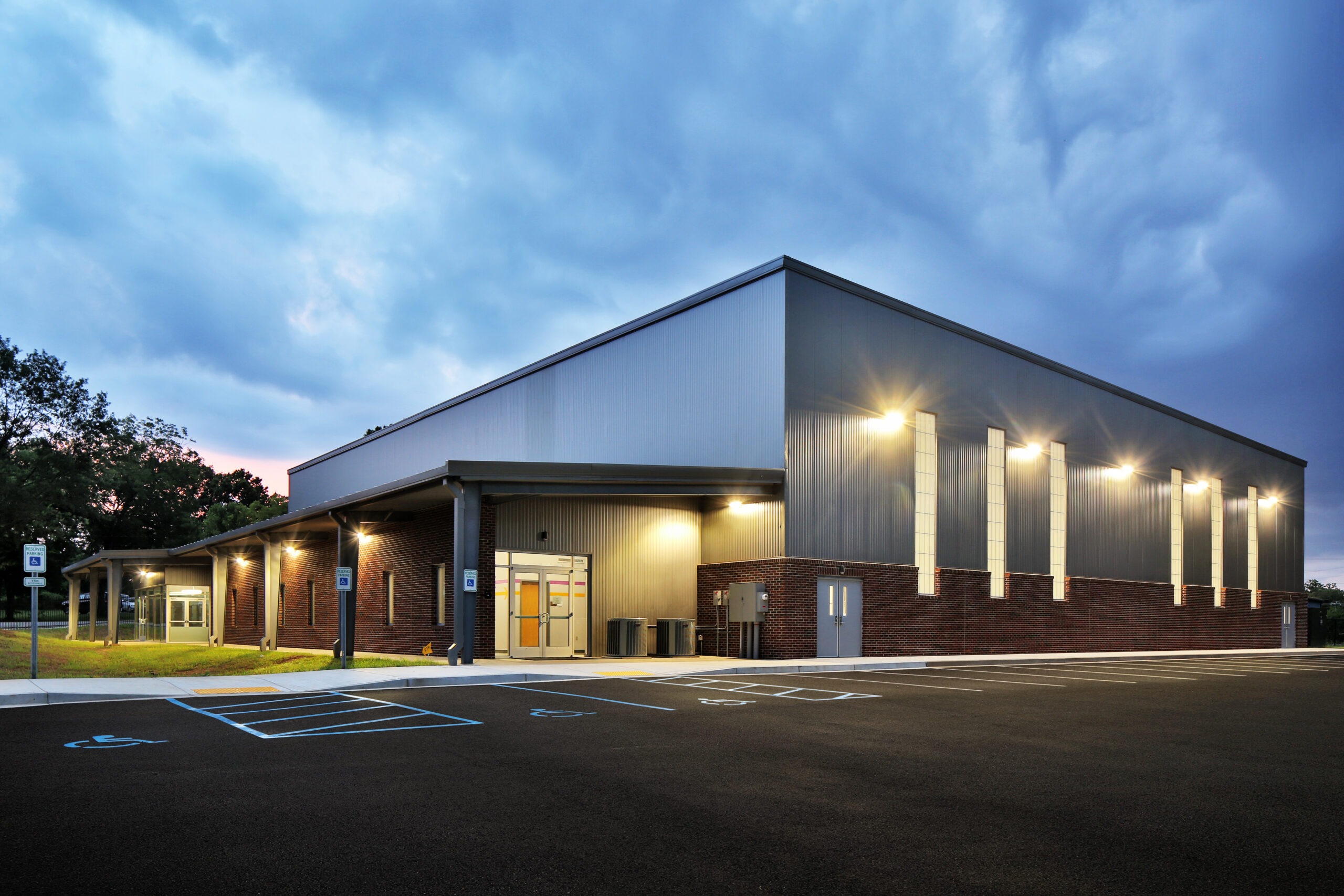
A commercial property lighting inspection can reveal conditions that are easy to overlook during a daytime walkthrough. As September brings shorter days and earlier sunsets, parking lots, sidewalks, entrances, loading areas, and other exterior spaces begin operating under different visibility conditions.
For facility managers, that change creates an inspection opportunity.
Areas that employees, customers, tenants, vendors, and delivery drivers experienced almost entirely in daylight during summer may now be used after dark. Exterior lighting becomes more important. Pavement markings can become less prominent. Changes in elevation may be harder to recognize. Landscaping can affect sightlines, and pedestrian routes that seem obvious during daylight may look different under artificial lighting.
This is one of the advantages of September’s In-Between period. Facility managers can evaluate properties under shorter daylight hours while conditions remain relatively mild, providing an opportunity to compare how the same exterior areas function during the day, at dusk, and after dark.
A daytime property inspection remains important. It simply does not show you everything.
Why Shorter Days Change a Commercial Property
Facility managers become familiar with their properties through repetition. They may see the same entrance, sidewalk, parking lot, loading area, and drive lane hundreds of times throughout the year.
That familiarity can make gradual changes difficult to notice.
Summer adds another factor. Long daylight hours mean many exterior areas are rarely evaluated under full nighttime conditions. A light that has lost output, landscaping that has grown into a sightline, or pavement markings that have gradually faded may attract little attention when sunlight does most of the work.
September begins removing that advantage.
Depending on the property and its operating hours, employees may begin arriving before sunrise or leaving after sunset. Evening customers and visitors spend more time navigating the property under artificial lighting. Deliveries may occur in lower-light conditions. Service providers working early or late shifts experience a different version of the site.
Facility managers should experience that version, too.
Walk the Property at the Time People Actually Use It
A property inspection does not always need to happen in the middle of the workday.
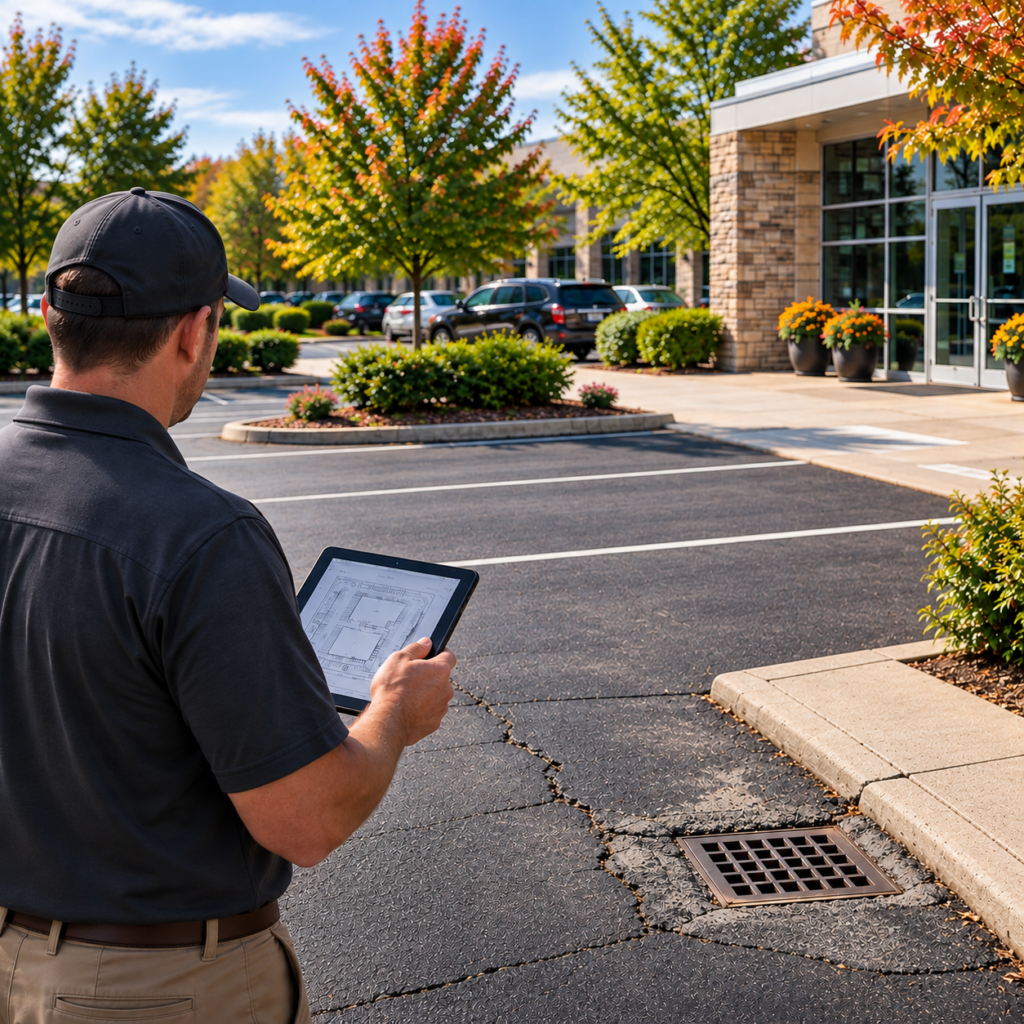
If a commercial property operates into the evening, schedule a walkthrough around dusk or after sunset. If employees arrive early in the morning, consider an inspection before sunrise. The objective is to observe the property under the same conditions experienced by the people who use it.
Start where they start.
Walk from the parking area toward the building entrance. Follow designated pedestrian routes. Cross drive lanes where employees or customers normally cross them. Visit secondary entrances, loading areas, service areas, dumpster enclosures, and other locations that remain active outside traditional daylight hours.
Then reverse the route.
Walking from the building toward the parking lot may reveal conditions that were less noticeable from the opposite direction.
This is not simply an exterior lighting inspection. It is an opportunity to understand how the entire property functions when daylight is no longer providing visibility.
Start With Commercial Exterior Lighting
Exterior lighting is the most obvious place to begin.
Look for fixtures that are not operating, but do not stop there. Compare the amount and consistency of light across the property. A functioning fixture does not necessarily mean every surrounding area has the same visibility.
Parking lots can contain bright sections next to noticeably darker ones. Building corners, mature landscaping, architectural features, parked vehicles, and other site elements can affect how light reaches the ground.
Pay attention to entrances, sidewalks, pedestrian crossings, accessible routes, loading areas, service drives, dumpster enclosures, parking areas, and other regularly used exterior spaces.
Also look at changes that may have occurred since the lighting system was installed. Trees and shrubs grow. Parking configurations change. Building additions or exterior equipment can alter sightlines. A property is not static, and the environment surrounding its lighting changes over time.
The purpose of the walkthrough is to observe those changes rather than assume that a functioning fixture means the area needs no further attention.
Facility Management Term: Photometric Plan
A photometric plan is a drawing or analysis that shows predicted or measured light levels across a property.
These plans can help designers, engineers, property owners, and facility teams understand how exterior lighting is distributed across parking lots, pedestrian areas, building entrances, and other spaces.
A nighttime walkthrough is not a substitute for a professional photometric analysis when one is required. It serves a different purpose.
The walkthrough gives facility managers a practical view of how the property currently feels and functions after dark. If the inspection identifies significant inconsistencies or concerns, additional evaluation can determine whether lighting levels, fixture performance, placement, or other factors need closer review.
Look at the Ground, Not Just the Lights
When facility managers inspect a property after dark, it is easy to spend the entire walkthrough looking upward at light fixtures.
The ground deserves just as much attention.
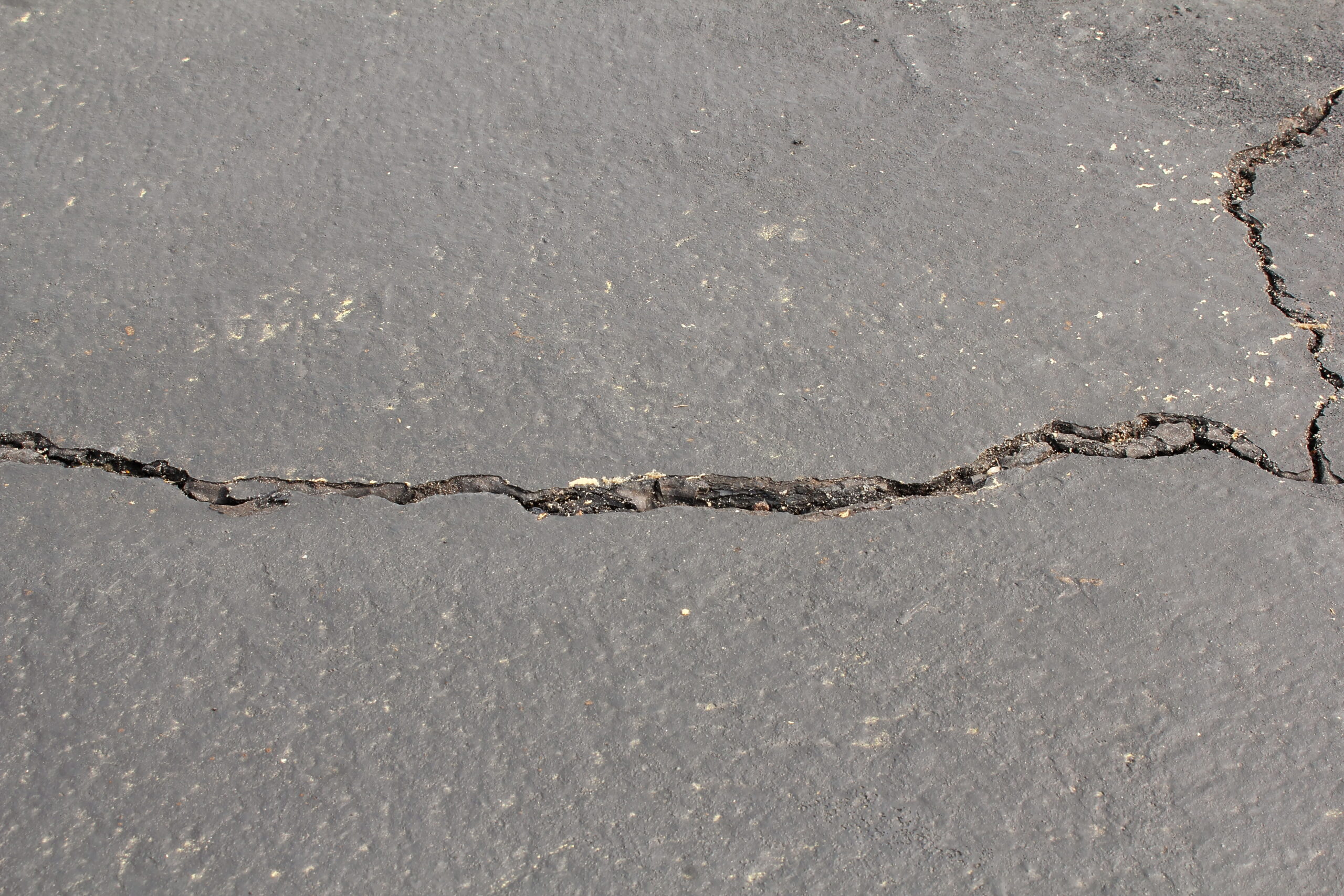
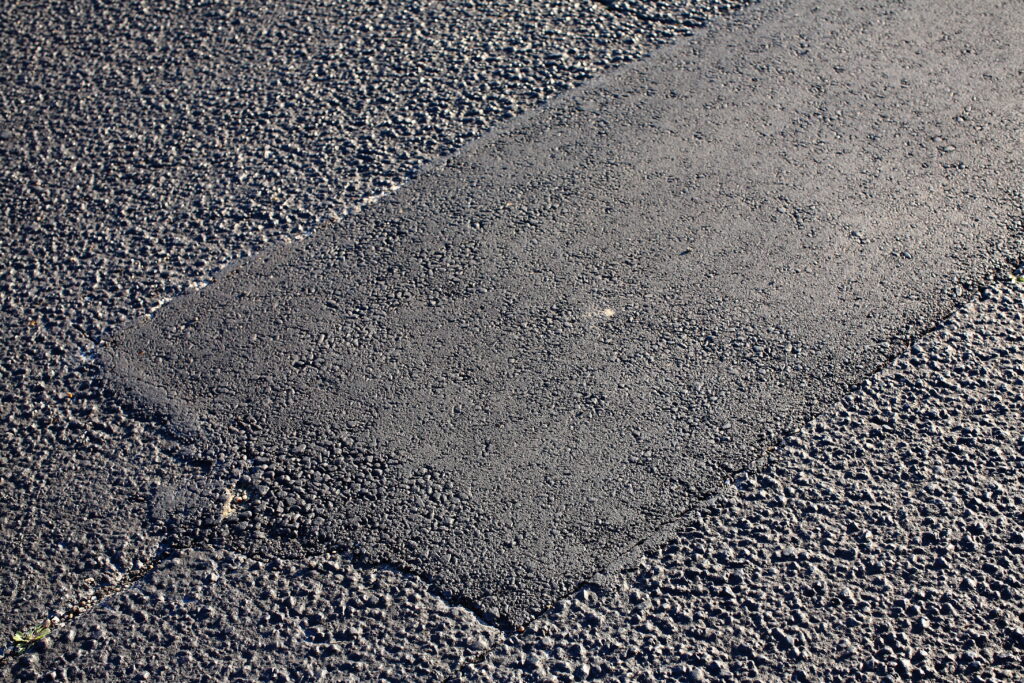
Pavement cracks, depressions, potholes, damaged curbs, uneven concrete, deteriorated joints, and transitions between surfaces can look different under artificial lighting. Shadows can change how surface conditions appear, while areas with lower visibility may make smaller changes in elevation less obvious.
Compare these observations with what you documented during daylight.
If you identified a concrete elevation change during a daytime inspection, return to the same location after dark. If a pavement repair sits along a pedestrian route, see how visible the transition is under nighttime conditions.
The condition has not changed simply because the sun went down. The way people experience it may have.
That distinction is worth understanding.
Review Pedestrian Routes From Beginning to End
A commercial property does not begin at the front door.
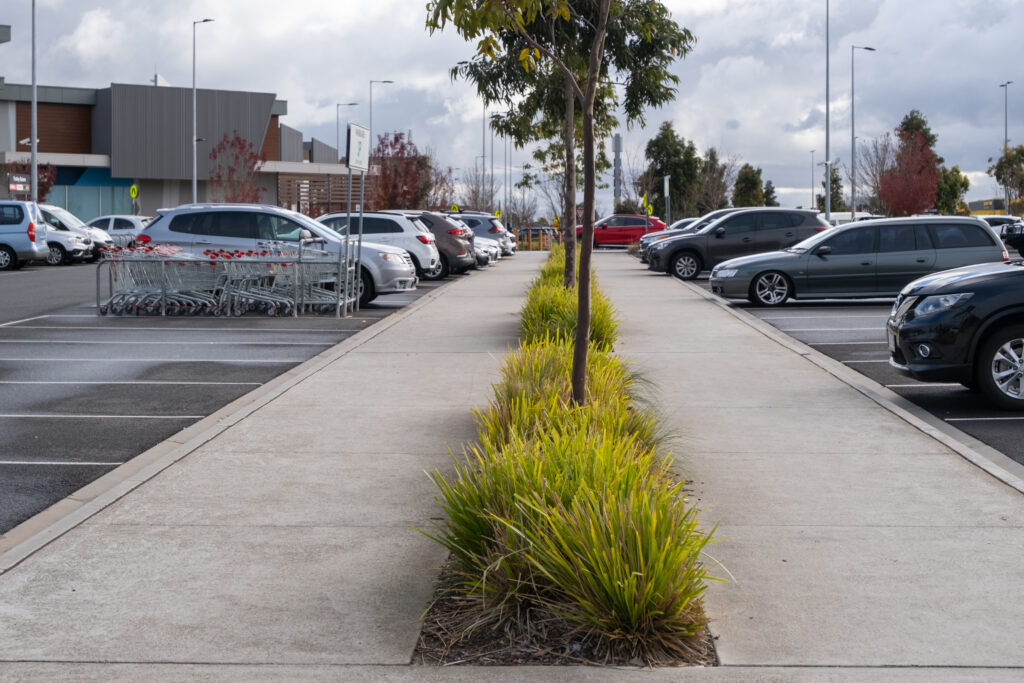
For many employees, customers, and visitors, the experience begins when they step out of a vehicle. They may cross a parking lot, navigate between parked cars, follow a sidewalk, cross a drive lane, use a curb ramp, and approach the building entrance before ever reaching the interior.
Inspect that complete route after dark.
Look at how clearly the path can be understood. Consider where pedestrians and vehicles interact. Check crosswalks, curb ramps, sidewalks, accessible routes, islands, entrances, and other transition points.
A route that feels obvious to someone who manages the property every day may be less obvious to a first-time visitor.
Try walking it without relying on familiarity. Look for the visual cues the property provides rather than the route you already know.
Faded Pavement Markings Become More Noticeable After Dark
Parking lot striping deteriorates gradually.
Because the change happens over time, facility teams that see the same lot every day may adapt to faded markings without realizing how much visibility has been lost.
Shorter days provide a useful opportunity to review those markings under different conditions.
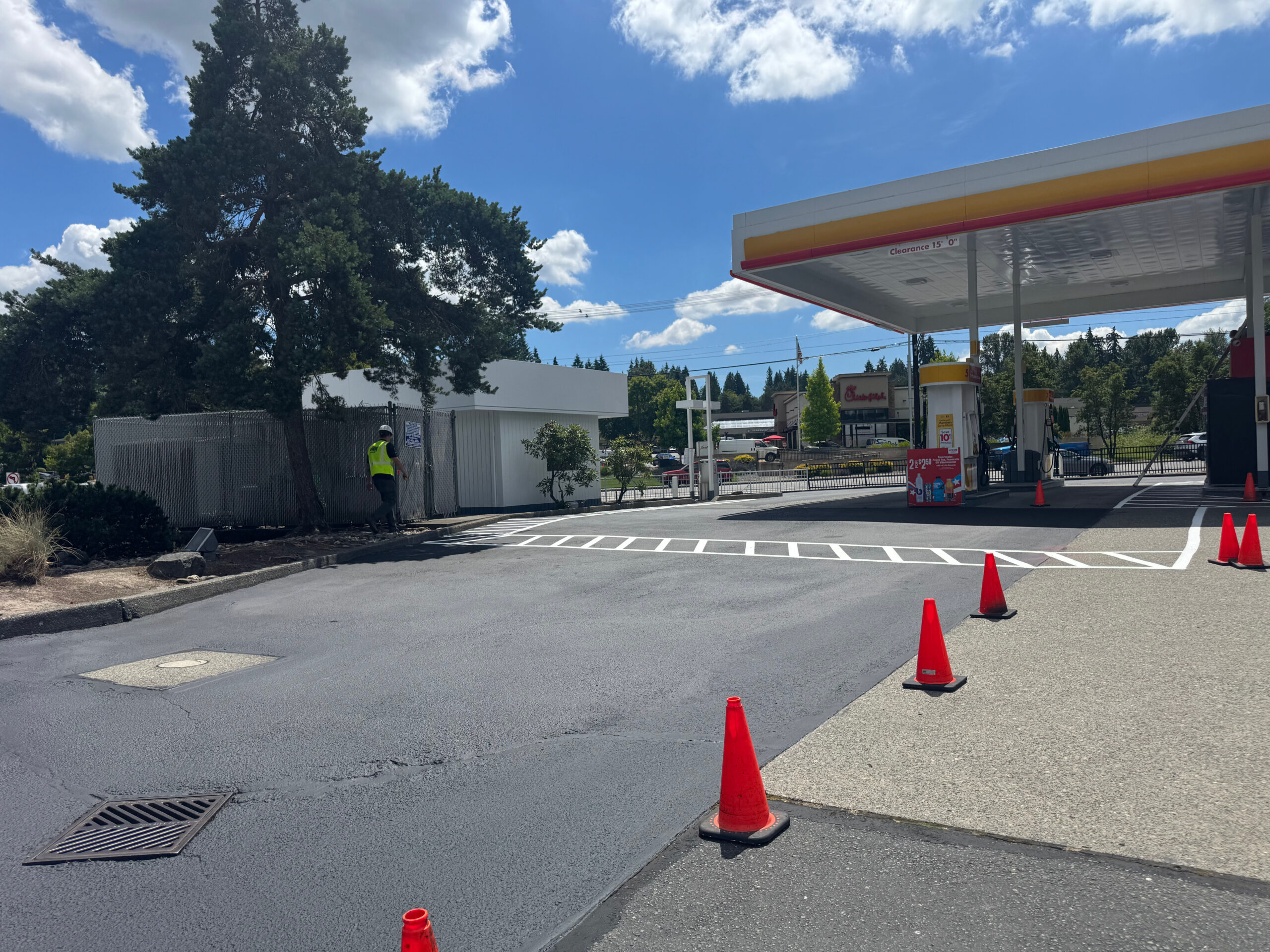
Look at parking stalls, directional arrows, crosswalks, stop bars, loading zones, accessible parking markings, fire lanes, and other painted pavement features. Observe them during daylight, at dusk, and after dark where practical.
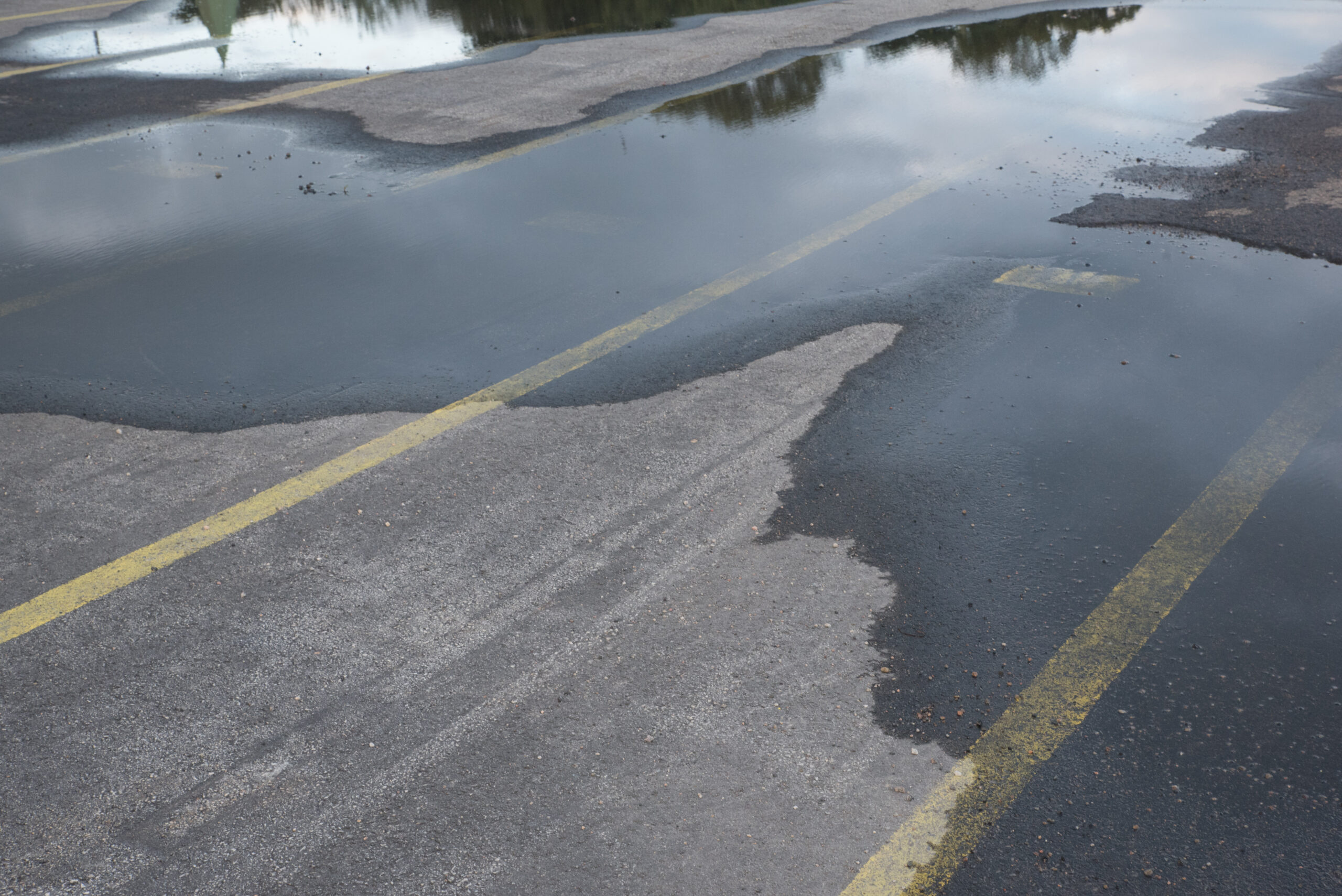
Rain can change the picture again. Wet pavement reflects light differently than dry pavement, which can affect how easily certain markings and surface features are distinguished.
The purpose is not to expect every painted line to look identical under every condition. It is to understand how effectively the markings communicate the property’s intended traffic and pedestrian organization as conditions change.
Landscaping Can Change Nighttime Visibility
September landscaping inspections should include more than plant health and appearance.
Months of growing season can change sightlines around a commercial property. Shrubs may have grown around signs. Tree canopies may extend farther toward light fixtures. Vegetation may narrow pedestrian routes or obscure curbs and other site features.
These conditions can be relatively easy to recognize during daylight. After dark, their effect may become more apparent.
Walk around landscaped islands, building entrances, sidewalks, monument signs, parking lot perimeters, and other locations where vegetation intersects with lighting or pedestrian movement.
Look at the property as a system.
A lighting concern may actually involve vegetation. A difficult-to-see curb may be affected by both faded markings and shadows. A pedestrian route may become less clear because several small conditions overlap.
Facility management often involves identifying those connections.
Check Entrances and Transition Points
Entrances concentrate activity.
Vehicles slow, turn, stop, and accelerate. Pedestrians move between parking areas and buildings. Asphalt meets concrete. Curbs, ramps, crosswalks, signs, lighting, landscaping, and drainage features may all occupy a relatively small area.
That makes entrances particularly useful places to inspect after dark.
Stand at the property entrance and look inward. Then stand near the building and look back toward the parking lot. Consider what a driver sees when entering and what a pedestrian sees when leaving.
Repeat the process at secondary entrances and service areas if they remain active outside daylight hours.
Transitions deserve similar attention. Look where sidewalks meet parking lots, where concrete aprons meet asphalt, where curb ramps meet crosswalks, and where pedestrian routes cross vehicle paths.
These are often the places where several facility systems interact.
Don’t Forget Loading and Service Areas
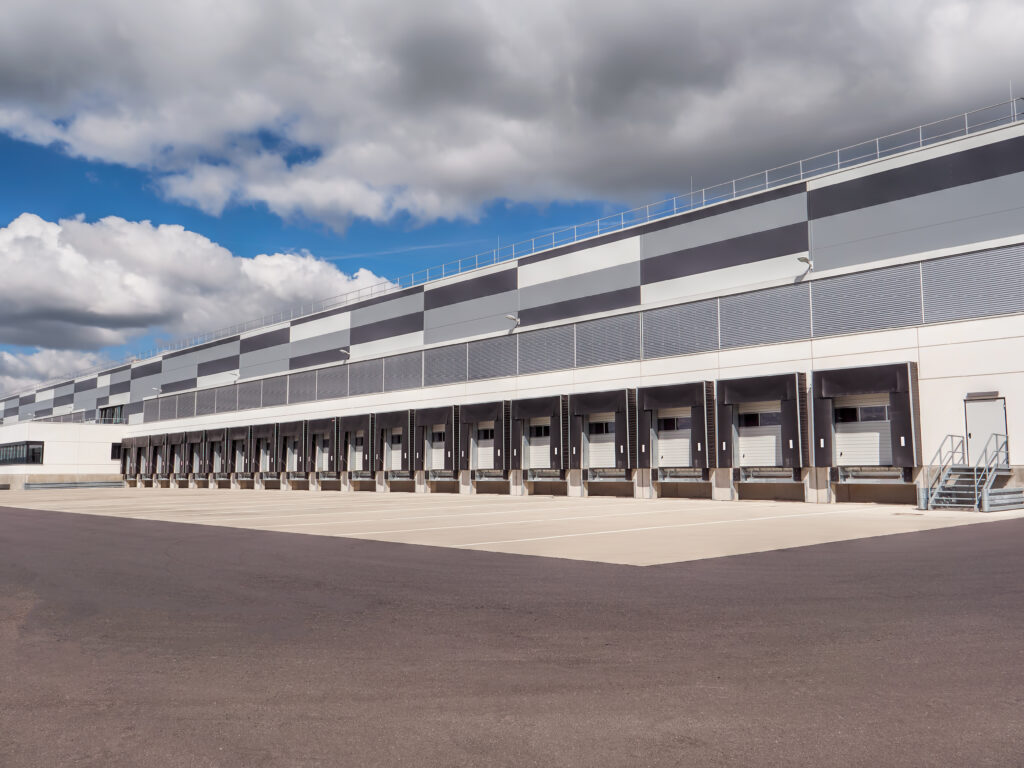
Customer-facing areas naturally receive attention, but many commercial properties continue operating behind the building long after the front entrance becomes quiet.
Loading docks, service entrances, delivery areas, waste collection areas, and employee entrances can have different lighting, pavement, traffic, and operational conditions than the main parking lot.
Inspect them accordingly.
Look at pavement condition along truck routes and turning areas. Check concrete around loading docks and dumpster pads. Review drainage structures, curbs, wheel stops, bollards, and other physical features.
Then consider visibility.
Can someone approaching the area easily distinguish the edge of the pavement? Are curbs and changes in elevation apparent? Does equipment or stored material alter the way light reaches the work area?
The back of the property deserves the same level of attention as the front when people regularly work there after dark.
NFC Pro Tip
Inspect the same route three times: during daylight, at dusk, and after dark.
Choose one representative route, such as the path from a frequently used parking area to the main entrance.
Photograph key locations from approximately the same position during each walkthrough. Compare pavement markings, sidewalks, curbs, landscaping, entrances, lighting, and surface conditions.
You are not looking for three completely different properties. You are looking for the details that become easier or harder to recognize as available light changes.
That comparison can provide better information than a nighttime inspection alone.
Use September to Document Exterior Lighting Conditions
Documentation makes seasonal inspections more useful.
Photograph exterior areas that deserve follow-up and record where each photograph was taken. For multi-site portfolios, use consistent categories so observations can be compared across properties.
A basic record might include the location, date, approximate time, weather conditions, observed condition, and whether follow-up is required.
Avoid relying entirely on photographs for lighting evaluations. Phone cameras can automatically brighten dark scenes, adjust exposure, and process images in ways that make a location appear different from what someone experienced in person.
Pair photographs with written observations.
If an area seemed unusually dark, document that observation even if the photograph makes it appear brighter.
Technology can help record the inspection, but the facility manager’s on-site observation still provides important context.
Shorter Days Also Change Maintenance Operations
The people maintaining a property experience the seasonal change, too.
Landscaping crews, pavement contractors, delivery drivers, waste collection providers, snow and ice teams, and other service partners may increasingly work during low-light conditions as daylight hours decrease.
September is a useful time to consider how that affects exterior operations.
Review access points, staging areas, loading zones, equipment locations, and other spaces used by service providers. If seasonal work will continue into fall, make sure current site conditions are accurately documented.
For properties in snow markets, this becomes increasingly relevant as winter approaches. Curbs, islands, drainage structures, pavement transitions, loading areas, and other site features that are easy to see in September may eventually become less visible under snow.
Good documentation now can provide useful context later.
The Nighttime Inspection Is Part of a Larger Property Picture
No single inspection tells facility managers everything they need to know.
A dry daytime walkthrough can reveal cracks, faded markings, concrete deterioration, landscaping conditions, and other visible issues. A post-rain inspection can reveal drainage patterns and standing water. A nighttime walkthrough can reveal how lighting, pavement, landscaping, and pedestrian routes interact under reduced visibility.
Together, those inspections create a more complete picture.
This is especially useful during The In-Between, when changing conditions provide several ways to evaluate the same property within a relatively short period.
Instead of waiting for a problem to become obvious under every condition, facility managers can change the conditions of the inspection.
Sometimes that is all it takes to notice something new.
Key Takeaways
- Shorter September days give facility managers an opportunity to evaluate commercial properties under nighttime conditions before winter arrives.
- Walk the property when employees, customers, tenants, vendors, and service providers actually use it.
- Inspect exterior lighting as part of the entire property rather than evaluating fixtures in isolation.
- Review pavement, concrete, curbs, transitions, and pedestrian routes after dark.
- Compare pavement markings during daylight, dusk, and nighttime conditions.
- Check whether summer landscaping growth has changed sightlines or affected lighting.
- Include loading docks, service areas, employee entrances, and other spaces outside customer-facing areas.
- Photograph conditions, but remember that phone cameras can make dark areas appear brighter than they look in person.
- Use consistent inspection records across multi-site portfolios.
- Combine daytime, post-rain, and nighttime observations for a more complete understanding of exterior conditions.
Frequently Asked Questions About Nighttime Commercial Property Inspections
Why Should Facility Managers Inspect a Property After Dark?
A nighttime inspection can reveal conditions that are less apparent during daylight, including differences in exterior lighting, visibility of pavement markings, pedestrian routes, surface transitions, landscaping interference, and other exterior conditions.
What Areas Should Be Included in a Nighttime Property Inspection?
Include parking lots, sidewalks, crosswalks, curb ramps, entrances, loading areas, service drives, dumpster enclosures, employee entrances, landscaped islands, and other exterior spaces regularly used outside daylight hours.
Should Exterior Lighting Be Inspected Even If Every Fixture Is Working?
Yes. A functioning fixture does not necessarily tell facility managers how consistently light reaches surrounding areas. A walkthrough can help identify differences in visibility, changes in landscaping, and other site conditions that deserve further evaluation.
Why Should Pavement Be Inspected After Dark?
Artificial lighting and shadows can change how pavement cracks, depressions, curbs, concrete transitions, and other surface conditions appear. Comparing nighttime observations with daytime inspections provides additional context.
Can Landscaping Affect Exterior Lighting?
Yes. Trees, shrubs, and other vegetation change over time and can influence sightlines or interfere with how light reaches certain areas. Landscaping near fixtures, signs, sidewalks, entrances, and parking areas should be included in exterior inspections.
Can I Use My Phone Camera to Evaluate Exterior Lighting?
Photographs are useful for documentation, but phone cameras frequently adjust exposure and brightness automatically. A photograph may therefore appear brighter than the location looked in person. Record written observations along with photographs when documenting nighttime conditions.
Should Multi-Site Facility Managers Conduct Nighttime Inspections at Every Property?
Properties have different operating hours, layouts, uses, and exterior conditions. A consistent inspection process can help facility teams evaluate locations systematically, while the scope and frequency of individual inspections should reflect how each property operates.
What’s Next in The In-Between?
Next week, we’ll bring the September inspection process together and look at the exterior conditions worth documenting before the first freeze and winter weather arrive.
Asphalt and concrete will be part of that conversation, but so will drainage, curbs, landscaping, pedestrian areas, loading zones, pavement markings, and the site information that becomes increasingly valuable once conditions change.
The goal isn’t to turn September into winter. It’s to understand the property while you can still see what summer left behind.
See the Property Under Different Conditions
Facility managers spend a great deal of time looking at their properties. The challenge is making sure they are not always looking at them in exactly the same way.
Change the time of the inspection. Walk the property after rain. Return after sunset. Approach the building as a visitor would. Leave through the employee entrance. Follow a delivery route. Look at the places where people, vehicles, pavement, landscaping, lighting, and drainage intersect.
September gives you the chance to do that before the next season changes the property again.
That is the value of The In-Between: not simply preparing for what comes next, but using the transition to see what is already there.
National Facility Contractors provides asphalt, concrete, landscaping, snow and ice management, and other facility services for commercial properties and multi-site organizations nationwide.
If your September inspection identifies exterior maintenance needs across your property or portfolio, contact National Facility Contractors to discuss the conditions and determine the appropriate next steps.