How water damages asphalt is easy to underestimate because some of the most important deterioration can begin below the surface. A puddle after a rainstorm may look harmless. A small crack may seem cosmetic. A slow-draining section of a parking lot may appear to be little more than an inconvenience.
But water has a way of finding weaknesses.
Once moisture gets through cracks, damaged pavement, poorly sealed joints, or other openings, it can reach the supporting layers beneath the asphalt. If drainage cannot move that water away effectively, the pavement structure may begin to lose the support it needs to handle traffic.
That is why successful commercial pavement management involves more than repairing what you can see. It also means understanding where water goes when it rains.
As part of our Asphalt August Commercial Pavement Resource Guide, let’s look beneath the surface to understand how water affects asphalt, why standing water deserves attention, and what facility managers can look for around their properties.
Why Is Water a Problem for Asphalt?
Asphalt pavement is a system, not simply the black surface you see when you walk across a parking lot.
The asphalt surface distributes vehicle loads to supporting layers beneath it. Those underlying materials provide much of the stability pavement needs to perform under repeated traffic.
Water can interfere with that system.
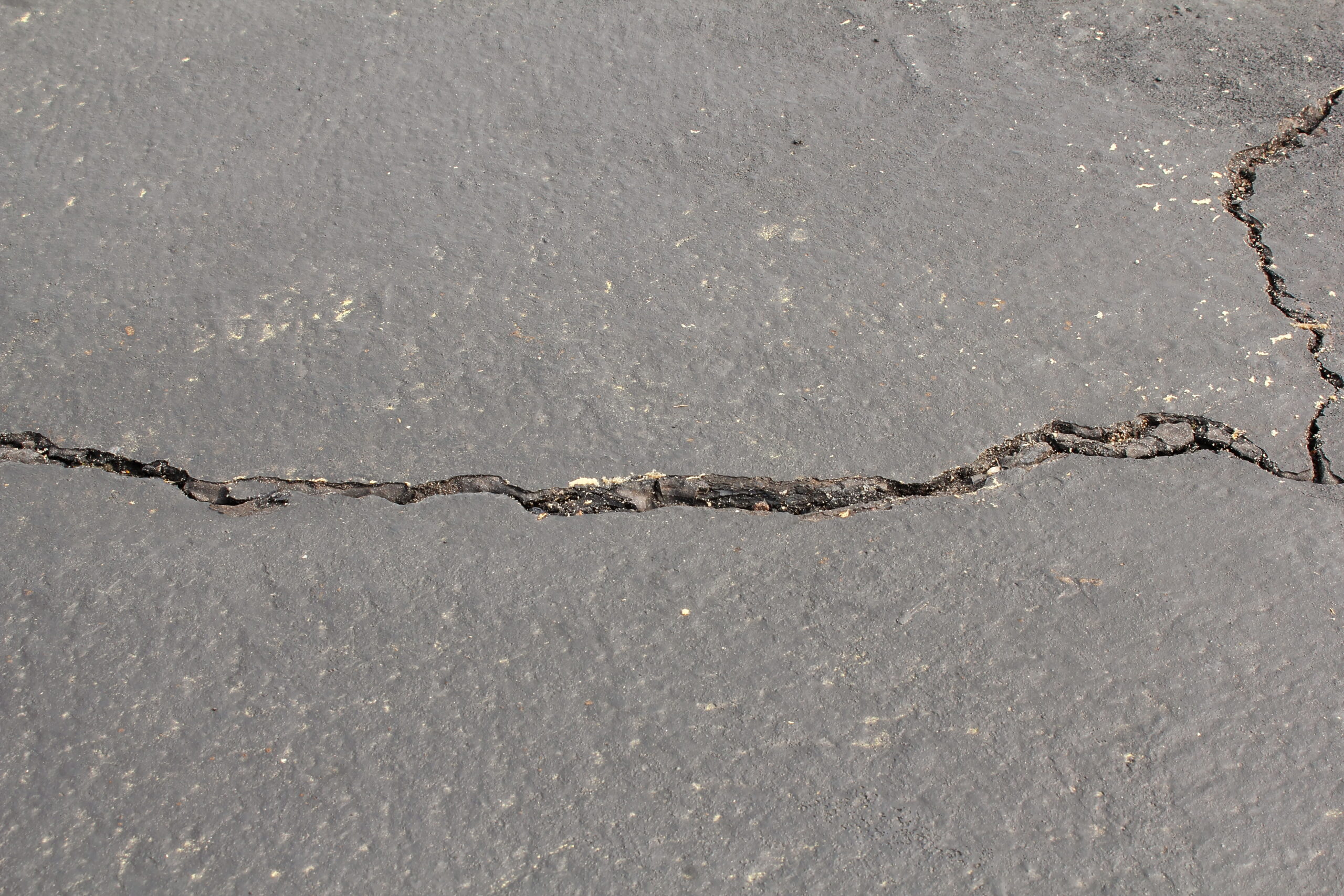
Cracks and other pavement defects may allow moisture to move beneath the surface. Drainage problems can also keep water around the pavement longer than intended. Over time, moisture can contribute to weakened supporting materials and accelerate existing deterioration.
This is one reason how water damages asphalt depends on more than the amount of rain a property receives. Pavement condition, drainage, traffic, soil conditions, climate, and maintenance history all play a role.
A property that handles water effectively may perform very differently from one where water repeatedly collects in the same locations.
What Happens When Water Gets Beneath Asphalt?
Imagine a loaded delivery truck crossing a commercial parking lot.
The asphalt doesn’t support that weight by itself. The load transfers through the pavement structure into the supporting materials below.
Now consider what happens when those materials become saturated or weakened.
The surface may begin to flex or move differently under traffic. Cracks can expand. Depressions may develop. Sections of pavement can begin breaking apart as repeated vehicle loads continue stressing the weakened area.
The visible damage may appear at the surface, but the underlying problem can be deeper.
This is also why repairing only what is visible does not always provide a lasting solution. If an underlying drainage or base problem remains, deterioration may return.

Why Standing Water Matters
A puddle does not automatically mean your parking lot is failing.
It does mean you should pay attention.
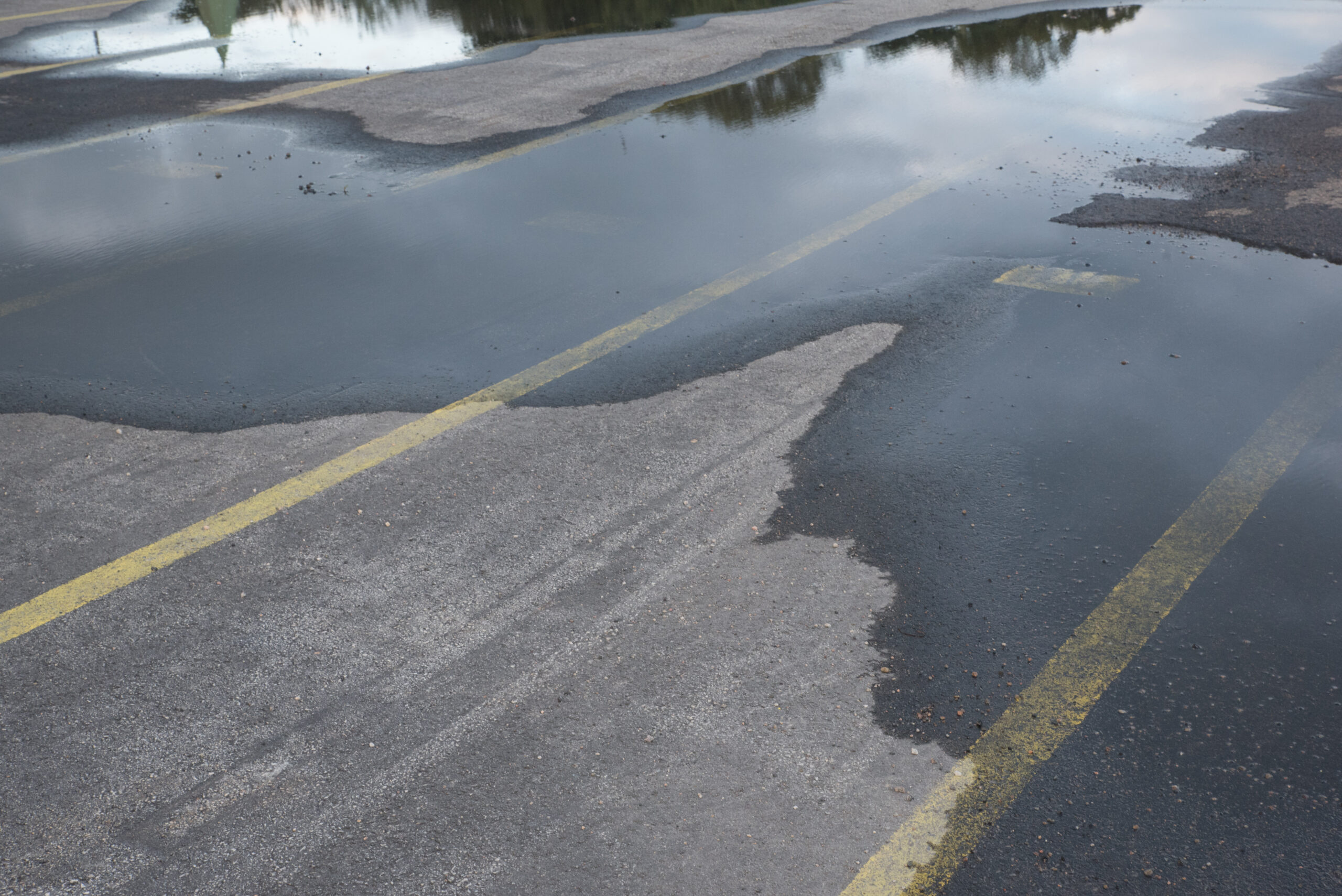
Commercial parking lots should generally direct water toward appropriate drainage areas. When water consistently remains in one location after surrounding pavement has dried, it can provide useful information about how the surface is performing.
Standing water may be associated with low areas, settlement, inadequate slope, clogged drainage structures, or changes in pavement elevation.
It can also create operational concerns. Ponding water may interfere with pedestrian routes, splash onto sidewalks or entrances, and create additional hazards when temperatures fall below freezing.
Rather than looking at a puddle as an isolated inconvenience, facility managers should ask a better question:
Why is the water staying here?
The answer can tell you something important about the property.
How Drainage Affects Parking Lot Performance
Good parking lot drainage relies on something that can be surprisingly difficult to see: elevation.
A properly designed pavement surface uses slope to move water toward catch basins, drains, gutters, swales, or other designated drainage areas. Even subtle changes in grade can determine whether water leaves the pavement or collects on it.
Over time, those conditions can change.
Pavement can settle. Repairs may alter surface elevations. Catch basins can become clogged. Adjacent landscaping can change drainage patterns. Curbs and drainage structures can deteriorate.
This means drainage deserves ongoing attention throughout the life of a commercial parking lot, not just when the pavement is initially installed.
After a substantial rainfall, take note of how quickly different areas drain. If the same puddles appear storm after storm, document their locations and monitor them for changes.
For more information about maintaining commercial pavement, explore National Facility Contractors’ commercial asphalt repair and maintenance services.
The Connection Between Water and Potholes
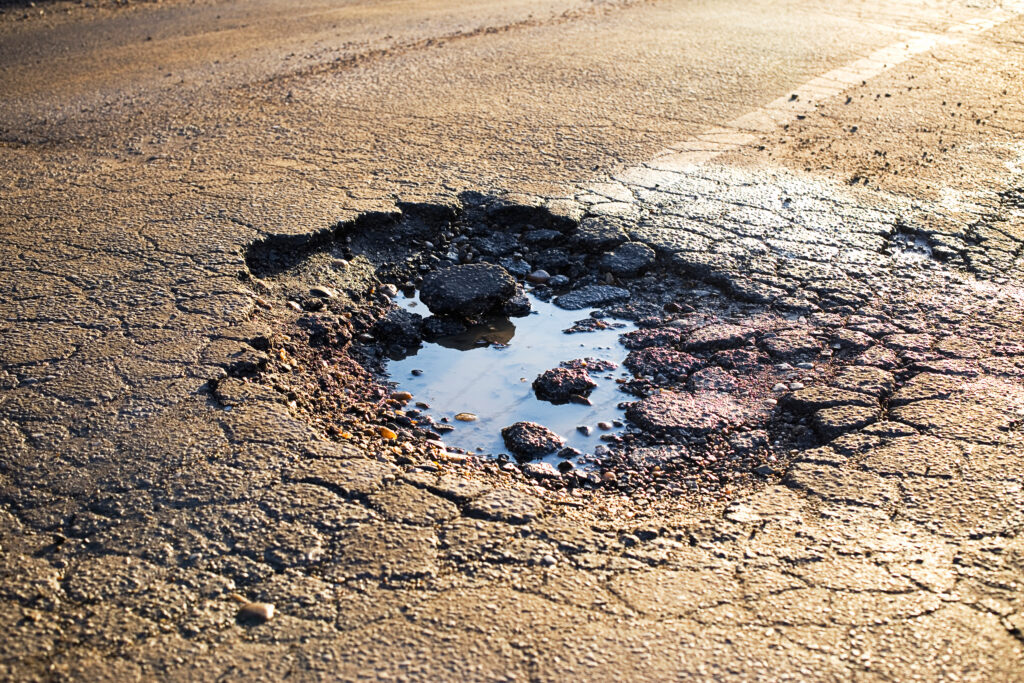
Potholes may seem to appear suddenly, but the conditions that produce them often develop over time.
Water can enter existing cracks or other openings in the pavement and affect the materials beneath the asphalt. As support deteriorates, traffic continues applying pressure from above.
Eventually, the pavement may begin breaking apart.
Once loose material is displaced by vehicle traffic, a small area of deterioration can become the familiar cavity we call a pothole.
The important lesson for facility managers is that the pothole is often the visible result, not necessarily the beginning of the problem.
Repeatedly patching a problem area without understanding why it keeps deteriorating may lead to recurring repairs. When potholes return in the same location, drainage and underlying pavement conditions deserve a closer look.
How Freeze-Thaw Cycles Affect Asphalt
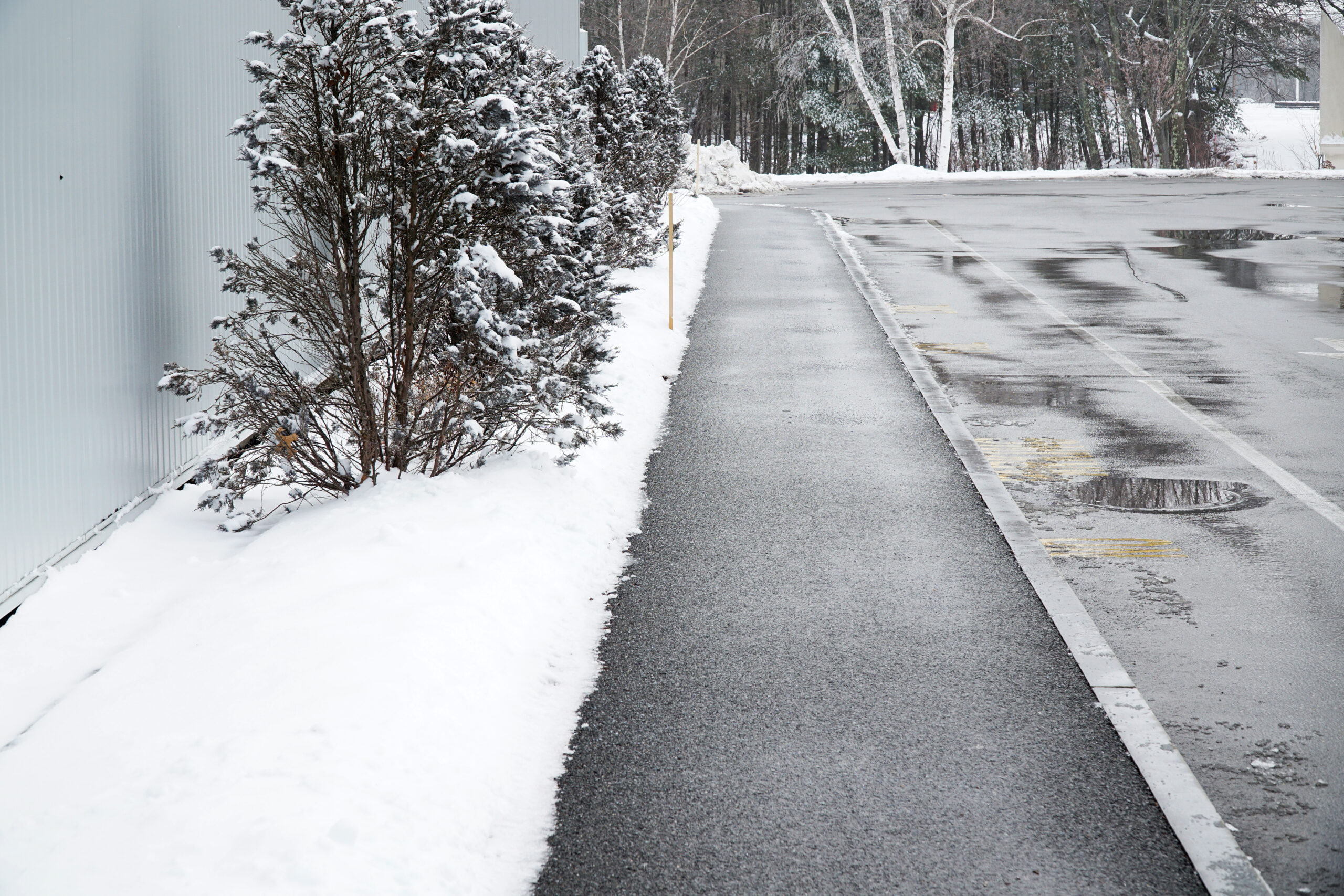
Water becomes particularly troublesome in regions where temperatures repeatedly move above and below freezing.
Moisture that enters pavement cracks can freeze as temperatures fall. Because water expands when it freezes, this process can place additional stress on already vulnerable pavement.
When temperatures rise, the ice melts. More moisture may enter. Then temperatures fall again.
This repeated freeze-thaw cycle can contribute to the expansion of cracks and further deterioration of weakened pavement.
Traffic continues throughout the process, placing vehicle loads on a pavement system that may already be compromised.
This helps explain why pavement damage can become particularly noticeable after winter. The conditions that caused the deterioration may have been developing beneath the surface for months.
Where Facility Managers Should Look for Drainage Problems
You don’t need surveying equipment to identify areas that deserve further evaluation. A simple property walkthrough after rainfall can reveal valuable information.
Pay particular attention to:
- Puddles that remain after surrounding pavement has dried
- Water collecting around catch basins or storm drains
- Cracks that consistently remain wet
- Depressions or settled areas in drive lanes
- Water collecting along curbs
- Drainage structures blocked by leaves, sediment, or debris
- Areas where landscaping drains onto pavement
- Water flowing across pedestrian walkways
- Recurring potholes in the same location
- Pavement deterioration around drains and catch basins
- Low areas near loading docks and service entrances
- Water flowing toward buildings rather than away from them
The goal isn’t to diagnose the cause during your walkthrough. It’s to identify patterns.
Take photographs, record locations, and compare conditions after future storms. That documentation can help determine whether a problem is isolated, progressing, or recurring.
What Can Be Done About Water-Damaged Asphalt?
There is no single repair for every water-related pavement problem.
The appropriate solution depends on what is causing the water to collect or penetrate the pavement and how much deterioration has already occurred.
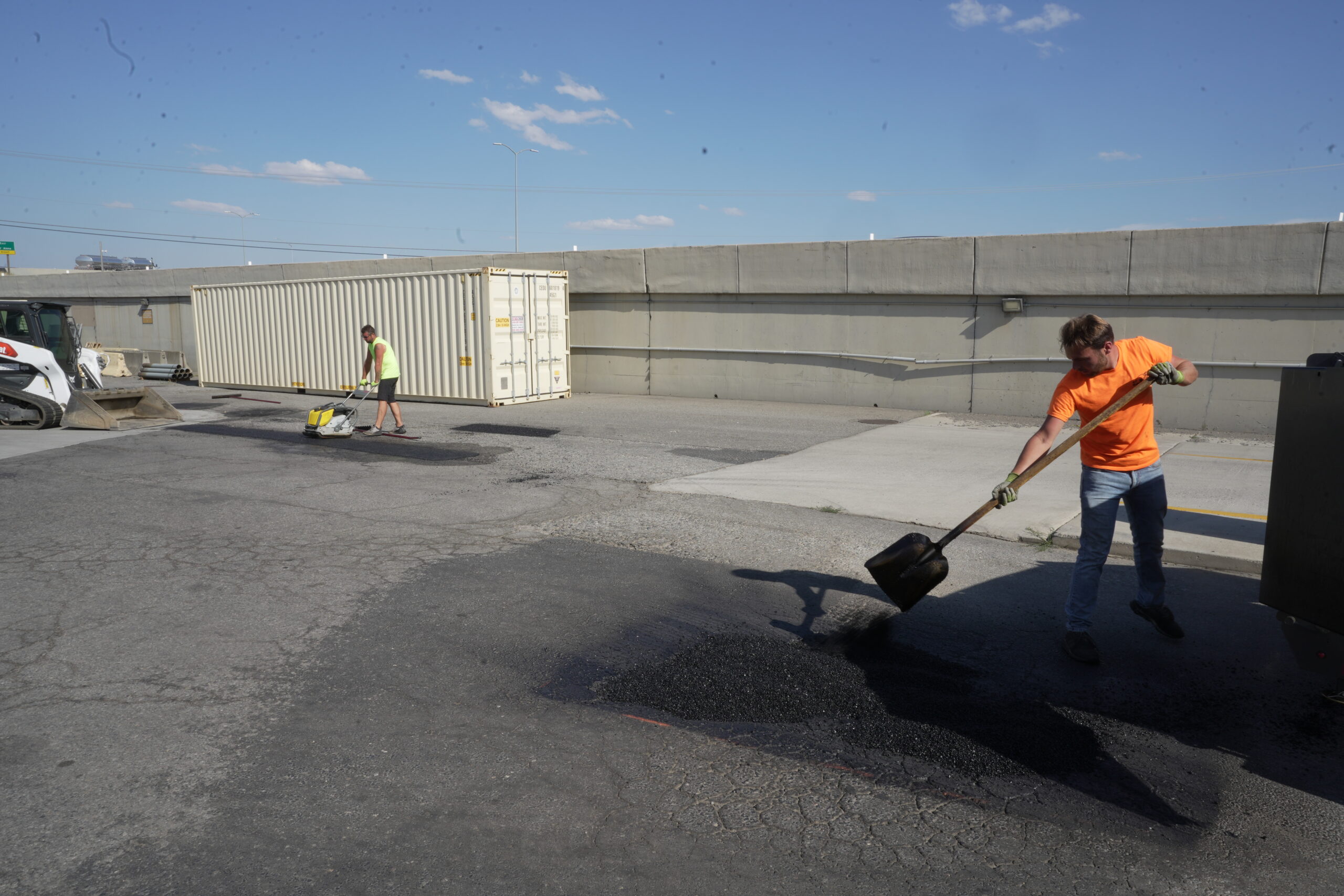
In some situations, maintenance may involve sealing appropriate cracks to limit moisture intrusion. Other properties may need drainage structures cleaned or repaired, low areas corrected, damaged asphalt patched, or deteriorated sections removed and replaced.
More extensive problems may require changes to drainage or reconstruction of failed pavement.
This is why pavement evaluation matters.
A fresh layer of asphalt can improve the surface, but if the underlying cause of recurring deterioration is not addressed, the same problem may return.
Effective pavement management looks at both the damage and the reason the damage developed.
Facility Management Term: Subgrade
Subgrade is the prepared soil or natural ground beneath the pavement structure.
Although facility managers rarely see it, the subgrade plays an important role in pavement performance because it helps support the layers above it. Soil conditions, moisture, drainage, and compaction can all influence how effectively that support is maintained.
When evaluating recurring pavement problems, what is happening beneath the asphalt can be just as important as what is happening on top of it.
NFC Pro Tip
Schedule your next pavement walkthrough for after it rains, not just when the sun is shining.
Dry pavement can tell you about cracking, surface deterioration, striping, and obvious damage. Wet pavement tells you something different.
Look for where water travels, where it slows down, and where it remains after other areas have dried. Photograph recurring puddles and compare them after future storms.
A rainstorm can turn your entire parking lot into a drainage map.
How Water Damage Fits Into Preventive Pavement Management
Preventive pavement maintenance isn’t about eliminating every imperfection. It’s about recognizing conditions that can shorten the service life of the pavement and addressing appropriate issues before deterioration becomes more extensive.
Water management belongs in that conversation.
Crack sealing may help limit water infiltration through appropriate cracks. Drainage maintenance can help keep water moving. Timely repairs can address damaged areas before they spread. Routine inspections can identify changing conditions before they become obvious from behind the wheel.
As we discussed in our previous Asphalt August article, Asphalt Crack Repair: Why Small Cracks Become Big Problems, cracks often provide an entry point for moisture.
Understanding what happens after water enters the pavement completes the picture.
The crack may be what you see. The water may be what you don’t.
Key Takeaways
- Asphalt pavement relies on supporting layers beneath the visible surface.
- Water can enter pavement through cracks and other damaged areas.
- Standing water can provide clues about settlement, drainage, or grading problems.
- Recurring potholes may warrant investigation beyond the visible surface repair.
- Freeze-thaw cycles can contribute to pavement deterioration where moisture is present.
- Parking lot drainage conditions can change as pavement and surrounding areas age.
- Post-rain inspections can help facility managers identify drainage patterns that are difficult to see in dry weather.
- Effective repairs should consider both visible pavement damage and its underlying cause.
Frequently Asked Questions About Water and Asphalt
Does Water Damage Asphalt?
Water can contribute to asphalt deterioration, particularly when it enters cracks or reaches supporting pavement layers. The extent of the problem depends on pavement condition, drainage, traffic, climate, and other site-specific factors.
Is Standing Water Bad for a Parking Lot?
Recurring standing water deserves attention because it may indicate a low area, settlement, drainage obstruction, or another condition affecting how water moves across the property.
Why Does Water Collect in the Same Part of My Parking Lot?
Repeated ponding can result from several conditions, including pavement settlement, inadequate slope, blocked drainage structures, or changes to surrounding areas. A site evaluation can help identify the cause.
Can Poor Drainage Cause Potholes?
Poor drainage and water infiltration can contribute to conditions that lead to pothole development. Moisture can weaken pavement support while repeated vehicle traffic continues stressing the surface.
Why Does Asphalt Seem Worse After Winter?
Moisture, freezing temperatures, thawing, snow and ice operations, and continued traffic can all contribute to winter pavement deterioration. Existing cracks and weak areas may become more noticeable as the season progresses.
Can Crack Sealing Prevent Water Damage?
Crack sealing can help limit moisture and debris from entering appropriate pavement cracks, but it cannot correct every pavement or drainage problem. The surrounding pavement must be evaluated to determine the appropriate treatment.
Should Commercial Parking Lots Be Inspected After Rain?
Yes. A post-rain walkthrough can help facility managers identify standing water, drainage patterns, clogged structures, depressions, and other conditions that may not be apparent when pavement is dry.
Additional Resources
For additional information about asphalt pavement, drainage, and pavement management, explore resources from:
- Federal Highway Administration (FHWA)
- Asphalt Institute
- National Asphalt Pavement Association (NAPA)
You can also explore National Facility Contractors’ resources on:
What’s Next in Asphalt August?
Understanding the Life Cycle of a Commercial Parking Lot
A parking lot doesn’t go directly from new pavement to complete reconstruction.
Between those two points are years of inspections, preventive maintenance, repairs, crack sealing, sealcoating, patching, resurfacing, and eventually rehabilitation or replacement.
Next in the Asphalt August Commercial Pavement Resource Guide, we’ll look at the stages of a commercial parking lot’s service life and explain how facility managers can make better maintenance decisions at each stage.
Protect Your Pavement by Managing the Water Around It
Water is a normal part of every commercial property’s environment. The goal isn’t to keep pavement permanently dry. It’s to help water move where it is supposed to go and prevent avoidable moisture-related deterioration.
That starts with paying attention.
Watch where water collects. Monitor cracks and low areas. Keep drainage structures clear. Document recurring problems. Most importantly, look beyond the visible symptom when the same pavement problem keeps returning.
National Facility Contractors provides commercial asphalt and concrete services for properties across the country, helping facility and property managers evaluate pavement conditions, address repairs, and develop practical long-term maintenance strategies.
If standing water, recurring potholes, cracking, or drainage-related pavement damage is appearing across your commercial property, contact National Facility Contractors to schedule a pavement evaluation and determine the right next step.