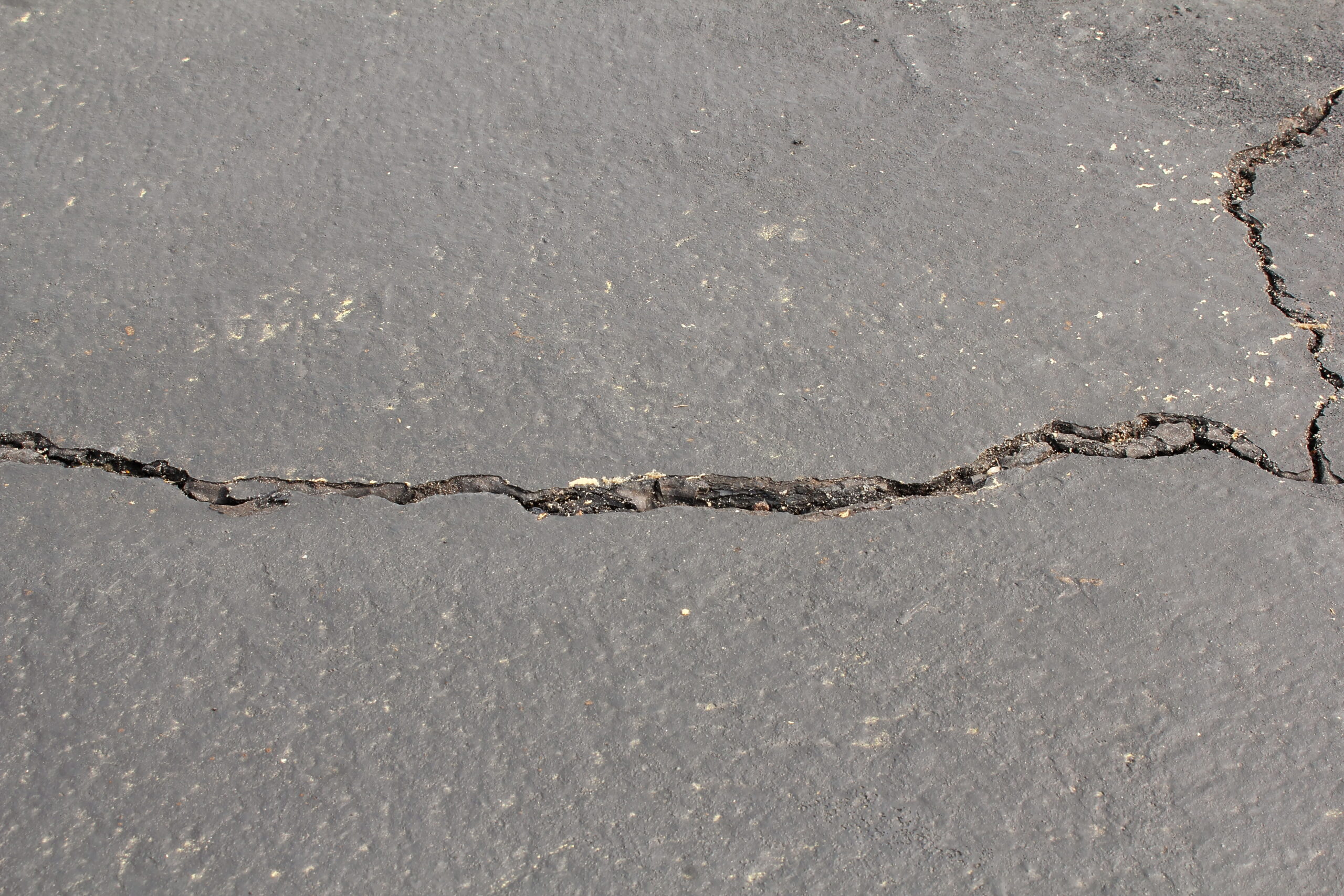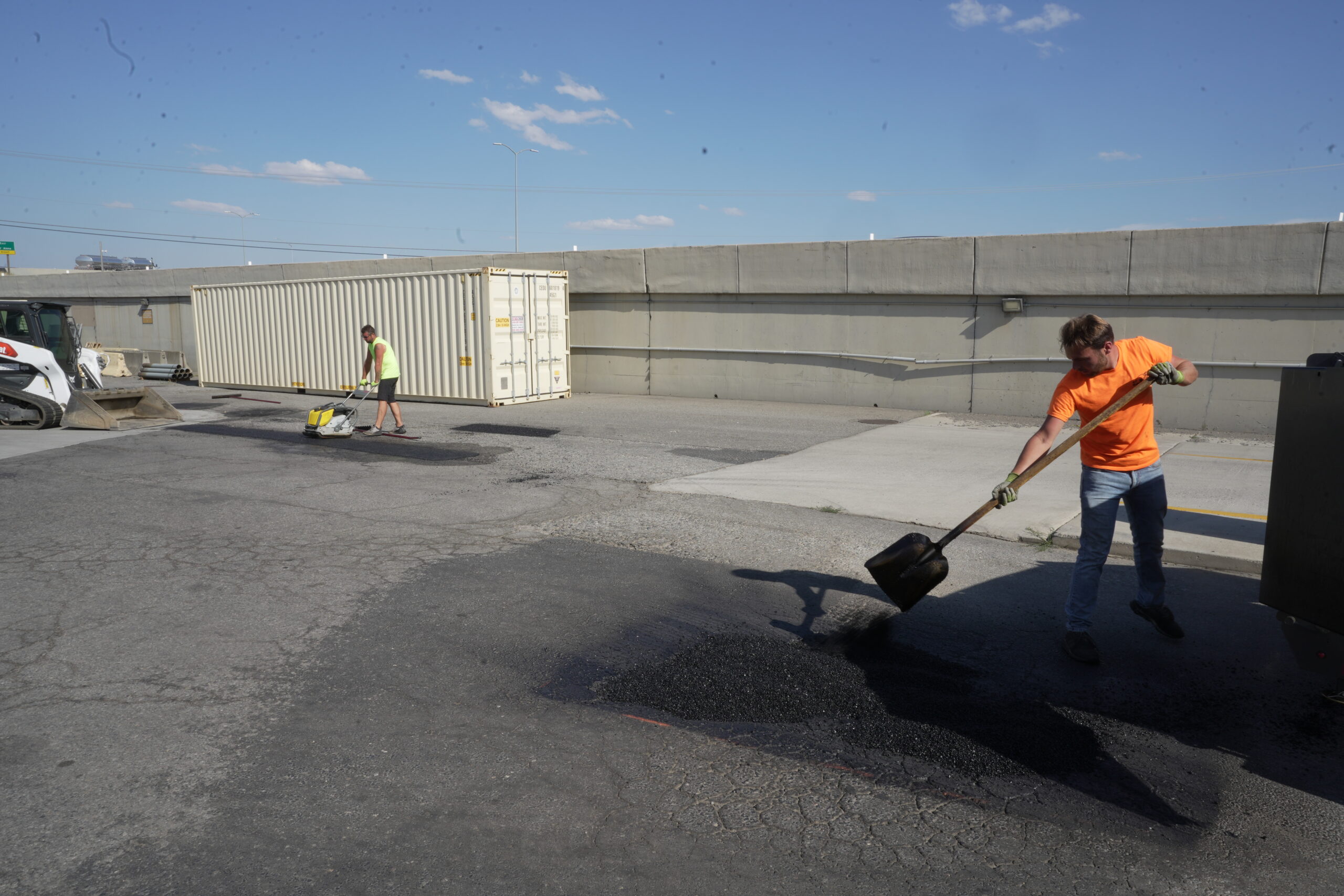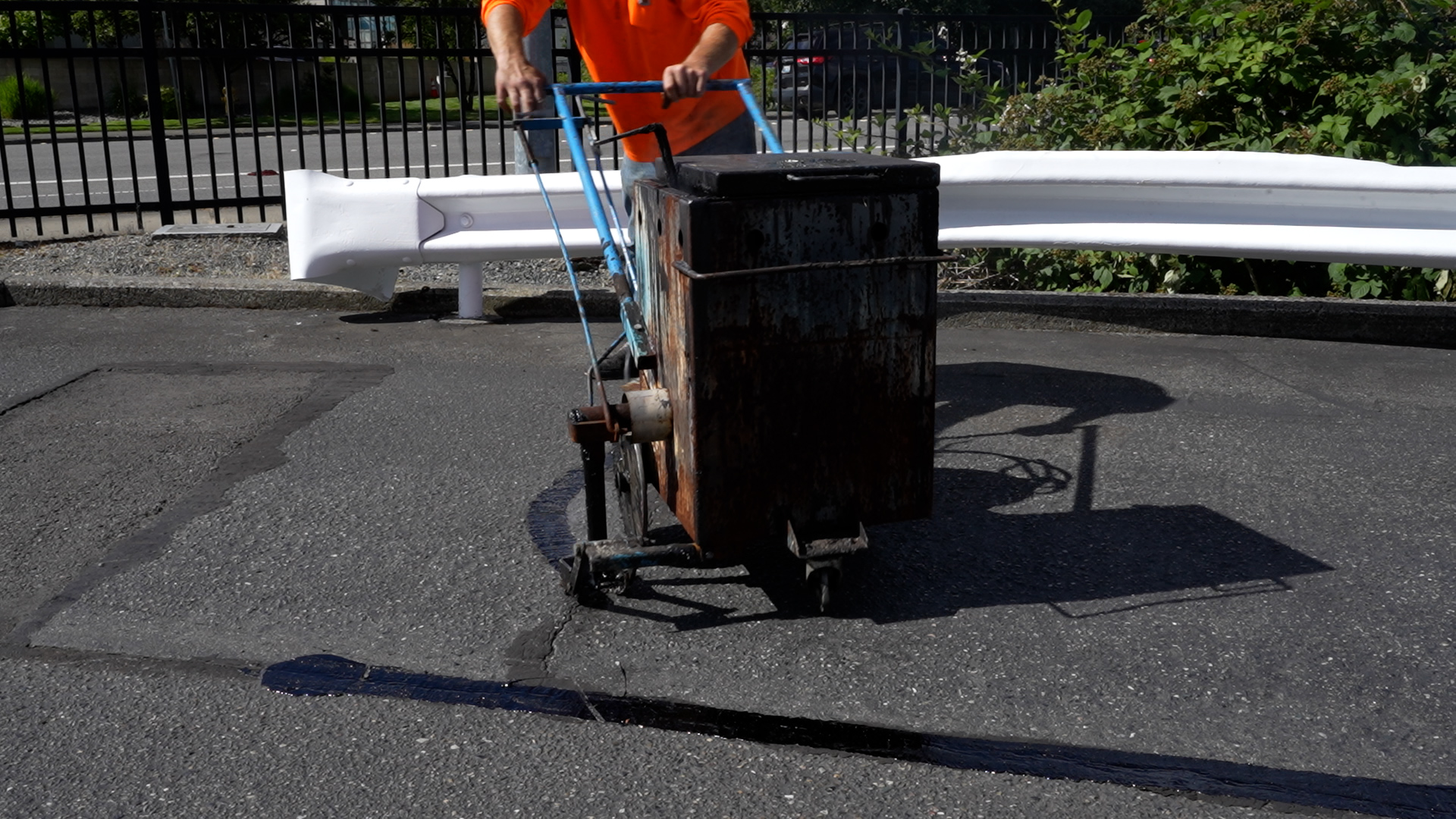
Asphalt crack repair is one of the most important maintenance tools available to facility managers who want to extend the service life of commercial pavement. A crack that looks insignificant from the driver’s seat can create an opening for moisture, expand as pavement moves, and eventually become part of a much larger maintenance problem.
In other words, “’Tis but a scratch” probably shouldn’t be your pavement maintenance strategy.
Cracking is also not a diagnosis by itself. Different crack patterns can indicate different problems, and filling every crack with sealant will not necessarily address the underlying cause. Effective pavement management starts with understanding what the asphalt is telling you. As part of our Asphalt August Commercial Pavement Resource Guide, we’re taking a closer look at why asphalt cracks, when crack sealing makes sense, and when visible cracking may indicate that a commercial parking lot needs more extensive attention.
Why Does Asphalt Crack?
Asphalt is durable, but it isn’t static. A commercial parking lot spends its entire service life exposed to vehicle loads, sunlight, moisture, temperature changes, chemicals, and movement within the pavement structure.
Over time, asphalt can become less flexible. Traffic repeatedly places stress on the pavement, while environmental conditions affect both the surface and the materials beneath it. Eventually, that stress can become visible as cracking.
The important question isn’t simply whether a crack exists. Facility managers should also consider where it is, what pattern it follows, whether it is changing, and what is happening around it.
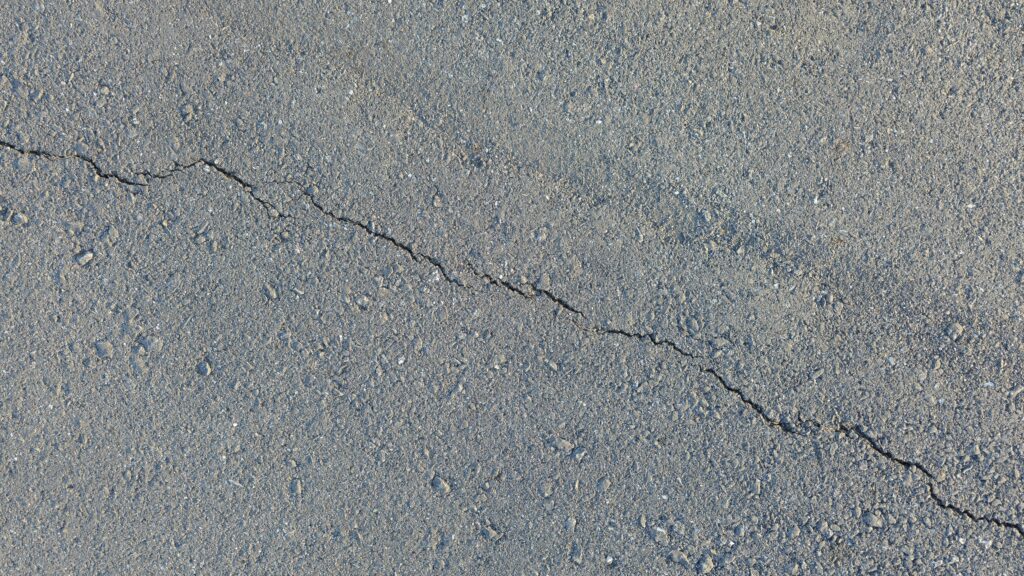
A narrow, isolated crack in otherwise sound pavement presents a very different maintenance question from interconnected cracking across an active truck lane. That distinction matters when choosing the appropriate repair.
Why Small Asphalt Cracks Matter
A small crack does not automatically mean a parking lot is failing. It does, however, create a vulnerability in what was previously a continuous pavement surface.
Once the surface opens, water and debris can enter the crack. Continued traffic can place stress along its edges. Seasonal expansion and contraction can cause the opening to change over time.
Ignoring that progression can turn a relatively manageable maintenance item into something much more involved.
Timely asphalt crack repair can help seal appropriate cracks against moisture and slow deterioration, but timing matters. Crack sealing works best as part of a broader preventive maintenance strategy rather than as an attempt to rescue pavement that has already experienced significant structural failure.
How Water Gets Beneath Asphalt
Water is one of the recurring themes you’ll see throughout Asphalt August because it plays such an important role in pavement performance.
Asphalt pavement depends on the layers beneath the visible surface for support. Cracks can provide a path for moisture to reach those underlying materials.
Once water reaches the base or subgrade, several problems may follow. Saturated supporting materials may lose strength, drainage problems can keep areas wet, and traffic can continue applying loads to pavement that no longer has the support it once did.
In climates that experience freezing temperatures, trapped moisture introduces another challenge. Water expands when it freezes, and repeated freeze-thaw cycles can contribute to further deterioration.
This is one reason commercial asphalt crack repair should be considered before cracks become extensive, particularly when the surrounding pavement remains in otherwise serviceable condition.
To learn more about maintenance and repair options for commercial pavement, explore National Facility Contractors’ commercial asphalt repair and maintenance services.
Common Types of Asphalt Cracking
Not every crack means the same thing. Recognizing the pattern can provide useful clues about what’s happening to the pavement.
Longitudinal Cracking
Longitudinal cracks generally run in the same direction as traffic or along pavement joints. Their causes can vary, which is why the surrounding pavement condition should be considered before choosing a repair.
Transverse Cracking
Transverse cracks run across the pavement rather than along the direction of travel. Temperature-related movement and aging can contribute to this type of cracking.
Edge Cracking
Cracks near the outside edge of asphalt deserve attention, particularly where pavement meets landscaping, soil, or an unsupported shoulder. Drainage, erosion, vegetation, and inadequate edge support can contribute to deterioration in these areas.
Alligator or Fatigue Cracking
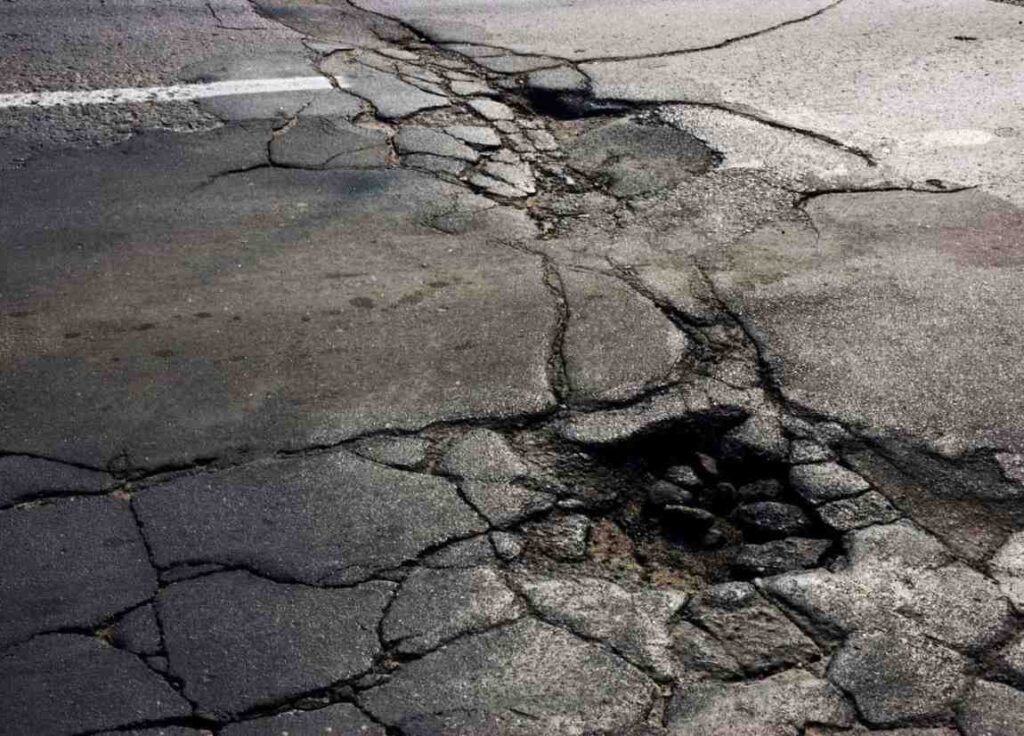
Alligator cracking gets its name from the interconnected pattern that resembles reptile skin.
This pattern is particularly important because it can indicate a problem beyond the surface. Repeated loading combined with inadequate pavement support can produce fatigue cracking, meaning simply filling the visible openings may not solve the underlying issue.
This is where professional evaluation becomes important.
Crack Sealing vs. Pavement Repair
The terms are sometimes treated interchangeably, but crack sealing and pavement repair are not necessarily the same thing.
Crack sealing is a preventive maintenance treatment intended for appropriate cracks in pavement that still has sufficient structural integrity. The goal is typically to limit water and debris infiltration while accommodating some pavement movement.
More extensive deterioration may require a different approach.
If an area shows widespread alligator cracking, settlement, significant deformation, recurring potholes, or evidence of base failure, applying crack sealant alone may address the symptom without correcting the cause.
Depending on pavement condition, the appropriate solution could involve patching, removing and replacing failed material, milling and overlaying, or reconstruction.
The repair should match the problem. That principle is far more valuable than simply asking, “Can this crack be filled?”
When Should Asphalt Cracks Be Repaired?
There isn’t a universal schedule that applies to every commercial parking lot. Pavement age, climate, traffic volume, vehicle weight, drainage, existing condition, and previous maintenance all influence when asphalt crack repair makes sense.
Rather than waiting for cracks to reach a certain visual threshold, facility managers should incorporate pavement inspections into routine property maintenance.
Look for changes between inspections. Is an existing crack widening? Are new cracks appearing nearby? Is the pavement beginning to settle? Does water collect around the area after rainfall?
A developing pattern can tell you much more than a single snapshot.
What Facility Managers Should Look For
You don’t need to diagnose pavement failure during a property walkthrough. You do need to recognize when something has changed.
During your next inspection, pay attention to:
- New cracks that weren’t present during the previous walkthrough
- Existing cracks that have widened or spread
- Networks of interconnected cracking
- Cracks near catch basins, curbs, or drainage structures
- Pavement edges that are cracking or breaking apart
- Standing water near damaged areas
- Settlement or depressions around cracks
- Vegetation growing through pavement openings
- Previously repaired cracks that have reopened
- Cracking in truck lanes, loading areas, and other high-stress locations
Photographing these areas from the same location during subsequent inspections can also help you monitor changes over time.
Facility Management Term: Pavement Distress
Pavement distress is a general term used to describe visible signs of deterioration or reduced pavement performance, including cracking, rutting, raveling, potholes, depressions, and other surface defects.
Different forms of distress can have different causes. Identifying the type and severity helps determine which maintenance or repair approach is appropriate.
NFC Pro Tip
Don’t document only the crack. Document its surroundings.
When photographing pavement damage, take one close-up image and another wider image showing where the problem sits within the property.
That wider perspective can reveal valuable context, including nearby drainage, heavy truck traffic, curbs, catch basins, loading docks, landscaped areas, or previous repairs.
The crack tells part of the story. The property around it can help tell the rest.
Asphalt Crack Repair and Preventive Pavement Management
The larger lesson isn’t that every crack represents an emergency. It’s that cracks provide information.
A thoughtful commercial pavement maintenance program uses that information to determine what requires immediate attention, what should be monitored, and what should become part of a longer-term capital plan.
That approach helps facility managers move away from repeatedly reacting to pavement failures and toward managing the parking lot as a long-term asset.
As we discussed in Why Your Parking Lot Is One of the Most Valuable Assets You Own, pavement condition affects far more than appearance. It influences accessibility, vehicle movement, pedestrian safety, drainage, property presentation, and long-term maintenance costs.
Key Takeaways
- Small cracks can allow water and debris into the pavement structure.
- Different cracking patterns can indicate different pavement conditions.
- Asphalt crack sealing is a preventive maintenance tool, not a universal solution for every form of pavement failure.
- Alligator cracking can indicate problems extending beyond the asphalt surface.
- Routine inspections help facility managers track pavement deterioration before problems become significantly more extensive.
- The appropriate repair should address the cause and condition of the pavement, not simply the visible crack.
Frequently Asked Questions About Asphalt Crack Repair
Is it worth repairing small cracks in asphalt?
When the surrounding pavement remains in suitable condition, addressing cracks early can help limit water and debris infiltration and slow further deterioration. The appropriate treatment depends on the crack type and overall pavement condition.
What happens if asphalt cracks aren’t repaired?
Cracks may widen, spread, and allow moisture into the pavement structure. Over time, deterioration can become more extensive and may require more substantial repairs.
Can every asphalt crack be sealed?
No. Crack sealing is appropriate for certain pavement conditions, but widespread fatigue cracking, structural failure, settlement, and other severe distress may require more extensive repair.
What is alligator cracking?
Alligator or fatigue cracking is a network of interconnected cracks that resembles alligator skin. It can be associated with repeated loading and insufficient pavement support and may indicate deterioration below the surface.
How often should commercial asphalt be inspected for cracks?
Facility teams should include pavement in routine property inspections and pay particular attention after severe weather, seasonal changes, or when new deterioration appears. The appropriate professional inspection schedule depends on the property’s pavement condition, traffic, climate, and maintenance history.
Additional Resources
For readers who want to learn more about pavement performance and maintenance, these industry resources provide additional information:
- Federal Highway Administration (FHWA) pavement resources
- Asphalt Institute technical and educational resources
- National Asphalt Pavement Association (NAPA) asphalt information
You can also explore National Facility Contractors’ resources on:
What’s Next in Asphalt August?
The Real Enemy of Asphalt Isn’t Traffic. It’s Water.
Why can one small drainage problem create so much pavement damage?
Next in our Asphalt August Commercial Pavement Resource Guide, we’ll go beneath the asphalt surface to examine how water infiltration, standing water, drainage, pavement cracks, and freeze-thaw cycles can affect commercial parking lots.
Protect Your Commercial Pavement Before a Small Problem Becomes a Larger One
Asphalt cracks shouldn’t automatically trigger an expensive repair project, but they shouldn’t automatically be dismissed either.
The right response starts with understanding the type of cracking, the condition of the surrounding pavement, and what may be happening beneath the surface.
National Facility Contractors provides commercial asphalt and concrete services for properties across the country, helping facility and property managers evaluate pavement conditions and identify appropriate maintenance and repair strategies.
If cracks are appearing across your parking lot, contact National Facility Contractors to schedule a pavement evaluation and determine the right next step for your property.